
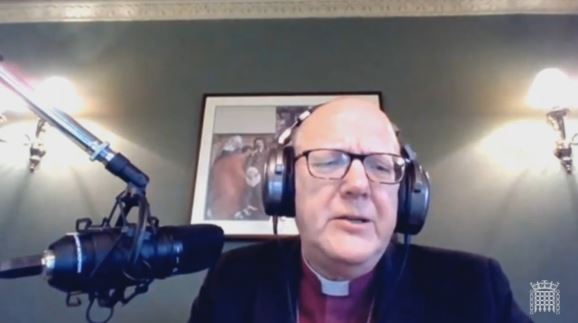
On 21st September 2020 the Bishop of Manchester, Rt Revd David Walker, made his maiden speech in the House of Lords during the Second Reading debate on the Government’s Counter-Terrorism and Sentencing Bill:
The Lord Bishop of Manchester (Maiden Speech) [V]: My Lords, I begin by expressing my thanks to the parliamentary staff and fellow Members of this House, who have both welcomed me and helped me understand something of the workings of this place. I also congratulate the noble Lord, Lord Vaizey, on his excellent and entertaining maiden speech reminding us of the importance of rehabilitation—not only for sacked government Ministers. I declare my interest as chair of the Greater Manchester police’s Ethics Committee, which is recorded in the register.
Continue reading “Counter-Terrorism and Sentencing Bill: Bishop of Manchester makes maiden speech”
 The Lord Bishop of Gloucester: My Lords, I am grateful to those contributing to this subject today who have far greater knowledge than I do, and I will aim to keep my comments brief.
 On 3rd February 2020 the House of Lords debated a motion from Lord Harris of Haringey, “to ask Her Majesty’s Government what plans they have to improve the safety and security of public venues, and whether they intend to introduce a Protect duty under the CONTEST strategy for countering terrorism.” The Bishop of Southwark, Rt Revd Christopher Chessun, spoke in the debate: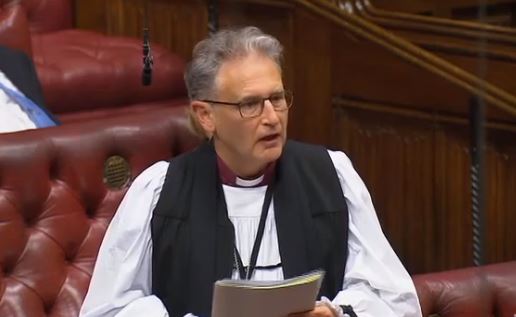
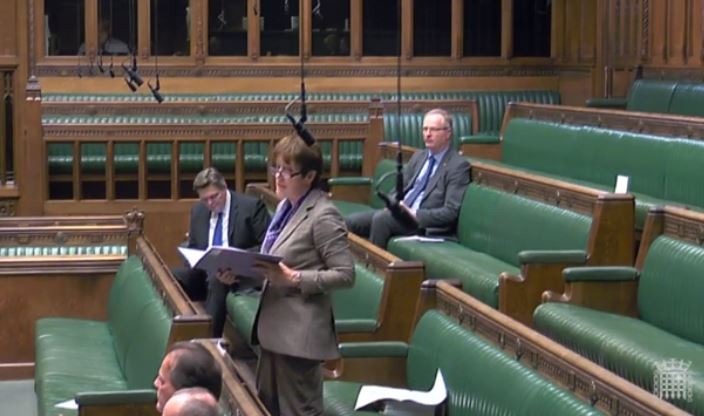
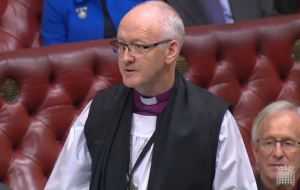 The Lord Bishop of Leeds: My Lords, my diocese, the diocese of Leeds, has had a link with Sri Lanka for nearly 40 years and I am in daily contact with the church out there. I urge the Minister and the Foreign Office to take seriously the difference between ethnic and religious strife, because we cannot always draw a straight line from people being of different religious practice or conviction to particular actions. The civil war, for example, was much more complex than is sometimes represented outside Sri Lanka. What has happened in the last few days is very different; it is international. We need to understand more about the impact on the Muslim community in Sri Lanka, as it has not been a pleasant experience for them. It is not quite as simple as we sometimes think, and I would urge caution in the way that we represent the current issue.
  The Archbishop of York: My Lords, will the Minister contemplate another example? Megrahi was sent from a Scottish jail back to Libya and expected to die within a short period, but he lived for longer than six months. What if someone was here and the same thing applied? President Pinochet was allowed to go back. Everybody expected him to die but he walked off the plane and lived for quite some time. So the six-month period could become a problem. One needs to find a way of describing it in another way. People have died within six months but some have lived longer. Can the noble Earl help us with that quandary?
  The Lord Bishop of Newcastle: My Lords, first I too want to say how much I am looking forward to the maiden speeches of the noble and learned Lord, Lord Garnier, and the noble Lord, Lord Tyrie. The noble Lord, Lord Tyrie, will be well acquainted with these Benches, having worked closely with my most reverend brother the Archbishop of Canterbury on the Parliamentary Commission on Banking Standards, which the noble Lord so ably chaired.
 The Church of England in Parliament
You must be logged in to post a comment.