Bishop of Derby – Housing Benefit, Human Trafficking, Forced Labour (Written Answers)

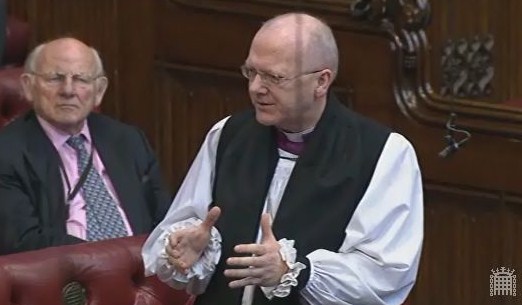
On 18th August 2014, the Bishop of Derby, the Rt Revd Alastair Redfern, received answers to five written questions on the topics of housing benefit, human trafficking and forced labour.

Housing Benefit: Social Rented Housing

Bishop of DerbyThe Lord Bishop of Derby: To ask Her Majesty’s Government what plans they have to increase the availability of suitable housing for housing benefit claimants eligible for the under-occupancy charge who are willing but unable to move to smaller accommodation due to a lack of social housing available.

The Parliamentary Under-Secretary of State, Department for Communities and Local Government (Lord Ahmad of Wimbledon): The 2015-18 Affordable Housing Programme encourages housing providers to build social homes of sizes that match local household needs. Of the successful bids so far, 77% have been for 1 and 2 bedroom homes. This will make more housing available for households in social housing who wish to downsize.

The Government has also taken steps to support mobility among tenants in the social rented sector. Our social housing reforms have given councils and social landlords much more flexibility in the allocation of housing. Our statutory guidance on social housing allocations encourages local authorities to prioritise under-occupying tenants wishing to move, and to consider whether there are provisions in their allocation scheme that might make it difficult for under-occupiers to move. In February, we issued a guide to help landlords facilitate mutual exchanges; the guide highlights various steps landlords can take to make mutual exchange a more attractive and viable proposition for tenants. The introduction of the national HomeSwap Direct scheme has made it easier for tenants wanting to move to find a suitable property. Since its launch in October 2011, tenants have carried out over 18 million searches of the property data held on HomeSwap Direct. The Government has also made clear its intention to introduce a Right to Move for social tenants who need to move to take up a job or be closer to work – we intend to consult soon on proposals.

In addition, many social landlords (both housing associations and councils) are helping affected tenants to move to more suitable accommodation by holding “mutual exchange fairs” (where tenants who want to downsize can meet with tenants who want a larger property), running transfer incentive schemes, and repairing properties which are being swapped through mutual exchange.

(via Parliament.uk) Continue reading “Bishop of Derby – Housing Benefit, Human Trafficking, Forced Labour (Written Answers)”

Written Questions – Disabled Students’ Allowances

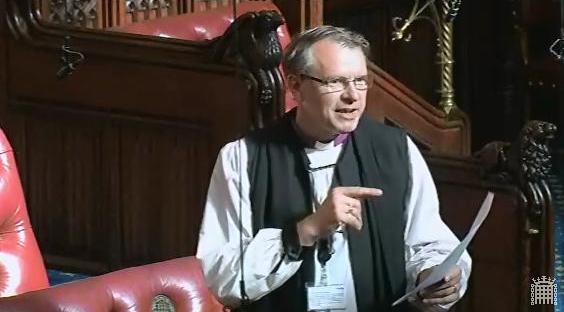
On 14th July 2014, the Bishop of St Albans, the Rt Revd Alan Smith, received answers to two written questions, on the subject of Disabled Students’ Allowances.

Bishop of St AlbansThe Lord Bishop of St Albans: To ask Her Majesty’s Government which criteria they will use, under the proposed changes to the Disabled Students’ Allowance, to distinguish between the need for higher specification or higher cost computers where a student needs one by virtue of their disability, as opposed to a need because of the way in which a course is delivered.

Lord Ahmad of Wimbledon: The criteria for determining when Disabled Student Allowances (DSAs) will contribute to the cost of higher specification or higher cost computers will be set out in guidance that will be published alongside the appropriate regulations in the autumn. Support under DSAs will continue to be available if the need for a higher specification or higher cost computer is by virtue of the student’s disability, rather than how the course is being delivered by the Higher Education Institution (HEI). If access to a higher specification or higher cost computer is essential to all students on that course, regardless of whether they are disabled or not, then provision of such computers would be a matter for the HEI.

Continue reading “Written Questions – Disabled Students’ Allowances”

Bishop of Derby speaks of unique contribution of the voluntary sector to society

“We do not look just to our neighbours but to strangers. We are not just interested in economic viability but in what is morally right. That is where the energy of the charity sector comes from, and why there is that great British tradition we have heard of—not because it is economically efficient but because it is morally right” – Bishop of Derby, 26.6.14

On 26th June 2014, the Bishop of Derby, the Rt Revd Alastair Redfern, took part in Baroness Scott of Needham Market’s take note debate on the role played by the voluntary and charitable sectors. He spoke of the distinctive nature of the voluntary and charitable sectors, how they can learn from the world of business but must not simply become businesses, and how they must be afforded the freedom and flexibility to deliver their own unique contribution to communities.

Bishop of Derby

The Lord Bishop of Derby: My Lords, I, too, thank the noble Baroness and her party for securing this debate. We talk in a context in which certainly many of the charities and voluntary and faith groups that I am involved with are in crisis, with rising demand and costs and reduced funding. That context is the ending of the welfare state. I remind the House that when the welfare state was conceived, Sidney and Beatrice Webb saw it as having three charity and voluntary work purposes: to meet basic needs, to bring people into association with each other, and to create partnership and participation. Of course, the welfare state became totally focused on meeting basic needs rather than on the richer political ecology of dignifying people, associating with them and bringing them into partnership. Many of us in the charitable and voluntary sector have got drawn into that game of meeting basic needs through projects. Continue reading “Bishop of Derby speaks of unique contribution of the voluntary sector to society”

Bishop of Durham gives maiden speech in House of Lords

“Young people…have been told that their value and contribution to the world is in work and their economic contribution. They have been told a lie…We have to help our young people to understand their true value as human beings first and foremost—but yes, we have to help them to find good, meaningful work” – Bishop of Durham, 10/6/14

14.06.10 Bishop of Durham 4

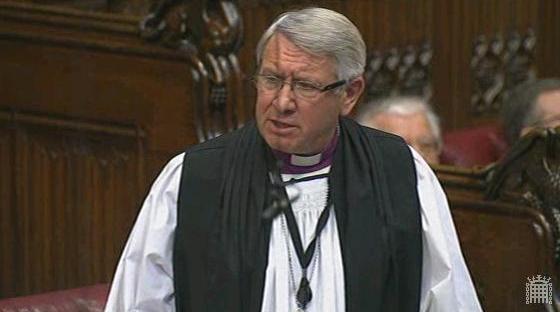
On 10th June 2014 the Bishop of Durham, Rt Rev Paul Butler, gave his maiden speech to the House of Lords, during the debate on the Queen’s Speech. The Bishop spoke about the attributes and needs of the Durham diocese, his experience of the global church, and his concern for young people’s social and economic welfare. He voiced his support for the Living Wage and plans within the Queen’s Speech for laws to tackle the emotional abuse of children.

This was the seventh contribution to the debate on the Queen’s Speech from the Bishops’ Benches. You can also watch a video of the Bishop delivering the speech on parliamentlive.tv


The Lord Bishop of Durham (Maiden Speech): My Lords, I begin by thanking your Lordships for the way in which I have been welcomed and supported as I have entered this noble House. That support has been full of wisdom, including guiding this Bishop as to how to kneel correctly during Prayers, for which I was extremely grateful. Continue reading “Bishop of Durham gives maiden speech in House of Lords”

Bishop of St Albans receives answers to written questions on benefits, electricity and housing

On 12th May 2014, the Rt Revd Alan Smith, Bishop of St Albans, received answers to three written questions on benefits, electricity and housing.

Benefits

14.03 Bishop of St AlbansThe Lord Bishop of St Albans: To ask Her Majesty’s Government what assessment they have made of the financial impact on people on low incomes of uprating most cash benefits and tax credits by one per cent from April 2013 rather than in line with inflation.

The Parliamentary Under-Secretary of State, Department for Work and Pensions (Lord Freud): For 2013/14, the main rates of working-age benefits, statutory payments and tax credits were up-rated by one per cent in the Social Security Benefits Up-rating Order 2013. The Welfare Benefits Up-rating Act 2013 provided for the one per cent increase to apply for 2014/15 and 2015/16. Both of these were accompanied by Impact Assessments.

As part of his ongoing public sector equality duty under the Equality Act 2010 to monitor impacts on “protected groups”, the Secretary of State continues to monitor the impacts of the Welfare Benefits Up-rating Act 2013 in light of any changes to the underlying rate of inflation. The underlying rate of inflation for increases in 2014/15 is similar to that forecast by the Office for Budget Responsibility and used in the Impact Assessment. It is therefore likely that the impacts on affected households will be broadly similar to those detailed in the Impact Assessment.

(via Parliament.uk)

Continue reading “Bishop of St Albans receives answers to written questions on benefits, electricity and housing”

Cost of Family Breakdown: Bishop of Chester Question to Government

The Bishop of Chester asked Her Majesty’s Government: what is their estimate of the cost of family and relationship breakdown to the welfare budget.

After the Minister’s reply, he followed up with a supplementary question.

Lord Freud: My Lords, I am unable to give an official figure. A number of organisations have produced estimates—for example, the Relationships Foundation, at £45 billion-odd—but there is no consensus. The social security spend on lone parents and collecting child maintenance is just under £9 billion, but we must acknowledge that there are wider societal costs. Government have an important role to play in supporting families and working to ensure stable futures for children.

The Lord Bishop of Chester: My Lords, if the figure of £45 billion or £46 billion given by the Relationships Foundation is even remotely accurate, that illustrates the cost of family and relational breakdown, which cashes out at about £1,500 each year for each taxpayer in our country. What more do the Government propose to do to support and strengthen family life and relationships in our country, which must somewhere include supporting the institution of marriage? Continue reading “Cost of Family Breakdown: Bishop of Chester Question to Government”

The Bishop of Leicester calls for evidence-based approach to provision of the Social Fund

Baroness Lister of Burtersett asked Her Majesty’s Government what arrangements will be made from April 2015 for the payment to local authorities of the moneys devolved from the Social Fund.

The Bishop of Leicester asked a supplementary question:

The Lord Bishop of Leicester: My Lords, in view of what the Minister has said, willLeicester she assure the House that there will be a proper assessment of the take-up of government funds by local authorities in 2013-14 to inform future consideration of the success or otherwise of these changes? How will the Government ensure that future consideration is linked to the wider impact of the Government’s welfare reforms?

 Baroness Stowell of Beeston: The Department for Work and Pensions is committed to reviewing how local authorities have been providing this support until now, and it will continue to do so during the course of 2014. What I hope we will see from that is that the very best practice which is being carried out in some local authorities will be used to inform other local authorities, and that the best practice is spread widely.

(via Parliament.uk)

Bishop of Ripon and Leeds cautions abolition of welfare provisions from local authority budgets

“One particular danger of the reduced provision, which will be exacerbated by its abolition, is the need for people to rely on high-interest lenders or loan sharks” – The Bishop of Ripon and Leeds

R_LOn 9th January 2014, the Bishop of Ripon and Leeds took part in Lord Smith of Leigh’s debate on the Local Government Finance Settlement. He focused his remarks on local welfare provision, and the risks associated with the removal of funding for local welfare provision from April 2015.

Continue reading “Bishop of Ripon and Leeds cautions abolition of welfare provisions from local authority budgets”

Bishop of Derby: housing people leaving prison in the interests of all

“It seems to me that the connection between housing and a lower reoffending rate is clear and it would be in the interests of government, society and prisoners if we could maximise the enabling of people leaving prison to be housed, giving stability of place and of relationship” – The Bishop of Derby

Bishop of DerbyOn 5th December 2013, the Bishop of Derby took part in a debate on the what assessment the Government have made of the impact on reoffending rates of providing stable accommodation for those leaving prison. Continue reading “Bishop of Derby: housing people leaving prison in the interests of all”

Bishop of Chester takes part in debate on Autumn Statement

On 5th December, the Bishop of Chester took part in the debate on the Autumn Statement, which was repeated in the House of Lords by the Commercial Secretary to the Treasury, Lord Deighton.

14.03 Bishop of Chester Continue reading “Bishop of Chester takes part in debate on Autumn Statement”