Police, Crime, Sentencing and Courts Bill: Bishop of Durham backs amendments to safeguard children involved in serious violence on behalf of the Bishop of Manchester

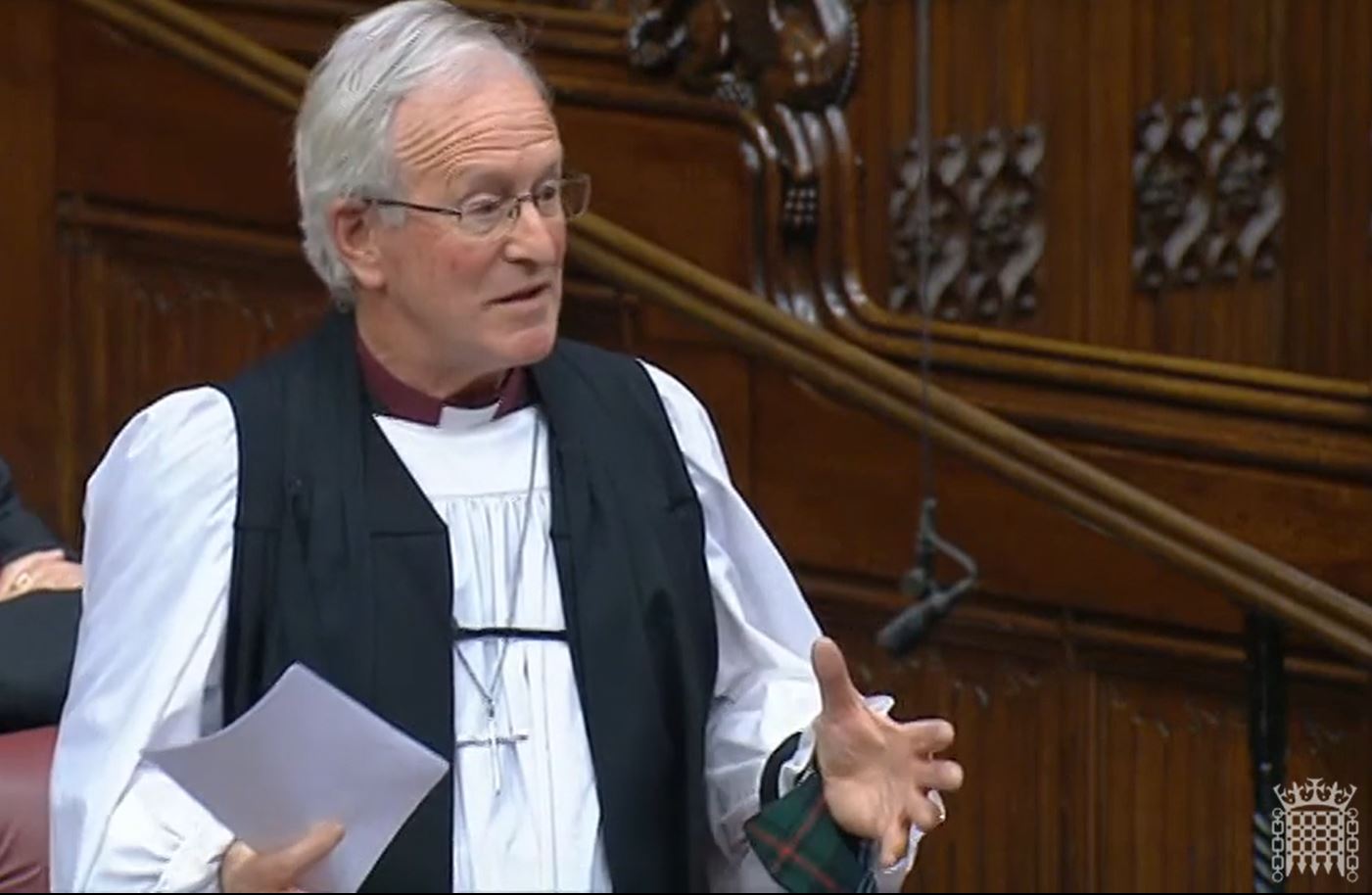
On 20th October 2021, during a debate on the Police, Crime, Sentencing and Courts Bill, the Bishop of Durham spoke in support of amendments intended to increase safeguarding efforts relating to children involved in serious violence, on behalf of the Bishop of Manchester:

The Lord Bishop of Durham: My Lords, the right reverend Prelate the Bishop of Manchester was in his place earlier but has had to go elsewhere for the evening. He has asked me to speak on his behalf on the amendments in this group tabled in his name alongside those of the noble Lord, Lord Rosser, and the noble Baroness, Lady Jones. I thank the Children’s Society and Barnardo’s for their support and helpful briefings.

The Church has a particular concern for vulnerable children. As far as the Church of England is concerned, there are 4,644 schools in which we educate around 1 million students. This educational commitment is combined with parish and youth worker activities that bring the Church into contact with thousands of families each year. Through the Clewer Initiative, many parishes and dioceses have worked closely on the issues of county lines and confronting the blight of modern slavery. Accordingly, we have seen at first hand and, sadly, all too frequently the terrible damage caused by serious youth violence and by the criminal exploitation of children. The latter is an especially insidious form of abuse, which one victim has described as “when someone you trusted makes you commit crime for their benefit”.

Continue reading “Police, Crime, Sentencing and Courts Bill: Bishop of Durham backs amendments to safeguard children involved in serious violence on behalf of the Bishop of Manchester”

Bishop of St Albans asks about child trust funds

The Bishop of St Albans asked a question on regulations surrounding child trust funds for children with learning disabilities on 22nd June 2021:

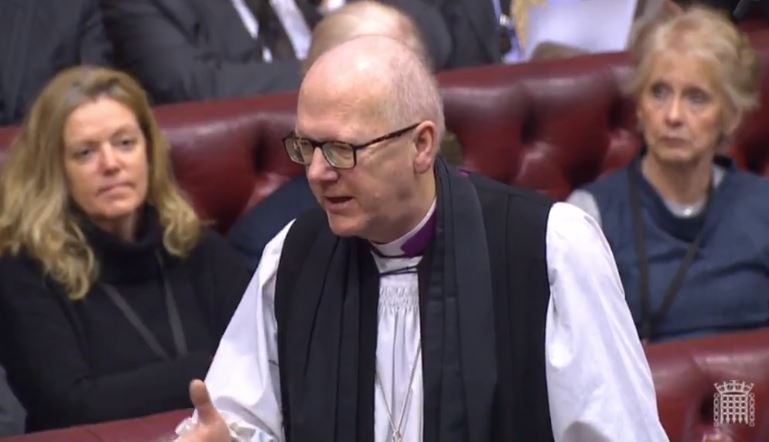
The Lord Bishop of St Albans: My Lords, may I press the Minister a little further? What plans do the Government have to work with the providers of child trust funds to develop a proactive strategy to advertise the need for parents of children with learning disabilities to apply to the Court of Protection in advance of the young adult’s child trust fund maturing? This is a really urgent matter, and we need the Government to be on the front foot.

Continue reading “Bishop of St Albans asks about child trust funds”

Bishop of Oxford asks about skill-building for young people post pandemic

The Bishop of Oxford asked a question on government efforts to help young people build skills and knowledge to ensure they are able to access careers following the COVID-19 pandemic on 16th June 2021:

The Lord Bishop of Oxford: My Lords, during their working lives this generation will face the full implications of not only the Covid pandemic but the fourth industrial revolution and the need to transform our economy to net zero. Young people will need to build meaningful careers, not simply survive from gig to gig. Can the Minister therefore explain where strategic thinking is happening and where policies interlock to provide the skills, employment safeguards and quality jobs, linked to national priorities, which young people will need?

Continue reading “Bishop of Oxford asks about skill-building for young people post pandemic”

Queen’s Speech – Bishop of Durham on children, young people and immigration

On 12th May 2021 the House of Lords debated the Queen’s Speech. The Bishop of Durham spoke, focusing on its impact on children and young people, and on the proposals for immigration.

“My Lords, it is a privilege to be the first to speak from these Benches on Her Majesty’s gracious Speech. I look forward to the valedictory speech of my colleague, the right reverend Prelate the Bishop of Portsmouth, who has served the House so well during his years as a Lord spiritual. I also look forward to the maiden speeches of the noble Baroness, Lady Blake, and the noble Lord, Lord Lebedev.

“I make my comments within a very specific framework: are the measures contained in the gracious Speech good for the children and young people of our land? At the outset of her tenure as Children’s Commissioner, Dame Rachel de Souza commented: ‘I want to see childhood right at the top of the Government agenda. That means every speech from the Prime Minister and Chancellor mentioning children, and every Government department constantly pushing to improve the lives of children’— so it was good to hear a range of references to children. Having the best start in life by prioritising early years is essential. There is no debate any longer that the months in the womb and the first 1,001 days of a child’s life are absolutely critical to lifetime development. Much deeper investment in all aspects of early years well-being—mental, physical, social and spiritual—is essential.

Continue reading “Queen’s Speech – Bishop of Durham on children, young people and immigration”

Bishop of Gloucester speaks in debate on building an inclusive society

The Bishop of Gloucester took part in a debate on building an inclusive society in a post-pandemic world on 14th April 2021, speaking on the topics of children, faith communities, and the marginalised:

The Lord Bishop of Gloucester: I am grateful to the noble Baroness, Lady Lister, for moving this Motion. I want briefly to touch on three areas: children and young people; churches and faith communities; and those living in the shadows.

First, I turn to children and young people. Last month, I hosted an online youth forum in the diocese of Gloucester, bringing together more than 100 people so that adults in different spheres of influence, including our MPs, had the opportunity to listen to young people. Prior to that event, I spent many hours listening to young people speak about the impact of Covid-19 on their lives and I will share a few quotes. “Lockdown’s been so isolating.” “I feel like there should be more knowledge about mental health, not just depression and anxiety, and we should be taught how to deal with them.” “There’s been no direction. We don’t know what’s going to happen next. It’s hard for us to try and adapt to all these different situations.” “We haven’t had the chance to say how we feel about things.” “I really hope that sometimes we can be taken more seriously, and that our views can be put across.” “I just want people with influence to understand that there’s a wider range of issues than just the small subsection that they look at.”

Continue reading “Bishop of Gloucester speaks in debate on building an inclusive society”

Bishop of London asks about potential mental health risks of asthma drug

The Bishop of London received the following written answer on 12th April 2021:

The Lord Bishop of London asked Her Majesty’s Government what recommendations have been made by the Medicines and Healthcare products Regulatory Agency regarding the prominence of warnings concerning mental health risks associated with the use of Montelukast in children; and what is the timescale for implementation of any such recommendations.

Continue reading “Bishop of London asks about potential mental health risks of asthma drug”

Bishop of Winchester asks about provision of high quality jobs for young people

The Bishop of Winchester asked a question on provision of high quality jobs and work placements for young people affected by the COVID-19 Pandemic on 2nd February 2021, during a discussion on youth unemployment:

The Lord Bishop of Winchester [V]: My Lords, in a recent survey by the Prince’s Trust, 21% of those aged 16 to 24 said that they felt their skills and training were no longer useful as a result of the pandemic. Given that about only 2,000 young people secured roles out of 120,000 approved placements in the Kickstart scheme, can the Minister say what action Her Majesty’s Government are taking to increase the numbers enrolled on placements and to ensure that they are all high quality?

Continue reading “Bishop of Winchester asks about provision of high quality jobs for young people”

Bishop of St Albans asks about access to broadband in deprived areas

The Bishop of St Albans asked a question on enabling access to broadband for young people in deprived areas and the importance of education in light of the coronavirus pandemic on 28th January 2021, during following a government statement on COVID-19:

The Lord Bishop of St Albans: My Lords, the position for young people in school and education is mixed, with some students in poorer areas still not having access to online education and those in remote rural areas with not-spots simply not able to get online. Could the noble Baroness comment on the priority of trying to ensure that we move much more rapidly on the provision of broadband, particularly in those difficult areas? Secondly, we are going to have to do a big catch-up on educational standards and achievements, but it is important, at the same time, to look holistically at the spiritual, emotional and psychological work we are going to have to do with our young people. What plans are being made by Her Majesty’s Government?

Continue reading “Bishop of St Albans asks about access to broadband in deprived areas”

Bishop of St Albans raises issue of housing in debate on intergenerational unfairness

The Bishop of St Albans took part in a debate on a report from the Select Committee on Intergenerational Unfairness on 25th January 2021, focusing on access to and provision of housing:

The Lord Bishop of St Albans [V]: My Lords, the decrease in the rates of home ownership for the younger generation is a major issue and not one of their own making. As this excellent report demonstrates, it is an important factor in addressing issues of intergenerational fairness. For many years, there has been a failure to supply housing adequately—an issue exacerbated by a cycle of stagnation fuelled by low market absorption rates and stalled developments.

The Letwin report suggests that one of the most important reasons for this is that developers will build new homes only at a rate that the market can absorb and that, by diversifying housing products, rates of absorption will increase. However, when I put down Written Questions to Her Majesty’s Government on this topic, never once has it been acknowledged that it might be in the interest of developers to land bank, as increased supply is likely to reduce house prices. While I believe that this has contributed to the lack of supply, I agree that low absorption remains a real issue. However, I do not think that diversification alone will solve it.

Continue reading “Bishop of St Albans raises issue of housing in debate on intergenerational unfairness”

Bishop of St Albans asks about problem gambling by young people

On 18th November the Bishop of St Albans received written answers to two questions on problem gambling and young people:

The Lord Bishop of St Albans: To ask Her Majesty’s Government what assessment they have made of the findings from the Gambling Commission’s 2020 Young People and Gambling Survey; and what steps they are taking to reduce problem gambling among 11 to 16-year olds. [HL10105]

The Lord Bishop of St Albans: To ask Her Majesty’s Government what assessment they have made of the report by the Gambling Commission and Ipsos Mori Young People & Gambling 2020 Technical Report, published in August, in particular its finding that the number of 11 to 16 year-olds classified as problem gamblers had risen from 1.7 per cent in 2019 to 1.9 per cent in 2020; and what discussions they have had with the Gambling Commission about ways in which problem gambling by children can be reduced. [HL10245] Continue reading “Bishop of St Albans asks about problem gambling by young people”