
On 20th June 2019 the Bishop of St Albans, Rt Revd Alan Smith, asked a question he had tabled to Government on serious youth violence:
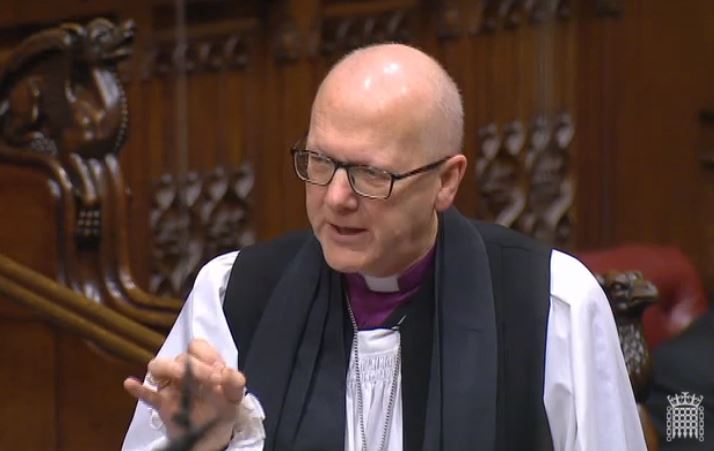
The Lord Bishop of St Alban: To ask Her Majesty’s Government what steps they are taking to address youth violence.
Baroness Barran (Con): My Lords, with the leave of the House, before I respond to the right reverend Prelate I am sure that the Chamber will join me in feeling profound regret at the recent tragic events and note that our thoughts are with the families of those who have been affected on our streets. The Government are taking steps to address all aspects of youth violence, from prevention to enforcement. Diverting young people away from crime is at the heart of our approach, which is why we are investing more than £220 million in early intervention schemes to steer children and young people away from serious violence.
The Lord Bishop of St Albans: My Lords, last weekend at least four people were killed through serious violence on the streets of the capital, and on Tuesday a young person in Luton, in my own diocese, was stabbed more than 20 times. Among all those who are trying to work on this problem, the churches have been involved, and indeed one church has produced a public statue of a phoenix made from 500 knives that had been reclaimed through a knife amnesty—a question of turning swords into ploughshares. Can the Minister tell us whether Her Majesty’s Government have made an assessment of the effectiveness of weapons amnesties in reducing the number of weapons on the streets, and whether more such initiatives are being planned?
Continue reading “Bishop of St Albans asks Government about serious youth violence”
 On 11th June 2019 the Earl of Glasgow led a short debate on the question to Government, “what assessment they have made of the operation of the theatre market in (1) London, and (2) elsewhere in the United Kingdom; and what steps they are taking to ensure that theatre is accessible to as wide an audience as possible.” The Bishop of Coventry, Rt Revd Dr Christopher John Cocksworth, asked a follow-up question: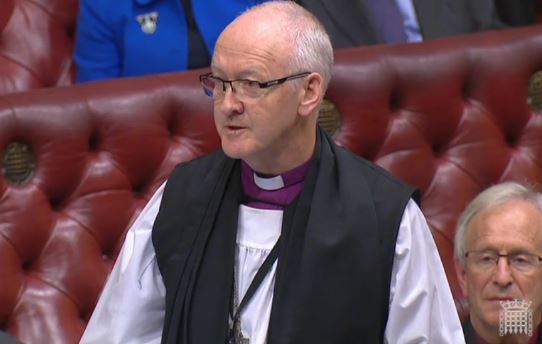
 The Lord Bishop of St Albans: (
 The Lord Bishop of St Albans: To ask Her Majesty’s Government what assessment they have made of the report State of Rural Services 2018, published by Rural England in February, and in particular of the impact of the closure of youth centres on young people; and what impact access to services has on young people’s engagement in risky behaviour compared to those living in urban areas.
  The Lord Bishop of Chester: My Lords, it is a privilege and a challenge to follow such a brilliant speech from someone who knows his way around the subject. If you want to find good things to tax, I always say that you should start with sin: find a new sin and tax it. I rather agree that HS2 is a sin, not for adding capacity, which I am all in favour of, but in doing so in such an unnecessarily expensive way. For me, trains go quite fast enough already and it could have been done far more cheaply without factoring in the speeds in a small country. As I follow the noble Lord’s speech, I think of St Paul, who once began by saying, “I speak as a fool”. I do so too, a little, after that wonderful description of the financial landscape.
 The Lord Bishop of St Albans:
 The Lord Bishop of Gloucester: My Lords, we know that websites and apps have brought many benefits, but at a cost. From my own visits to schools, I am particularly concerned about the hate speech that young people are exposed to online, including through anonymous apps like Sarahah. What are the Government doing to ensure that the age verification checks on apps are effective? How are the Government working with smaller developers to ensure that their platforms are not used to propagate threats and hate speech?

 The Church of England in Parliament
You must be logged in to post a comment.