
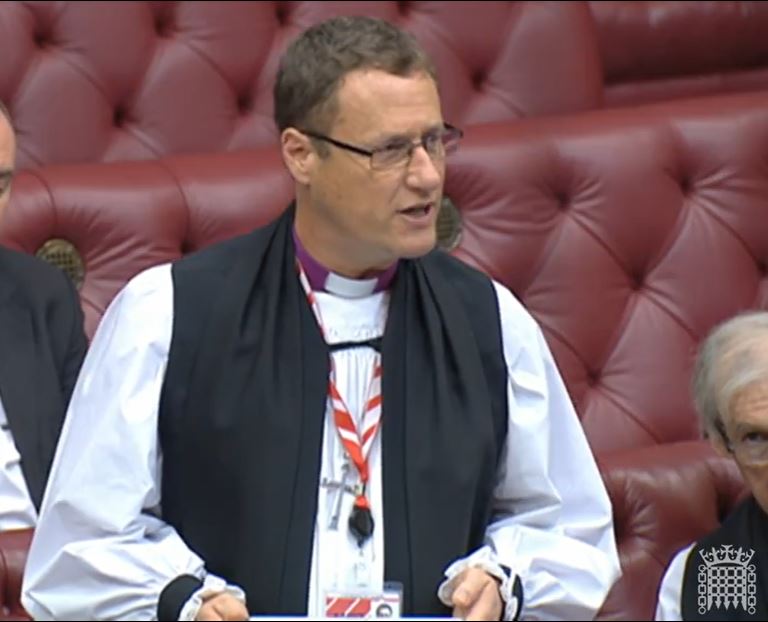
The Bishop of Leicester spoke in a debate on the Places of Worship Renewal Fund on 25th June 2026, highlighting several shortcomings in the new fund and urging the government to look at long term planning for support of this kind of funding:
The Lord Bishop of Leicester: My Lords, I am extremely grateful to the noble and learned Baroness, Lady Prentis, for securing this debate and, indeed, for her wider service to the Church. I congratulate her daughter and son-in-law as well. I thank the many thousands of people across our country who play a part in caring for our wonderful churches and churchyards.
My fellow Lords spiritual regret that they are not able to join this debate; many are with their candidates for ordination services taking place this weekend. I know, however, that they share my support for the places of worship renewal fund and the recognition from the Secretary of State for Culture, Media and Sport that places of worship are
“part of who we are as a nation”.
As the Second Church Estates Commissioner put it when this scheme was raised in Questions in the other place, churches are cornerstones of our communities. It is hard to overstate the significance they hold to people up and down the country, irrespective of faith. They are not only places of worship but vital community assets contributing to heritage, to social cohesion and to local economies. I am pleased, therefore, that the Government recognise this through the fund.
I am also aware that there have been collaborative campaigns for long-term sustainable support for the fabric of church buildings. The places of worship renewal fund will help unlock other funding for capital works which would have been unavailable under the previous scheme. In my diocese, for example, there are a number of major parish churches in areas of high deprivation which simply could not have raised the necessary funds needed for repairs, even with the VAT rebate.
There are, however, shortcomings to this new fund; some have already been mentioned by noble Lords, but I think it is important that I state them for the record. First, far fewer churches overall will be supported through this new fund than they were by the Listed Places of Worship Grant Scheme. The latter provided around £40 million a year and supported around 5,000 listed places of worship per year. By contrast, the places of worship renewal fund works out at £23 million annually for four years and is expected to benefit around 100 to 150 listed places of worship each year.
Secondly, this fund applies only to England. Church buildings play as important a part in the heritage and community infrastructure of the devolved nations. I ask the Minister to explain how the Government plan to support churches in Northern Ireland, Scotland and Wales.
Thirdly, although I appreciate the focus on areas of high deprivation, where churches can struggle to raise funds, the index of multiple deprivation does not reliably capture the challenges that more rural areas face in this respect and, indeed, more broadly. Very rural areas have smaller communities to draw on for fundraising, yet churches there can play an even more important role in bringing people together, often as the only public building for miles. Again, I ask the Minister whether any support will be extended to these more rural churches in future years of the fund.
The financial challenges facing cathedrals and church buildings, and those who care for them, are growing. Recent funding pressures highlight a widening gap between the cost of maintaining historic places of worship and the resources available to support them. Many congregations are now small and the burden of upkeep increasingly falls on communities with limited resources. A strategic long-term funding approach is needed—one which recognises that greater stability enables greater planning, better outcomes and, ultimately, better value for money. Can the Minister indicate whether that is the Government’s long-term ambition?


You must be logged in to post a comment.