On 16th November 2020 Baroness Massey of Darwen asked the Government ” what plans they have to incorporate the United Nations Convention on the Rights of the Child into legislation.” The Bishop of Durham asked a follow up question:
On 16th November the Bishop of St Albans received a written answer in response to a question on house prices, sales and diversification:
The Lord Bishop of St Albans: To ask Her Majesty’s Government, further to the Written Answers by Lord Greenhalgh on 1 October (HL8296), 6 October (HL8828), and 28 October (HL9442), what assessment they have made of the impact of (1) fears of negative equity on existing house purchases, and (2) house prices rising faster than wage increases, on the effectiveness of diversification. [HL9871] Continue reading “Bishop of St Albans asks about housing market”
On 16th November 2020 the Bishop of St Albans received a written answer to a question on gigabit-capable rural broadband:
The Lord Bishop of St Albans: To ask Her Majesty’s Government, further to the Written Answer by Lord Agnew of Oulton on 3 November (HL9493), whether the commitment to provide gigabit-capable broadband nationwide will be rolled out equitably between rural and urban communities. [HL10103] Continue reading “Bishop of St Albans asks about rural broadband rollout”
Parliament met in Westminster and online this week. The Bishop of Durham was on duty in the House of Lords and read prayers at the start of each sitting day.
On 12th November 2020 a Government statement on supporting disadvantaged families, including measures to address school holiday hunger, was given in the House of Lords. The Bishop of Durham asked a question in response:
The Lord Bishop of Durham [V]: I warmly welcome so much in the Statement and in the decisions made; I also associate myself with those who ask why it did not all happen a bit more quickly. None the less, this has exposed the underlying fundamental structural issues which mean that we are not tackling child poverty in the round and as a whole. What consideration have Her Majesty’s Government given to creating really long-term solutions by forming a child poverty commission, as proposed by faith leaders in their recent letter to the Prime Minister? Continue reading “Bishop of Durham calls for a child poverty commission”
On 12th November 2020 the House of Lords asked questions of Government on the Covid-19 lockdown and its impact on homelessness and rough sleepers. The Bishop of Durham asked a question:
The Lord Bishop of Durham [V]: The Salvation Army has an innovative project for short-term housing solutions by using “meanwhile use” land to provide high-quality modular homes rooted in church communities and supported by wider community groups. This gives the residents the provision of a flat and the relational support of the community. What consideration have Her Majesty’s Government given to the Salvation Army’s innovative approach to homelessness and similar projects? Continue reading “Bishop of Durham asks about innovative solutions to homelessness”
On 12th November Baroness Northover asked the Government “what assessment they have made of reports that four pro-democracy legislators have been dismissed from the Hong Kong Legislative Council with immediate effect.” The Bishop of St Albans asked a further question:
On 12th November 2020 Lord Woolley of Woodford asked the Government “what plans they have to maintain the £20 a week increase in Universal Credit (1) for the duration of, and (2) after, the COVID-19 pandemic.” The Bishop of Durham asked a further question:
The Lord Bishop of Durham [V]: Families in receipt of legacy benefits, such as employment and support allowance, did not benefit from the very welcome £20 a week uplift in benefits. These people are just as likely to be affected by the financial impact of the Covid-19 pandemic and include many disabled people. Will the Government extend the increase in benefits to include those in receipt of legacy benefits, as recommended by the Joseph Rowntree Foundation’s Keep the Lifeline campaign? Continue reading “Bishop of Durham asks about benefit increases to match coronavirus uplift in universal credit payments”
On 12th November 2020 the Bishop of St Albans received a written answer to a question on rural infrastructure investment:
The Lord Bishop of St Albans: To ask Her Majesty’s Government, further to their decision to launch a one-year Spending Review, whether their multi-year capital allocation for priority infrastructure projects includes projects in rural areas, in particular (1) the Community Housing Fund, especially for rural affordable housing schemes, and (2) the Village Hall Improvement Grant Fund. [HL9791] Continue reading “Bishop of St Albans asks about rural infrastructure investment”
On 11th November the House of Lords debated the Government’s Covert Human Intelligence Sources (Criminal Conduct) Bill at its Second Reading. The Bishop of Durham spoke in the debate, raising concerns about the risks to the safety of children:
The Lord Bishop of Durham [V]: My Lords, I too would like to welcome the noble and learned Minister to the House and to his new role. Not many find their maiden speech to be that of introducing a Bill to the House, and I congratulate him on the necessarily blended speech.
I welcome the Government’s move to provide a statutory basis for covert human intelligence sources to participate in criminal conduct, where it is necessary and proportionate to do so for a limited set of specified purposes. We recognise the heavy duty placed on government to protect its citizens, and this Bill is a necessary step so that those undertaking these activities with a view to protecting the public can be clear in their status and duties.

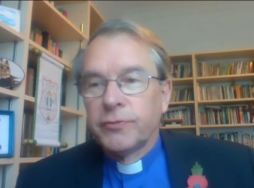 The Lord Bishop of Durham [V]: Regarding the voice of children and young people, if Article 12 had been in law, what might their input have been on their own situation in schools, universities and the like through the pandemic? Continue reading “Bishop of Durham asks about children’s views of education during the pandemic”
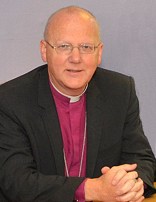 The Lord Bishop of St Albans: To ask Her Majesty’s Government, further to the Written Answers by Lord Greenhalgh on 1 October (
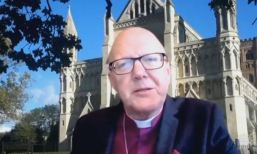 The Lord Bishop of St Albans: To ask Her Majesty’s Government, further to the Written Answer by Lord Agnew of Oulton on 3 November (
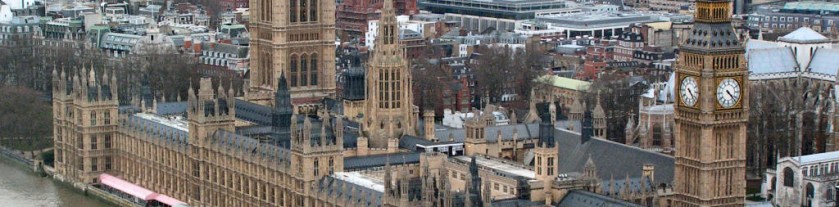 Parliament met in Westminster and online this week. The Bishop of Durham was on duty in the House of Lords and read prayers at the start of each sitting day.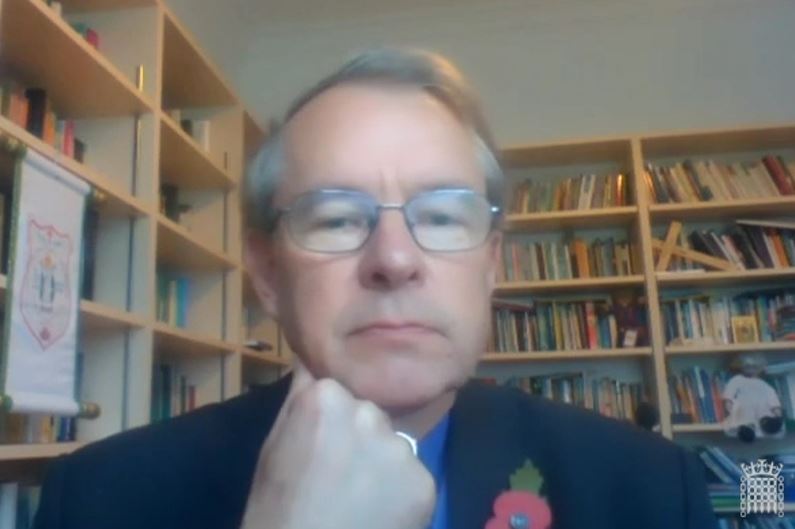
 The Lord Bishop of Durham [V]: I warmly welcome so much in the Statement and in the decisions made; I also associate myself with those who ask why it did not all happen a bit more quickly. None the less, this has exposed the underlying fundamental structural issues which mean that we are not tackling child poverty in the round and as a whole. What consideration have Her Majesty’s Government given to creating really long-term solutions by forming a child poverty commission, as proposed by faith leaders in their recent letter to the Prime Minister?
  The Lord Bishop of Durham [V]: The Salvation Army has an innovative project for short-term housing solutions by using “meanwhile use” land to provide high-quality modular homes rooted in church communities and supported by wider community groups. This gives the residents the provision of a flat and the relational support of the community. What consideration have Her Majesty’s Government given to the Salvation Army’s innovative approach to homelessness and similar projects?
  The Lord Bishop of St Albans [V]: My Lords, the Government have provided a way for citizens holding a BNO passport to take steps to come here. A high proportion of people will miss out on this scheme, particularly those born after 1997. What other immigration measures have the Government considered in the interests of safety for the people of Hong Kong?
 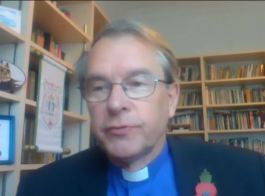 The Lord Bishop of Durham [V]: Families in receipt of legacy benefits, such as employment and support allowance, did not benefit from the very welcome £20 a week uplift in benefits. These people are just as likely to be affected by the financial impact of the Covid-19 pandemic and include many disabled people. Will the Government extend the increase in benefits to include those in receipt of legacy benefits, as recommended by the Joseph Rowntree Foundation’s Keep the Lifeline campaign?
 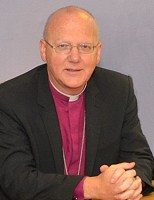 The Lord Bishop of St Albans: To ask Her Majesty’s Government, further to their decision to launch a one-year Spending Review, whether their multi-year capital allocation for priority infrastructure projects includes projects in rural areas, in particular (1) the Community Housing Fund, especially for rural affordable housing schemes, and (2) the Village Hall Improvement Grant Fund. [HL9791]

You must be logged in to post a comment.