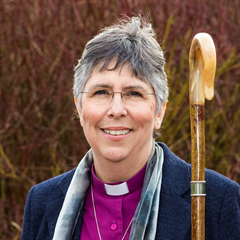
Terminally Ill Adults (End of Life) Bill: Bishop of Newcastle points out lack of safeguards in online processes

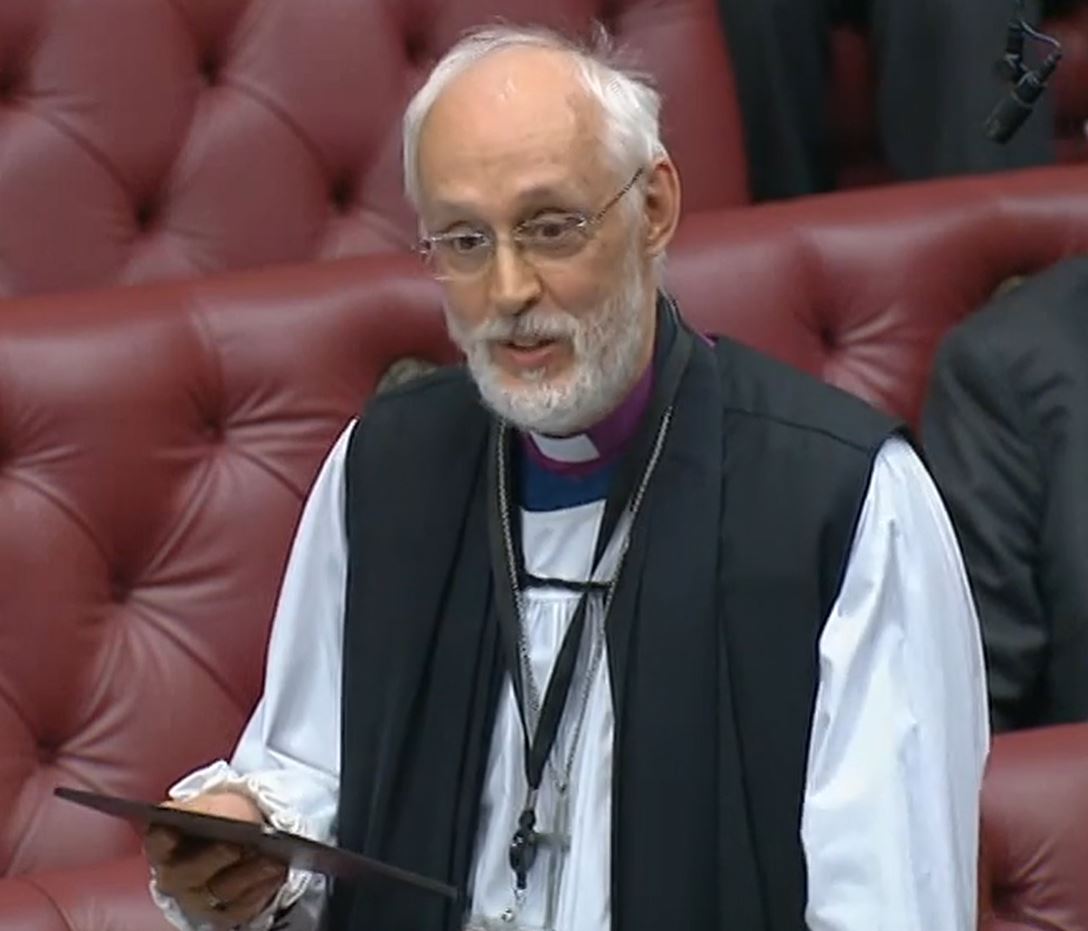
The Bishop of Newcastle spoke during the committee debate on the Terminally Ill Adults (End of Life) Bill on 30th January 2026, highlighting the lack of adequate safeguards in any online-only process for facilitating assisted dying:

The Lord Bishop of Newcastle: My Lords, taken together, the amendments in this group highlight the importance of contact with people at the hardest time in their lives—a time when we must be most vulnerable, clinically and personally. This must not be a process in which anyone is made to feel rushed or that can be completed entirely online.

Continue reading “Terminally Ill Adults (End of Life) Bill: Bishop of Newcastle points out lack of safeguards in online processes”

Terminally Ill Adults (End of Life) Bill: Bishop of Southwark calls for royal commission on dying well

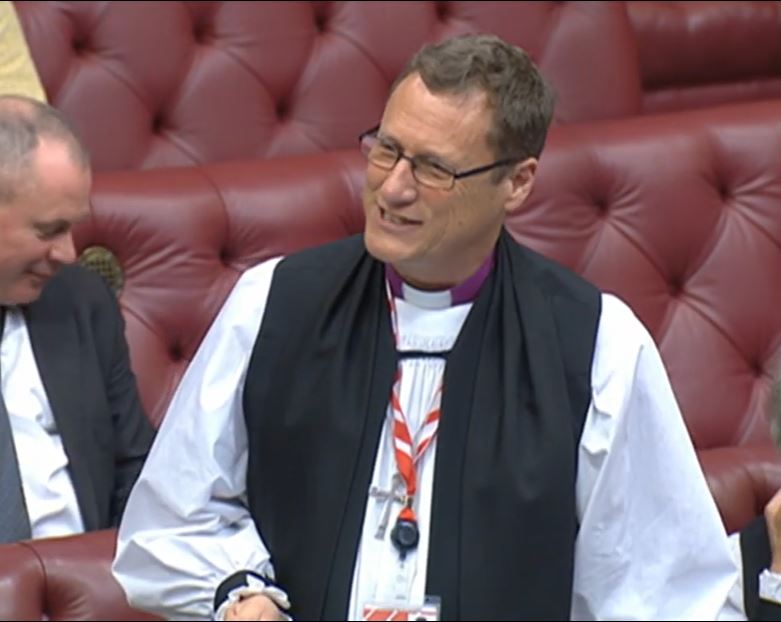
The Bishop of Southwark spoke following a government statement preceding the committee debate on the bill, asking that, should the bill fall, a royal commission on dying well be considered:

The Lord Bishop of Southwark: My Lords, I too wish to speak in good faith. That is what all our Committee consideration has been about, in almost every speech I have heard and listened to—and I have made an effort to attend a good number of sittings. I am very grateful to the Government Chief Whip for what he has said. I am also very grateful to the noble and learned Lord, Lord Falconer, for saying on the “Today” programme that he now anticipates that the Bill will fall. So my question is: if and when it does, please will the need for a royal commission on dying well be factored into consideration?

Hansard

Bishop of Leicester asks about welfare payments

The Bishop of Leicester received the following written answer on 30th January 2026:

The Lord Bishop of Leicester asked His Majesty’s Government what plans they have to ensure that cash payments received through the Crisis and Resilience Fund do not lead to a deduction in a person’s Universal Credit payment.

Continue reading “Bishop of Leicester asks about welfare payments”

Bishop of Hereford speaks in debate on establishing moratorium on super-intelligent AI

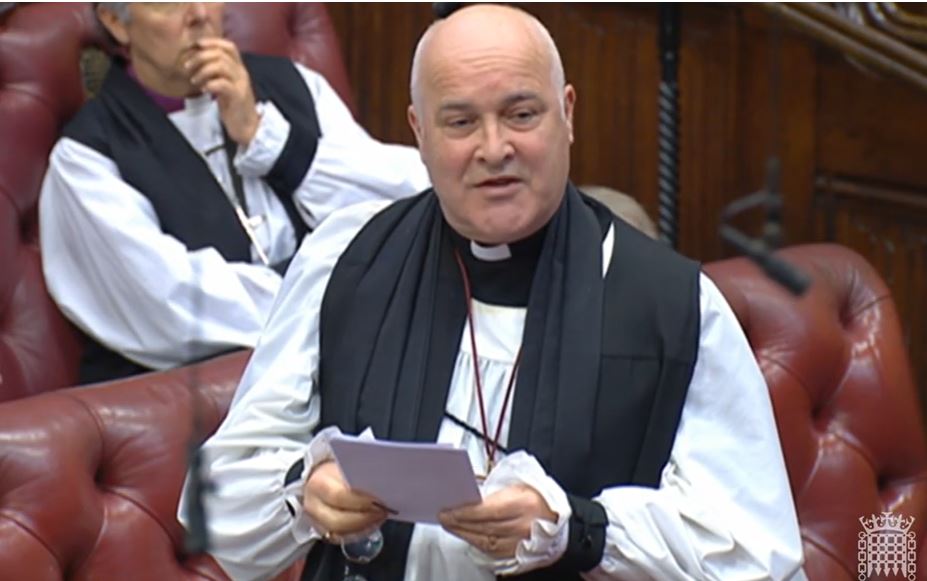
The Bishop of Hereford spoke in a debate on proposals for an international moratorium on the development of superintelligent AI on 29th January 2026, highlighting the importance of tempering “intelligence” with love and human collaboration, and urging the government to support a moratorium:

The Lord Bishop of Hereford: My Lords, it is appropriate that this debate happens the day after the Church celebrated the life and work of the great divine Thomas Aquinas, one of the founding intellectual fathers of western thought, because this debate cuts to the very heart of how we understand ourselves.

Our debate is about the regulation of superintelligence. We know that intelligence is simply

“the ability to learn, understand and think in a logical way about things; the ability to do this well”.

Continue reading “Bishop of Hereford speaks in debate on establishing moratorium on super-intelligent AI”

Bishop of Sheffield asks about higher education and asylum

The Bishop of Sheffield asked a question on investment in higher education for asylum seekers and refugees in the UK on 29th January 2026, during a discussion on extending the scope of eligibility for the Erasmus+ scheme:

The Lord Bishop of Sheffield: My Lords, I am proud that both the University of Sheffield and Sheffield Hallam University offer sanctuary scholarships to support talented students who have sought asylum in the UK. Noble Lords will know that many asylum seekers and refugees arrive in the UK already equipped with language skills, vocational training and, indeed, advanced degrees. Given the Government’s intention to introduce an international student levy on English higher education providers, will any of the revenue raised be reinvested in asylum seekers and refugees pursuing higher education or further education in this country?

Continue reading “Bishop of Sheffield asks about higher education and asylum”

Children’s Wellbeing and Schools Bill: Bishop of Portsmouth speaks to amendments on schools with a religious character

The Bishop of Portsmouth spoke to amendments to the Children’s Wellbeing and Schools Bill regarding impacts on schools with religious designations on 28th January 2026, particularly in the case of multi-academy trusts and lines of communication between religious bodies and their schools:

The Lord Bishop of Portsmouth: My Lords, I will speak to Amendments 193A, 193B and 193C and declare my interest as chair of the National Society for Education. I thank the noble Baroness, Lady Ritchie, for her support of Amendments 193A and 193B. I will address these two first and together.

These two amendments are about good communication. They would require the chief inspector to include the relevant religious body along with the academy proprietor and the Secretary of State when a report is circulated at the conclusion of an inspection of a multi-academy trust that contains a school with a religious foundation. For example, in the case of the Church of England, the relevant body would be the Diocesan Board of Education.

Continue reading “Children’s Wellbeing and Schools Bill: Bishop of Portsmouth speaks to amendments on schools with a religious character”

Votes: Children’s Wellbeing and Schools Bill

On 28th January 2026, the House of Lords debated the Children’s Wellbeing and Schools Bill. Votes were held on amendments to the bill, in which Bishops took part:

Continue reading “Votes: Children’s Wellbeing and Schools Bill”

Bishop of Sheffield asks about combatting flooding and droughts in Yorkshire

The Bishop of Sheffield tabled a question on sustainable water management solutions to address flooding events and protracted droughts in Yorkshire on 28th January 2026:

The Lord Bishop of Sheffield: To ask His Majesty’s Government what evaluation they have made of sustainable water management solutions to address flooding events and protracted droughts in Yorkshire.

Continue reading “Bishop of Sheffield asks about combatting flooding and droughts in Yorkshire”

Bishop of Manchester asks about funding for music and drama education

The Bishop of Manchester asked a question on support for music and drama heritage in the UK on 28th January 2026, during a discussion on funding of the Music and Dance Scheme for schools to support children from families with lower incomes:

The Lord Bishop of Manchester: My Lords, I declare my interest: I might myself have the voice of a frog but I have Chetham’s School of Music, which provides wonderful choristers for my cathedral. Does the Minister agree with me that there seems to be an anomaly? Last week the Government were able to announce significant money over four or five years for the built heritage of this country. However, when it comes to an equally important part of our heritage, our music and drama heritage, we are told that the most we can expect is another year and then, perhaps, later on, something longer. Why can we not have a similar length of settlement for the music and dance schools now as we had for the built heritage last week?

Continue reading “Bishop of Manchester asks about funding for music and drama education”

Children’s Wellbeing and Schools Bill: Bishop of Manchester moves amendment on religious education

On 28th January 2026, the Bishop of Manchester spoke in a debate on the Children’s Wellbeing and Schools Bill regarding regulation of home education, and moved his own amendment on mitigation “of adverse impact on institutions providing religious instruction, but not wider or general education, as identified in the Equality Impact Statement.”

The Lord Bishop of Manchester: My Lords, I will be very brief. It is an old, apparently African, adage that it takes a village to raise a child, but it is no less true for that. What that captures in a few words is that raising a child is a balance: a partnership between the parents on the one hand and the wider community on the other. I think that is what we are trying to get at in this group of amendments: what are the appropriate powers for the state to have and what should be simply left to parents?

Continue reading “Children’s Wellbeing and Schools Bill: Bishop of Manchester moves amendment on religious education”