
On 13th June 2019 Baroness Brinton asked the Government “what steps they are taking to ensure that unpaid carers receive the support to which they are entitled.” The Bishop of St Albans, Rt Revd Alan Smith, asked a follow-up question:
 The Lord Bishop of St Albans: My Lords, I am sure that we all want to encourage stronger family and community life, which is the very bedrock of healthy societies, but there is one group in particular that needs help and that is the 166,000 underage carers in England. Research by the Children’s Society suggests that that is just the tip of the iceberg—indeed, a huge underestimate. Many of these young people do not realise that they classify as carers: it is just what they have had to deal with. In many cases it is affecting their schooling and mental health. What are Her Majesty’s Government able to do to help and support underage carers in particular?
 On 13th June 2019 the Second Church Estates Commissioner, Rt Hon Dame Caroline Spelman MP, answered a written question from Frank Field MP on affordable housing:
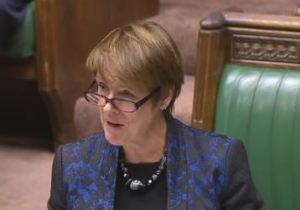 On 13th June 2019 the Second Church Estates Commissioner, Rt Hon Dame Caroline Spelman MP, answered a written question from Fiona Bruce MP on grants to the Archbishops’ Council:
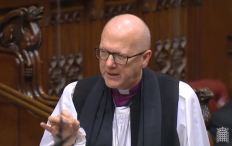 On the 13th June 2019 the bishop of St Albans the Rt Revd Alan Smith received a written answer from the government about 5G spectrum sharing.
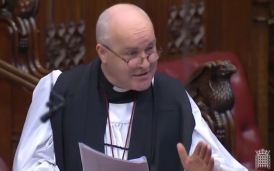 On 12th June 2019 the House of Lords debated a report from the Communications Committee, “That this House takes note of the Report from the Communications Committee Regulating in a digital world (2nd Report, HL Paper 299).” The Bishop of Chelmsford, Rt Revd Stephen Cottrell, who served on the Committee, spoke in the debate.
 On 12th June 2019 Lord Alton asked the Government “what assessment they have made of the impact of the government of Hong Kong’s proposed new extradition law on (1) the autonomy of Hong Kong, and (2) its Basic Law guaranteeing the rights and freedoms of its citizens.” The Bishop of Coventry, Rt Revd Christopher Cocksworth, asked a follow up question on rights and protections for religious minorities.
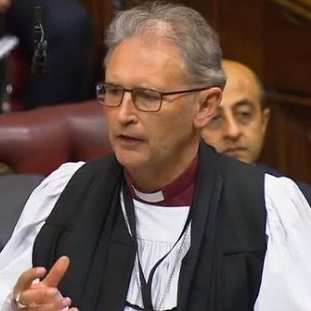 On 11th June 2019 the Earl of Glasgow led a short debate on the question to Government, “what assessment they have made of the operation of the theatre market in (1) London, and (2) elsewhere in the United Kingdom; and what steps they are taking to ensure that theatre is accessible to as wide an audience as possible.” The Bishop of Coventry, Rt Revd Dr Christopher John Cocksworth, asked a follow-up question:
 The Lord Bishop of Coventry: My Lords, I am sure that Members of your Lordships’ House would expect these Benches to join in the outrage at these attacks. We do so fully, condemning them on behalf of the Church of England and of other churches and faith communities.

You must be logged in to post a comment.