
On 2nd May 2019 the House of Lords debated a motion from Lord Rooker, that “this House takes note of Her Majesty’s Government’s legal responsibility to reduce greenhouse gas emissions as detailed in the Climate Change Act 2008 and the implications of continuing climatic changes for global security and stability and for the world economy.” The Bishop of Salisbury, Rt Revd Nicholas Holtam, spoke in the debate:
 The Lord Bishop of Salisbury: My Lords, the context of this debate has changed radically over the past few months. Whatever you think of the tactics of Extinction Rebellion, what has been created by its disruption has put the environment on the agenda in a new way and with greater urgency. The debate in the other place yesterday on a climate emergency was Parliament catching up with more than 40 councils in the UK that have decided to act in response to this climate emergency, including Wiltshire declaring that it will be carbon neutral by 2030. Two-thirds of Britons are now said to agree that the planet is in a climate emergency.
 Question
 The Archbishop of York: My Lords, I want to support the main thrust of the speech from the noble Lord, Lord Stevenson, about debt. Julia Unwin, who was chief executive of the Joseph Rowntree Foundation, did a big research project on why people were going to Wonga. They went to Wonga because it asked no questions; people knew they could get their payday loan. Other lenders asked more questions and were far more intrusive and credit was not readily available. Noble Lords know that my archiepiscopal colleague, the most reverend Primate the Archbishop of Canterbury, said that he intended not only to reform Wonga but to do away with it, and we know what has happened to Wonga.
 The Lord Bishop of St Albans:
 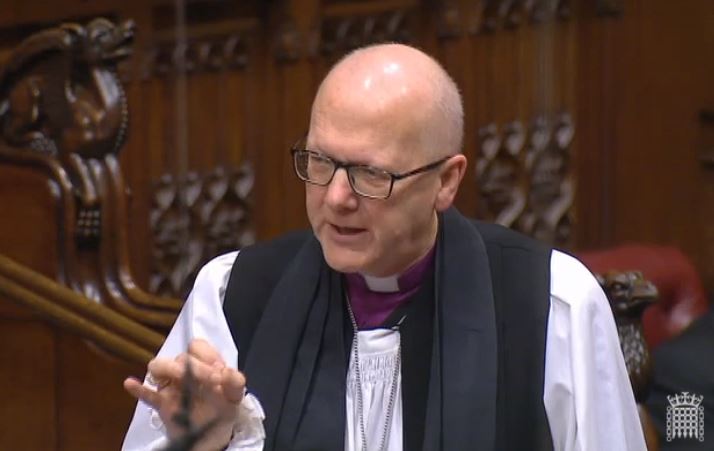 The Lord Bishop of St Albans: My Lords, this is a vast subject, and I will limit my comments to just a few areas.
 The Lord Bishop of St Albans: My Lords, the UNCRC states that the best interests of the child must be paramount in all decision making and yet evidence that our Benches are collecting shows that the two-child limit policy is having a substantially negative impact on those families affected by it. In the light of the Government’s obligations under UNCRC, will the Minister undertake to commission independent research into the impact of the two-child limit policy on those families which are affected by it?
 This week in the House of Lords bishops spoke about new Relationships and Sex Education regulations, and the impact of digital advertising on children. They asked questions about the impact of the two-child limit for certain benefit payments, the attacks against Christians in Sri Lanka, community sponsorship of refugees, and the UK’s future relationship with the EU. In the House of Commons the Second Church Estates Commissioner answered a question on community use of church buildings.
 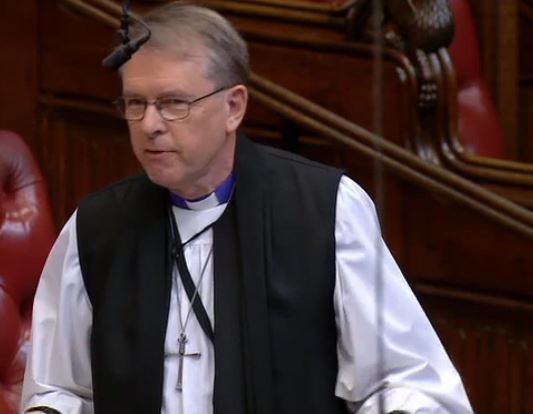 The Lord Bishop of Durham: My Lords, I also thank the noble Lord, Lord Gilbert of Panteg, and the committee for the report, which made for fascinating reading. My friend the right reverend Prelate the Bishop of Chelmsford sends his apologies for not being in his place today; he is elsewhere in the world with the most reverend Primate the Archbishop of Canterbury, and so asked me to address one or two matters. I take complete responsibility for what I say, although he said that I must talk about self-regulation.
 The Lord Bishop of Durham: My Lords, I declare an interest as a trustee of
  The Lord Bishop of Durham: My Lords, it is my pleasure to follow the noble Baroness, Lady Tyler, and I fully endorse everything she said about the context of relationships being at the heart of all this. I welcome the discussion and the framework. The Church of England, as the biggest single education provider in the country, has been among the parties engaged in the consultation, for which we are deeply grateful.

You must be logged in to post a comment.