
Counter-Terrorism and Border Security Bill – Bishop of Newcastle raises freedom of religion and expression

On Tuesday 9th October 2018 the House of Lords debated the Government’s Counter-Terrorism and Border Security Bill. The Bishop of Newcastle, Rt Revd Christine Hardman, spoke in the debate to seek assurances on freedom of thought and expression: 

The Lord Bishop of Newcastle: My Lords, first I too want to say how much I am looking forward to the maiden speeches of the noble and learned Lord, Lord Garnier, and the noble Lord, Lord Tyrie. The noble ​Lord, Lord Tyrie, will be well acquainted with these Benches, having worked closely with my most reverend brother the Archbishop of Canterbury on the Parliamentary Commission on Banking Standards, which the noble Lord so ably chaired.

In opening this debate, the Minister spoke powerfully and movingly about the terrible consequences of terror, the effect on people’s lives, the suffering that is lifelong for people. It is in this context that I broadly welcome the Bill. I certainly recognise the difficulty of drafting and steering this kind of legislation. It is to walk something of a tightrope, as described by the noble Lord, Lord Marks. The current national security situation is complex, as is seen so sharply in our news headlines this morning. At Second Reading, I would like us to stay alert to that tightrope we walk, to proportionality and, perhaps especially, to the danger of unintended consequences. Continue reading “Counter-Terrorism and Border Security Bill – Bishop of Newcastle raises freedom of religion and expression”
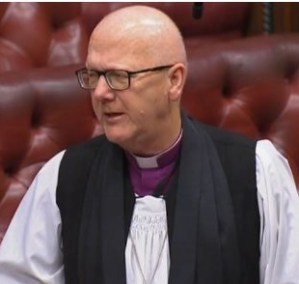
Bishop of St Albans asks Government how often it has sought death penalty assurances for British nationals

On 9th October 2018 the Bishop of St Albans, Rt Revd Alan Smith, received a written answer to a question on death penalty assurances for British or former British citizens:

The Lord Bishop of St Albans: To ask Her Majesty’s Government, further to the statement by Baroness Williams of Trafford on 24 July, how many times in the last 20 years they have decided not to seek death penalty assurances for British or former British citizens; and what were the details of any such cases. Continue reading “Bishop of St Albans asks Government how often it has sought death penalty assurances for British nationals”
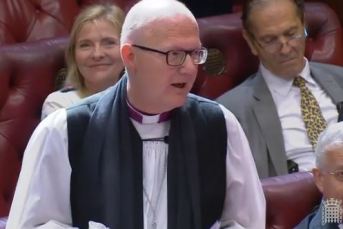
Bishop of St Albans asks about visas for seasonal agricultural workers to meet harvest need

StAlbansRoMB3On 24th September 2018 the Bishop of St Albans, the Rt Revd Alan Smith, received a written answer from the Government to a question on seasonal agricultural workers:
The Bishop of St Albans: To ask Her Majesty’s Government what steps they are taking to provide visas for seasonal agricultural workers and to ensure that there will be a sufficient number of such workers to meet harvest need. Continue reading “Bishop of St Albans asks about visas for seasonal agricultural workers to meet harvest need”

Bishop of St Albans asks Government about counter-extremism policy

On 17th & 20th September 2018 the Bishop of St Albans, Rt Revd Alan Smith, received written answers from Government to three questions on countering extremism policy:

The Lord Bishop of St Albans:

(i) To ask Her Majesty’s Government what assessment they have made of the joint statement published by Prevent Watch on 27 July about the Commission for Countering Extremism’s “evidence drive”; and how they intend to respond to the concerns raised in the statement.

(ii) To ask Her Majesty’s Government what weight will be given to academic evidence reviewed as part of the Commission for Countering Extremism’s evidence drive compared to evidence from other sources.

(iii) To ask Her Majesty’s Government whether they will conduct an independent review of how the Prevent programme is currently operating before placing any additional responsibilities on local authorities as recommended by the Joint Committee on Human Rights in its report, Counter-Extremism, published on 20 July 2016 (HL Paper 39), and since; and if not, why not.

Continue reading “Bishop of St Albans asks Government about counter-extremism policy”

Bishop of St Albans asks Government about fly-tipping prosecutions

On 19th September 2018 the Bishop of St Albans, Rt Revd Alan Smith, received a written answer to a question on fly-tipping:

The Lord Bishop of St Albans: To ask Her Majesty’s Government what assessment they have made of statistics for prosecutions for fly-tipping in England; and, in the light of those, whether local authorities have sufficient powers in relation to fly-tipping. Continue reading “Bishop of St Albans asks Government about fly-tipping prosecutions”

Bishop of St Albans asks about food security and farm payments after Brexit

On 18th September 2018 the Bishop of St Albans, Rt Revd Alan Smith, received a written answer to a question on food security and farm payments after Brexit.

The Lord Bishop of St Albans: To ask Her Majesty’s Government, what steps they are taking to ensure sufficient levels of food security following any change in payments to UK farmers after Brexit. Continue reading “Bishop of St Albans asks about food security and farm payments after Brexit”

Week in Westminster, 10th-14th September 2018

This week in the House of Lords bishops led a debate on women’s centres, and spoke in debates on antisemitism, problem gambling, and the Government’s Victims Strategy. They asked questions about gambling advertising, countering extremism, and the anniversaries of D-day and the Battle of Arnhem. Continue reading “Week in Westminster, 10th-14th September 2018”
Bishop of Birmingham affirms commitment of bishops to oppose antisemitism, adopt IHRA definition and its examples

On 13th September 2018 the House of Lords debated a motion from Lord Popat, “To ask Her Majesty’s Government what actions they are taking to reassure the Jewish community over the impact of anti-Semitism in the United Kingdom.” The Bishop of Birmingham, Rt Revd David Urquhart, spoke:

The Lord Bishop of Birmingham: My Lords, as we have heard, there is a need for constant vigilance to ensure that antisemitism plays no part in the life of our country. To continue its determination in this aim, the College of Bishops of the Church of England, building on 75 years of friendship marked by the founding of the Council of Christians and Jews, has adopted and adhered to the International Holocaust Remembrance Alliance’s working definition of antisemitism, including all examples without qualification or exception. This is in the context of our conviction, which I trust will be affirmed today by Her Majesty’s Government, that anyone involved in political, spiritual or national life should reject all language and activity that leads to prejudice, stigma or hatred towards people on the grounds of their religion, culture, origins, identity or beliefs. This includes issues related to those we are discussing today, such as Islamophobia. Continue reading “Bishop of Birmingham affirms commitment of bishops to oppose antisemitism, adopt IHRA definition and its examples”

Bishop of St Albans asks Government about plans for Commission for Countering-Extremism

On 13th September 2018 the Bishop of St Albans, Rt Revd Alan Smith, received a written answer to a question on the Commission for Countering-Extremism.

The Lord Bishop of St Albans:  To ask Her Majesty’s Government when they will publish the (1) work programme, (2) remit, and (3) terms of reference, of any studies by the Commission for Countering-Extremism. Continue reading “Bishop of St Albans asks Government about plans for Commission for Countering-Extremism”

Bishop of St Albans suggests steps to tackle social harm caused by problem gambling

On 12th September 2018 the Bishop of St Albans, Rt Revd Alan Smith, spoke in a House of Lords debate tabled by Lord Broooke of Alverthorpe “To ask Her Majesty’s Government what assessment they have made of the trends in different types of addiction in England and Wales.” He focused his comments on gambling addiction and the steps needed to address the social harm being caused.

The Lord Bishop of St Albans: My Lords, I am grateful to the noble Lord, Lord Brooke, for raising ​this issue and to the noble Lord, Lord Chadlington; I wish to address the same area, but he has done it with eloquence and passion. I will try not to repeat the arguments he made, although there may be a little bit of duplication.

Gambling addiction is now a major public health issue in the UK. We have an estimated 430,000 problem gamblers. As well as the huge financial cost to us as a nation, which falls on the taxpayer, it is affecting other areas of life. Last week, for example, Simon Stevens, the chief executive of NHS England, spoke of the huge additional burden it is putting on the NHS; some estimate that it is costing the NHS £610 million per year at a time when budgets are really stretched. But this is not about the financial costs alone. Gambling addicts have higher rates of separation and divorce than the general population, and higher levels of homelessness. Problem gambling affects all age groups, but particularly large numbers of children are either at risk or designated as problem gamblers. Continue reading “Bishop of St Albans suggests steps to tackle social harm caused by problem gambling”