Bishop of St Albans asks urgent question on crisis facing the Rohingya people in Myanmar

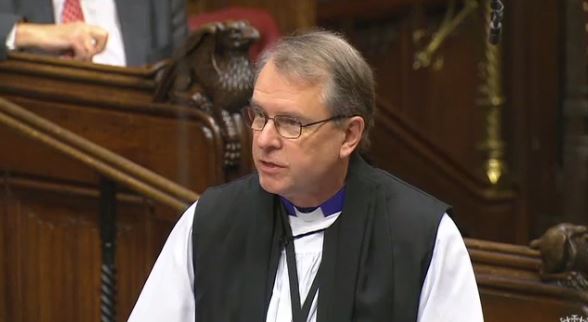
St Albans 2On 5th September 2017,  the Bishop of St Albans, Rt Revd Alan Smith, tabled an urgent question, to ask Her Majesty’s Government “what it is doing to respond to the crisis facing the Rohingya people in Myanmar.” Below is the Minister’s response and a subsequent question asked by the Bishop.

Baroness Goldie (Con): My Lords, Her Majesty’s Government are deeply concerned by the situation in Rakhine and the plight of the Rohingya. We immediately raised the situation in the United Nations Security Council on 30 August, where we urged a restrained security response and that all sides de-escalate tensions. Our priority now is ensuring that urgent food and medical assistance can be provided to displaced civilians. Our heads of mission in Rangoon and Dhaka have ​been discussing the situation in Rakhine with their respective host Governments, including enabling humanitarian aid to reach where the need is greatest.

Continue reading “Bishop of St Albans asks urgent question on crisis facing the Rohingya people in Myanmar”

Bishop of Southwark asks about increasing funding for Children’s Hospices

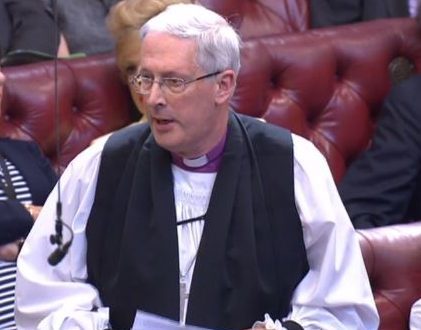
southwark-20feb17On 5th September 2017,  Baroness Walmsley asked the Government “how they intend to implement the NICE guideline End of life care for infants, children and young people with life-limiting conditions: planning and management.” The Bishop of Southwark, Rt Revd Christopher Chessun, asked a follow up question:
The Lord Bishop of Southwark: My Lords, as the Minister has already intimated, the key to delivery of end-of-life care to children and young people is the work of our children’s hospices. Given the 22% figure, will Her Majesty’s Government follow the lead of the Scottish Government and agree to work towards funding 50% of children’s hospices’ charitable costs, to the benefit of the patients concerned, rather than allow the proportion to decrease? Continue reading “Bishop of Southwark asks about increasing funding for Children’s Hospices”

Second Church Estates Commissioner champions Coventry bid to be 2021 City of Culture

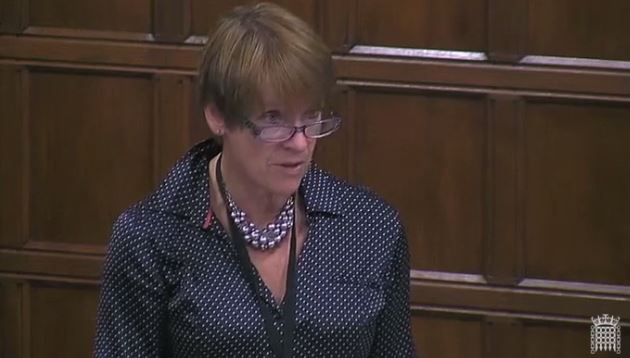
On 5th September 2017, the Second Church Estates Commissioner, Dame Caroline Spelman took part in a Westminster Hall debate on Coventry’s bid to be the 2021 City of Culture, citing the impact of the Cathedral in the life of the city.

Dame Caroline Spelman (Meriden) (Con): I congratulate the hon. Member for Coventry South (Mr Cunningham) on securing this debate. It is exciting for all of us to ​know that Coventry has made the shortlist and is now in a five-way race to win this title. I declare my interest in that part of my constituency is covered by the diocese of Coventry, so I have many reasons to visit the city on a regular basis.

Continue reading “Second Church Estates Commissioner champions Coventry bid to be 2021 City of Culture”

Church Commissioners’ answer: St Wilfrid’s Church, Scrooby

On 5th September 2017, Rt Hon Dame Caroline Spelman MP, the Second Church Estates Commissioner, answered a written question from John Mann MP about the provision of lavatories at St Wilfrid’s Church, Scrooby.

Continue reading “Church Commissioners’ answer: St Wilfrid’s Church, Scrooby”

Archbishop: British society deserves an economy rooted in the common good

On 5th September 2017 the Archbishop of Canterbury, Most Revd Justin Welby, published an article in the Financial Times, about the need to address economic inequality. The Archbishop is a member of the IPPR thinktank’s Commission on Economic Justice, whose interim report can be seen here. The text of the article is below.

Britain stands at a moment of significant economic uncertainty; a watershed moment where we need to make fundamental choices about the sort of economy we need for the way we want to live. Continue reading “Archbishop: British society deserves an economy rooted in the common good”

Artificial Intelligence: A Guide to the Key Issues

The Bishop of Oxford, Rt Revd Steven Croft, is a member of the House of Lords Select Committee on Artificial Intelligence. This blog by Bishop Steven about the key issues involved in AI, was published on the Diocese of Oxford website.

The one on the right is Artie.

Artie is a Robothespian.  We met last week at Oxford Brookes University.  Artie showed me some of his moves.  He plays out scenes from Star Wars and Jaws with a range of voices, movements, gestures and special effects (including shark fins swimming across the screens which form his eyes).

Artie can’t yet hold an intelligent conversation but it won’t be long before his cousins and descendants can.  Artificial Intelligence (AI) is now beginning to affect all of our lives. Continue reading “Artificial Intelligence: A Guide to the Key Issues”

Oaths and Affirmations

Any MP wishing to take their seat in the Commons has by law to either swear an oath or make a solemn affirmation of allegiance to the Crown. After this June’s General Election, 483 of Parliament’s 650 MPs, three quarters of the whole, chose to swear their oath of allegiance on a religious text (Christian or other faith). The option to affirm, for those MPs not wanting to involve God in their declarations of allegiance, was taken up by 160 MPs.

Prime Minister Theresa May swearing the parliamentary oath whilst holding the King James Bible, June 14th 2017

While swearing in habits might give some general insight into trends of religious and cultural affiliation, they don’t help us to pinpoint with exact precision numbers of the faithful on the green benches. Over half of all MPs, 378 in total, chose to swear an oath of allegiance on the King James Bible, but that may say more about tradition and precedent than about personal Christian commitment. Historically the option to affirm instead of swear on a religious text was as much about providing conscientious alternatives for the religious as well as for atheists, and choosing to affirm instead of swear is still practised by a small number of MPs of Christian and other faiths (both Sikh MPs affirmed, whilst one MP affirmed whilst holding the King James Bible). Even with those caveats, it’s possible to notice some broad trends. Continue reading “Oaths and Affirmations”

Bishop of Durham asks about humanitarian and food aid to Burundi

On 27th July 2017 the Bishop of Durham, Rt Revd Paul Butler, received a written answer to a question of Government about humanitarian and food aid to Burundi:

The Lord Bishop of Durham: To ask Her Majesty’s Government, further to the answer by Lord Bates on 19 July (HL Deb, cols 1616–17), whether humanitarian assistance to (1) the 700,000 in need of food aid, and (2) the three million in need of humanitarian aid, in Burundi will continue to be made available through organisations such as Tearfund, Christian Aid and Oxfam. Continue reading “Bishop of Durham asks about humanitarian and food aid to Burundi”

Bishop of Southwark asks Government about protection of Christians in Iraq and Syria

On 25th July 2017 the Bishop of Southwark, Rt Revd Christopher Chessun, received written answers to two questions of Government about protecting Christians in Iraq and Syria. 

The Lord Bishop of Southwark: To ask Her Majesty’s Government what steps they are taking in Iraq and Syria to discharge the responsibility set out by Mark Field MP, Minister of State at the Foreign and Commonwealth Office, on 4 July (HC Deb Col. 21WH) for “protecting and upholding the rights of Christian communities across the globe.” Continue reading “Bishop of Southwark asks Government about protection of Christians in Iraq and Syria”

Week in Westminster, 17th-20th July 2017

Welcome to our weekly round up of activity in Parliament. This week bishops in the House of Lords led a debate on welcoming refugees, supported an amendment to a Government Bill aimed at alleviating problem debt, and also spoke on the electricity market and transport to and from the island of Lindisfarne. Bishops also asked questions about mental health provision in schools, unaccompanied child refugees, Iraq, South Sudan, Nigeria, Indonesia, religious freedom in Russia, Tajikistan and Yemen, the UNHCR, the 2018 Commonwealth Summit, executions in Saudi Arabia, stalking offences and transport in the north-east. The Second Church Estates Commissioner answered questions from MPs in the House of Commons on food banks and rural church growth. Parliament rose on Thursday for its summer recess and will return in September. Continue reading “Week in Westminster, 17th-20th July 2017”