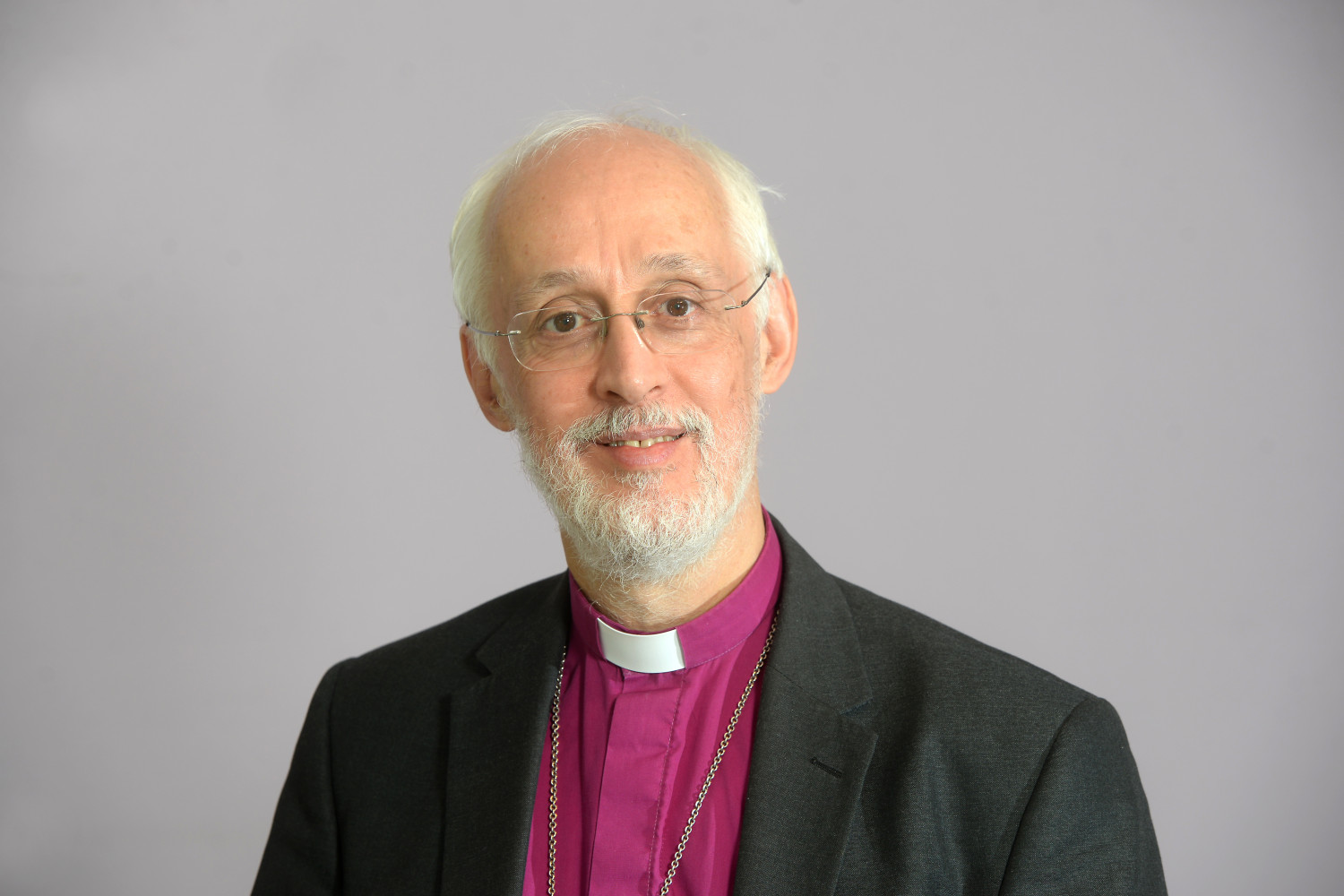
Conversion Therapy Prohibition (Sexual Orientation and Gender Identity) Bill: Bishop of Guildford expresses concerns regarding effects on freedom of religion

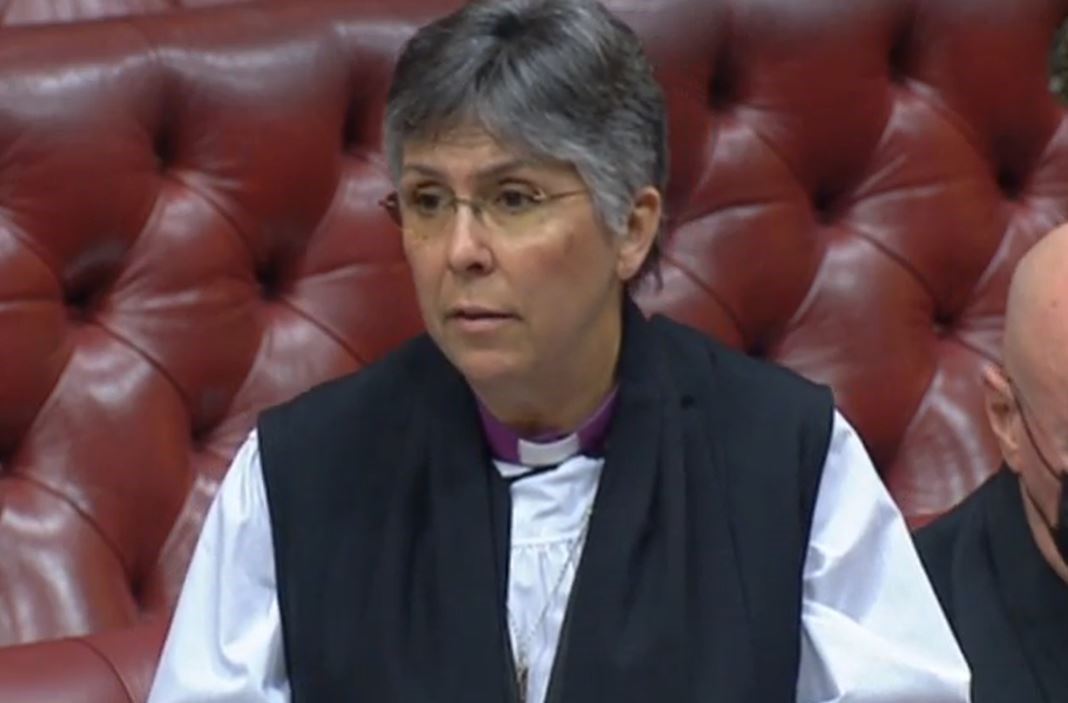
On 9th February 2024, the Bishop of Guildford spoke in a debate on the Conversion Therapy Prohibition (Sexual Orientation and Gender Identity) Bill, supporting the intention of the bill whilst noting concern that the wide scope of the bill would have an impact on religious freedoms:

The Lord Bishop of Guildford: My Lords, the use of coercion to seek to alter the sexuality or gender identity of another person, whether medical, psychological, spiritual or otherwise, is clearly an abhorrent abuse of power. If there is a gap in the law at this point—I leave that question to those who are more expert in the law than I am—it needs to be filled. The Church of England has given serious thought to coercion in recent years, as we have become more aware of the dangers of controlling and bullying leadership styles and the toxic cultures that they can engender. In that sense, I welcome at least part of the intention of this Bill—to protect vulnerable LGBT adults and young people from such potentially abusive and harmful environments and behaviours.

However, I share with many others across this Chamber a sense of deep alarm at the almost unlimited reach of the Bill as drafted, in which no attention is given to questions of consent, harm, vulnerability or the use and abuse of power. Instead, it appears to introduce blanket bans on certain ways of behaving, even certain ways of thinking, within the workplace, school, church, mosque and even the family. At the very least, it creates a culture of fear across the board—a kind of chill factor, especially for those who may not be fully signed up to the current societal orthodoxies.

Continue reading “Conversion Therapy Prohibition (Sexual Orientation and Gender Identity) Bill: Bishop of Guildford expresses concerns regarding effects on freedom of religion”

Conversion Therapy Prohibition (Sexual Orientation and Gender Identity) Bill: Bishop of Bristol welcomes legislation whilst calling for greater clarity

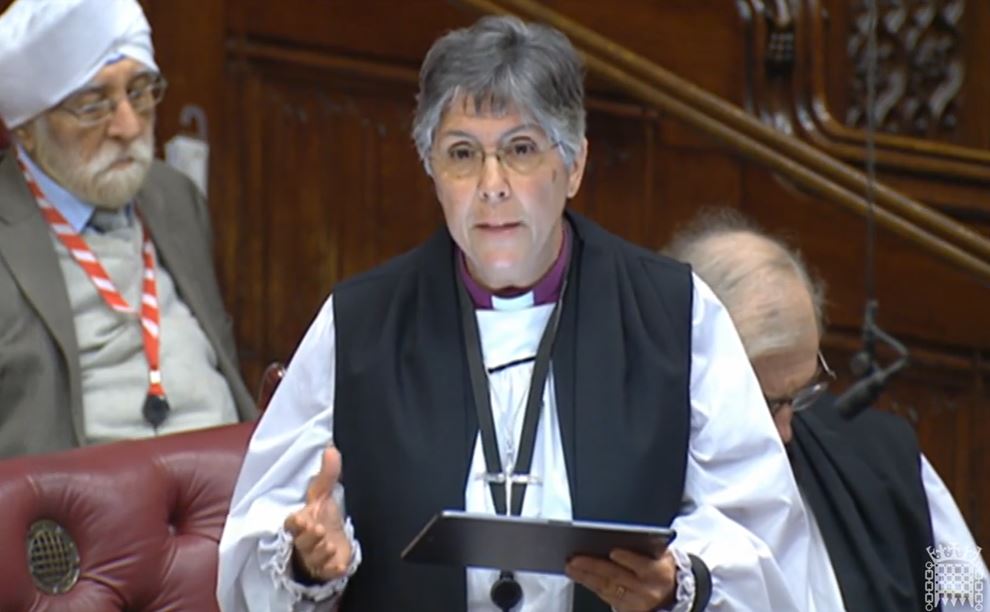
The Bishop of Bristol spoke in a debate on the Conversion Therapy Prohibition (Sexual Orientation and Gender Identity) Bill, (a private members bill brought by Baroness Burt of Solihull to ban the practice of conversion therapy for LBGT+ people) on 9th February 2024, supporting the bill and stressing the need to continue to work to protect LGBT+ people from harm, and expressing a desire for greater clarity in some parts of the legislation:

The Lord Bishop of Bristol: My Lords, I begin by thanking the noble Baroness, Lady Burt, for her Bill. I am grateful to the noble Baroness for engaging with the complexity of drafting legislation to prevent conversation therapy or practices, given the variety of views there clearly are in this Chamber and in wider society. I declare my interests: until December, I was one of the bishops leading on safeguarding in the Church of England and I am still co-chair of the APPG on Safeguarding in Faith Communities.

I have been aware for many years in pastoral ministry of some horrific practices, from physical punishment, counselling and prayer techniques akin to interrogation to, at worst, supposedly curative rape. Such practices are used against those in faith communities who are regarded as deviating from the communities’ norms for sexuality and gender identity. These more or less hidden practices must be prevented by statutory provision if they are not already. We should note too that those who are victims should be much better supported. I am also aware of the much more subtle impact on LGBTIQ people of faith—the pressure on them to conform to the norms set by the hierarchy of their faith community. The cultures which pervade many faith communities render those exploring their identity very vulnerable indeed to abuse, as the IICSA report reminded us.

Continue reading “Conversion Therapy Prohibition (Sexual Orientation and Gender Identity) Bill: Bishop of Bristol welcomes legislation whilst calling for greater clarity”

Victims and Prisoners Bill: Bishop of Bristol supports amendments focused on protecting migrant victims of crime

The Bishop of Bristol, on behalf of the Bishop of Gloucester and the Bishop of London, spoke in support of two amendments to the Victims and Prisoners Bill on 5th February 2024, one aimed at improving conditions for migrant victims of domestic violence, and another on ensuring that data on victims of crime not be shared with immigration enforcement authorities:

The Lord Bishop of Gloucester: My Lords, I rise to speak on behalf of two of my colleagues who have supported amendments in this group. My right reverend friend the Bishop of Gloucester regrets that she cannot be in her place to add her voice in support of Amendment 80, which concerns a cause on which she has long been an advocate. She tabled an amendment to the Domestic Abuse Bill, with cross-party support in 2021. Advocates have campaigned for 30 years to improve conditions for migrant women who have no recourse to public funds and who are victims of domestic abuse. While there has been some progress, including the introduction of the domestic violence indefinite leave to remain rule and the destitution domestic violence concession, there is still much more to be done to make sure that victims of domestic abuse with no recourse to public funds, or who are undocumented, are eligible for those schemes. Victims face an impossible choice: domestic abuse or deportation and destitution. Many are unable even to enter a women’s refuge; they cannot pay their rent or living costs as they are not eligible for housing or other social security benefits.

Continue reading “Victims and Prisoners Bill: Bishop of Bristol supports amendments focused on protecting migrant victims of crime”

Victims and Prisoners Bill: Bishop of Manchester tables amendments to bolster victim support organisations

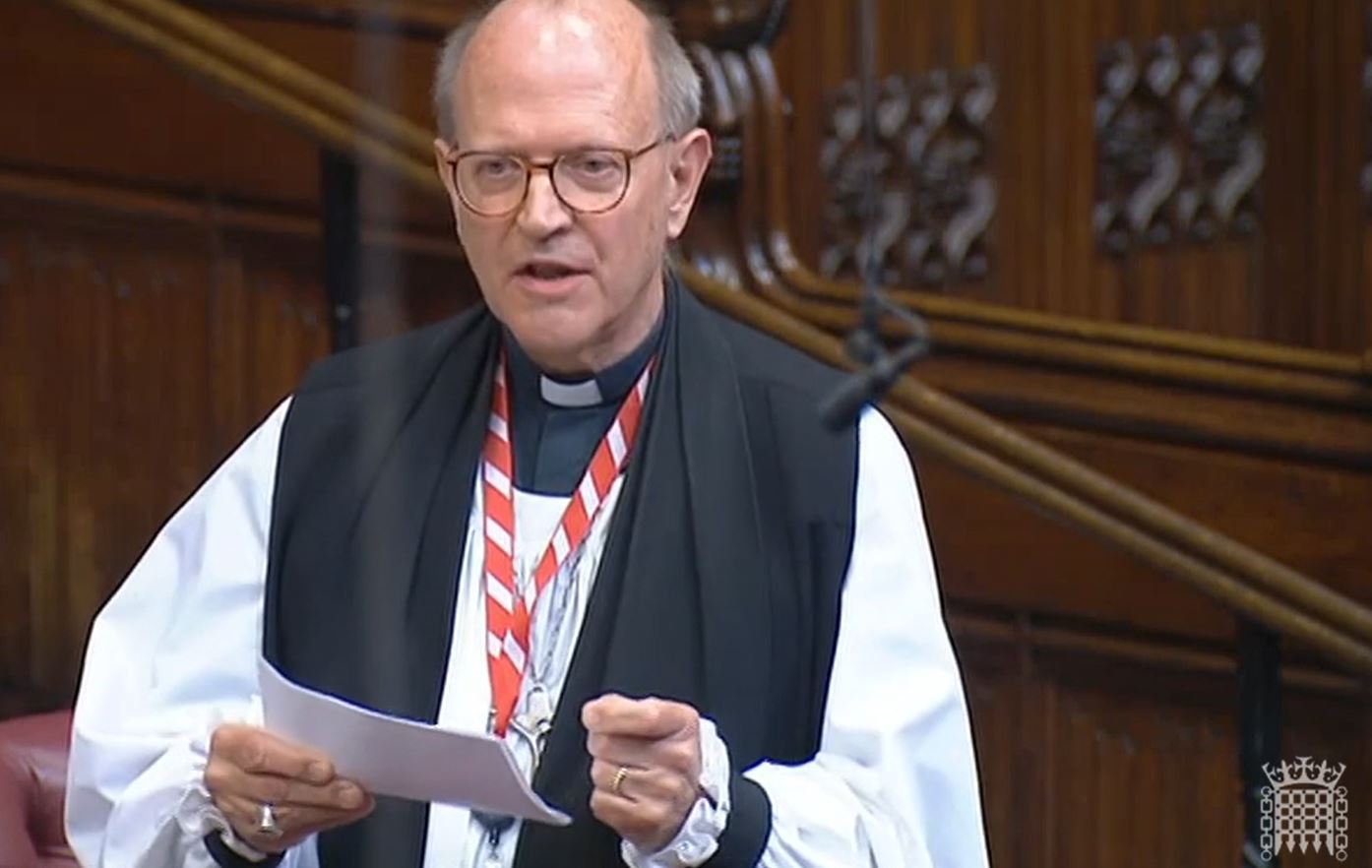
On 5th February 2024, the House of Lords debated the Victims and Prisoners Bill in Committee. The Bishop of Manchester spoke on two amendments he had tabled, aimed at enabling increased collaboration between statutory and community bodies in the victim support sector:

The Lord Bishop of Manchester: My Lords, I rise to speak to Amendments 56 and 59 in my name; I also support the other amendments in this group. These amendments would all help to firm up the very good intentions set out in Clauses 12 and 13.

In an earlier group, I tabled an amendment to ensure that victim support services were properly signposted; it is no use a service existing if the people it is meant to serve are not able to access it. But now we come to, if anything, a more fundamental point: how do we ensure that the right services exist for victims, and in each and every part of the country?

The Bill as drafted gets much right: it requires policing bodies, integrated care boards and local authorities to collaborate in assessing the needs of victims, producing a published strategy and, indeed, revising that strategy as occasion requires—so far, so good. But, as things stand, and as the noble Lord, Lord Russell of Liverpool, has indicated, that assessment and strategy could be little more than a combination of the unaffordable and the non-existent—a bit like an overambitious child’s Christmas wish list.

Continue reading “Victims and Prisoners Bill: Bishop of Manchester tables amendments to bolster victim support organisations”

Victims and Prisoners Bill: Bishop of Leeds supports amendment to ensure competence of translators and interpreters

On 31st January 2024, the House of Lords debated the Victims & Prisoners Bill in the second day of committee. The Bishop of Leeds spoke in support of an amendment to the bill tabled by Baroness Coussins aimed at ensuring that translators and interpreters working in victims services be trained and qualified professionals:

The Lord Bishop of Leeds: My Lords, I apologise that I was not able to be present at Second Reading—the day job had to take precedence. I rise to endorse thoroughly what the noble Baroness, Lady Coussins, said in her speech. I wish not to speak to each amendment but to add a bit of heft to what she said. I do not exactly declare this as an interest, but I was a professional linguist before I went into the Church, so language has been important to me right the way through.

We heard in the Minister’s response earlier that victims must get the information they need. They also must get it in a form they are able to read, or hear, and understand. In this country language is often misunderstood or not taken as seriously as it ought to be, or as one might find in some countries in continental Europe, for example, where you live on boundaries and have to operate in a number of languages. Because we are an island nation, this is something we do not necessarily experience.

Continue reading “Victims and Prisoners Bill: Bishop of Leeds supports amendment to ensure competence of translators and interpreters”

Votes: Safety of Rwanda (Asylum & Immigration) Bill

On 29th January 2024, the House of Lords debated the Safety of Rwanda (Asylum & Immigration) Bill in its second reading. A vote was held on a motion relating to the bill, in which a bishop took part.

Continue reading “Votes: Safety of Rwanda (Asylum & Immigration) Bill”

Safety of Rwanda (Asylum & Immigration) Bill: Bishop of London points out inconsistency with international law and human rights regulations

On 29th January 2024, the Bishop of London spoke in a debate on the Safety of Rwanda (Asylum & Immigration) Bill, pointing out the inconsistency of the bill’s approach to international law, and the potential harm of disapplying parts of the human rights act to refugees and asylum seekers:

The Lord Bishop of London: My Lords, I share many concerns about the Bill that have been expressed by many other noble Lords, but I will focus on human rights. What underpins my contribution to the House is a fundamental belief that all people are made in the image of God. It is a belief that is the foundation not just of the Christian faith but of many other faiths and religions. People have an inherent immeasurable value and deserve dignity and respect. In the Bill, unfortunately, the value of people is consistently maligned. For example, the Bill decides who is and is not entitled to human rights. Has history not taught us the risk of that?

It is an odd situation that we find ourselves in when it feels necessary to state in your Lordships’ House that the Government should obey the law, yet the Minister has stated on the face of the Bill that he is unable to say that the measures within it are compatible with the European Convention on Human Rights. Clause 3 disapplies sections of our Human Rights Act and Clause 1(6) lists great swathes of international law that will be contravened to pass the Bill. As many noble Lords have said, it is illogical that the Government are disregarding international law while relying on Rwanda’s compliance with it to assure us it is safe. That is not a mark of global leadership.

Continue reading “Safety of Rwanda (Asylum & Immigration) Bill: Bishop of London points out inconsistency with international law and human rights regulations”

Safety of Rwanda (Asylum & Immigration) Bill: Bishop of Durham questions support for refugees available in Rwanda and raises risks of modern slavery

On 29th January 2024, the House of Lords debated the the Safety of Rwanda (Asylum & Immigration) Bill. The Bishop of Durham spoke in the debate, questioning, based on his experience of the country through his role as Bishop, whether Rwanda would be able to adequately support refugees relocated from the UK, and highlighting the risks to refugees in the country, particularly in terms of modern slavery:

The Lord Bishop of Durham: My Lords, I declare my interests as laid out in the register. I stand in agreement with the arguments already made regarding the domestic constitutional, international standing and human rights concerns surrounding this Bill. I echo the belief that we should not outsource our moral and legal responsibilities to refugees and asylum seekers. However, today I hope to bring some insight to this debate through my own experience of Rwanda.

Rwanda is a country that I love. It is a country that I have travelled to on 20 occasions since 1997. I have observed the amazing transformation of Kigali and some aspects of the whole nation. My visits take me to rural villages, small towns and cities, not simply the glamour of a great international city. I have had the privilege of becoming friends with many local people whom I have met and stayed with there. The conversations I had there last August further led me to conclude that this policy will simply not work.

Continue reading “Safety of Rwanda (Asylum & Immigration) Bill: Bishop of Durham questions support for refugees available in Rwanda and raises risks of modern slavery”

Safety of Rwanda (Asylum & Immigration) Bill: Archbishop of Canterbury raises concerns over potential damaging impact of legislation

The Archbishop of Canterbury spoke in a debate on the Safety of Rwanda (Asylum & Immigration) Bill on 29th January 2024, expressing concern that the legislation would be damaging to the UK in outsourcing asylum to another country, calling on the government to establish a wider strategy for refugee policy and to lead internationally on this:

The Lord Archbishop of Canterbury: My Lords, in almost every tradition of global faith and humanism around the world, the dignity of the individual is at the heart of what is believed. In the Christian tradition, we are told to welcome the stranger. Jesus said:

“I was a stranger and you invited me in”.

In numerous places in the Old Testament and the New, the commands of God are to care for the alien and stranger. It has already been said, and I agree, that the way that this Bill and its cousin, which we debated in the summer, work is by obscuring the truth that all people, asylum seekers included, are of great value. We can, as a nation, do better than this Bill.

Continue reading “Safety of Rwanda (Asylum & Immigration) Bill: Archbishop of Canterbury raises concerns over potential damaging impact of legislation”

Victims & Prisoners Bill: Bishop of Gloucester speaks in support of amendments providing support for children of modern slavery victims

On 24th January 2024, the Bishop of Gloucester spoke in support of amendments 7 and 11 to the Victims & Prisoners Bill, which would provide provision for support given to children of victims of modern slavery:

The Lord Bishop of Gloucester: My Lords, my right reverend friend the Bishop of Bristol, as has been said, regrets that she cannot be in the Chamber today but along with her, I support Amendments 7 and 11. The children of victims of modern slavery are currently underserved by support services, despite that lasting and intergenerational trauma which witnessing the crime of modern slavery can cause. We have already heard about the organisation Hestia. In 2021, it estimated that as many as 5,000 vulnerable children could be identified within the NRM as children of victims of modern slavery. I want to add that there is an urgent need to extend victims’ rights to this group, and I am glad to see these amendments.

Hansard