On 4th March 2024, the House of Lords debated the Safety of Rwanda (Asylum and Immigration Bill) in the first day of the report stage. Votes were held on amendments to the bill, in which Bishops took part:

Legislation before Parliament
On 4th March 2024, the House of Lords debated the Safety of Rwanda (Asylum and Immigration Bill) in the first day of the report stage. Votes were held on amendments to the bill, in which Bishops took part:
On 4th March 2024, the Archbishop of Canterbury spoke in a debate on the Safety of Rwanda (Asylum and Immigration) Bill, in support of a group of amendments seeking to ensure compliance with the rule of law in the application of the bill:

The Lord Archbishop of Canterbury: My Lords, at this stage of the debate on this group, we are looking at two distinct things. One is the question of whether Rwanda is safe. If, as the noble Lord just said, it is unquestionably safe, it seems to me that these amendments are not a problem because, at that point, the Secretary of State can easily say, “It’s safe”, and they will have evidence of that, for this and future Governments.
Continue reading “Safety of Rwanda (Asylum and Immigration) Bill: Archbishop of Canterbury supports amendments on rule of law”On 4th March 2024, the House of Lords debated the Safety of Rwanda (Asylum and Immigration) Bill in the first day of the report stage. The Bishop of St Edmundsbury & Ipswich spoke in the debate, supporting amendments on assessing Rwanda’s safety, establishing right of return for asylum seekers after relocation, and protection for victims of modern slavery:
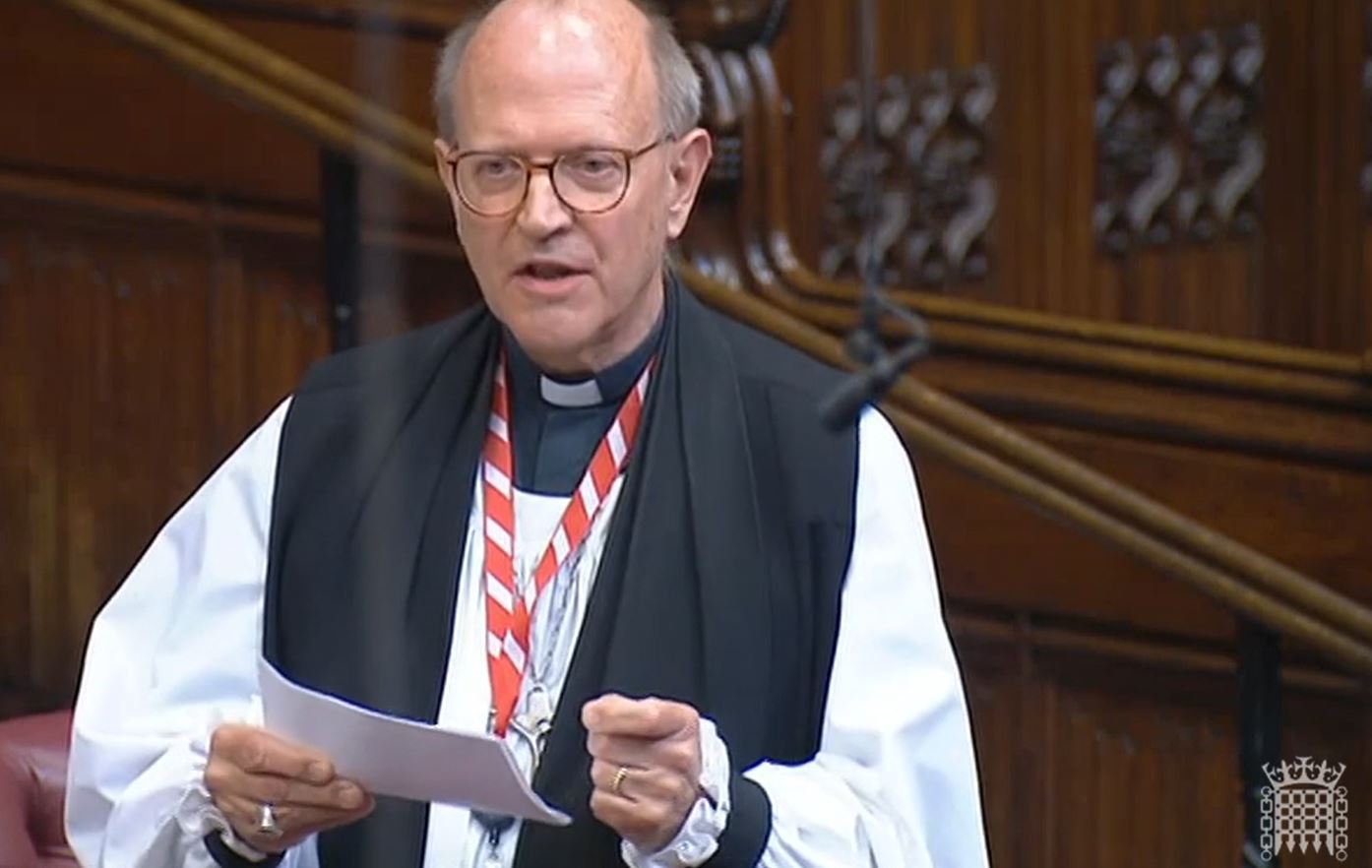
The Lord Bishop of St Edmundsbury & Ipswich: My Lords, I shall speak in favour of Amendments 1, 3 and 5 tabled by the noble Baroness, Lady Chakrabarti, to which I have added my name. I do not believe that we can enshrine in law a statement of fact without seeing and understanding the evidence that shows such a statement to be true, in particular when such a statement of fact is so contentious and for which the evidence may change. Ignoring for a second the strange absurdity of such declarations, we must also consider the real impact that this could have on the potentially vulnerable people whom the Government intend to send to Rwanda. As my most reverend friend the Archbishop of Canterbury, who is in his place, said at Second Reading,
Continue reading “Safety of Rwanda (Asylum and Immigration Bill): Bishop of St Edmundsbury and Ipswich supports amendments on modern slavery, right of return, and overall safety”The Bishop of Winchester spoke in a debate on the second reading of the Schools (Mental Health Professionals) Bill on 1st March 2024, pointing out the need for a consistent, universally applied policy to improve student mental health, and the need to address the causes of mental health issues at a root level:
The Lord Bishop of Winchester: My Lords, I am grateful to the noble Baroness for bringing this Bill to us for its Second Reading. We indeed face a crisis in this area and need to be aware of the long-term consequences of not addressing it.
The Bill would pave the way for just the kinds of interventions that are sorely needed. The NSPCC and our own Library briefing state that more than 20% of children and young people are living with poor mental health. CAMHS referrals are provided for only the most severe presenting issues, while early intervention, though widely recognised to be key to good long-term outcomes, is now a thing of distant memory. The sobering fact is that children are taking their own lives while they wait to be seen, and that is deeply shameful.
Last summer, the Church of England published the document Our Hope for a Flourishing Schools System, which makes specific mention of mental health, it being the issue school leaders most often raise with us. It states:
“Children’s mental health and wellbeing is prioritised and resourced generously by a society that invests in the long-term future of its nation by placing children first in funding and political direction. The fulfilling of a child’s potential should never be hindered, blocked or prevented by the system in which they find themselves”.
However, those words are, sadly, far from being the current reality.
Continue reading “Schools (Mental Health Professionals) Bill: Bishop of Winchester applauds measures to address mental health issues in young people”
The Bishop of Newcastle spoke in a debate on the second reading of the Media Bill on 28th February 2024, commending the bill and requesting that additional attention for language provision be included in the legislation:
The Lord Bishop of Newcastle: My Lords, I am glad to be able to speak in this debate, and thank the previous speaker, the noble Lord, Lord Russell, for his comments. It is an honour to follow him.
In conversations I have had in recent weeks, it is clear that there is a strong desire across this House to ensure the Media Bill progresses positively through its legislative processes, in part because this is, as noble Lords have said, a Bill that acknowledges the vastly changed broadcasting landscape over the past 20 years. Given the rapidly developing technological nature of the communications landscape, it is understandable that the Bill aims to give flexibility and adaptability where needed. The point I wish to make is about the absence of clear statutory provision for languages in this Bill, in particular for Gaelic. Other noble Lords have already referred to this in the debate.
Continue reading “Media Bill: Bishop of Newcastle calls for additional focus on language provision”On 28th February 2024, the House of Lords debated the Media Bill in its second reading. The Bishop of Leeds spoke in the debate, welcoming the bill whilst raising concerns on issues of metrics, language, prominence and genres:

The Lord Bishop of Leeds: My Lords, it is a pleasure but somewhat daunting to follow the noble Lord, Lord Birt. I agree with every word he said. I strongly welcome the Bill. It is timely and necessary. The regulatory framework that governs public service media, not just broadcasting, is in urgent need of updating, given the accelerating changes in technology, media consumption and the wider media ecosystem in the 20 years since the Communications Act 2003. I commend the excellent Library briefing for this debate. It was very helpful.
A number of things that are on my mind have already been mentioned, so I will move swiftly on. As the noble Baroness, Lady Featherstone, and, I think, the noble Lord, Lord Lipsey, have already noted, I understand that the intention to drop Section 40 of the Crime and Courts Act will almost certainly proceed. It was a manifesto commitment by the Government. However, I will not be the only person to want to put on record that arguments by press agencies about freedom of speech can ring somewhat hollow. Leveson worked on this for good reasons. Freedom of speech and press freedom must not be confused with press protectionism. Victims of press misrepresentation and abuse must be forgiven for suspecting that government can easily be captured by business.
Continue reading “Media Bill: Bishop of Leeds welcomes legislation and highlights areas of concern around data use and metrics”On 26th February 2024, the House of Lords debated amendments to the Victims and Prisoners Bill. The Bishop of Manchester spoke in support of amendment 133 to the bill, which “would require public authorities, public servants and officials to act in the public interest and with transparency, candour and frankness when carrying out their duties in relation to major incidents,” arguing that introducing this statutory duty would allow for greater support for victims and survivors of major incidents and crimes:
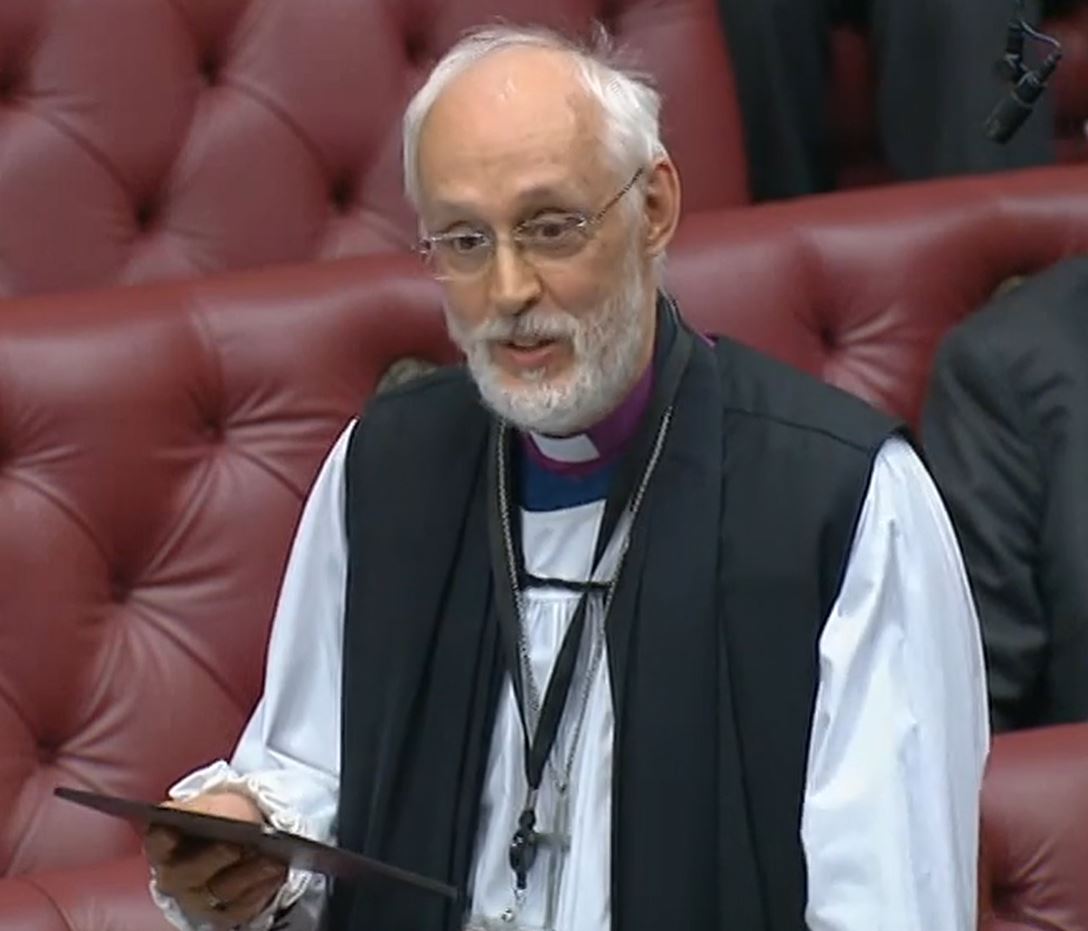
The Lord Bishop of Manchester: My Lords, I rise to speak to this amendment to which I have added my name. I declare my interest as co-chair of the national police ethics committee.
Before turning to the amendment, I follow other noble Lords by recording the deep gratitude of both myself and many in the Church for the wisdom and friendship of Lord Cormack. On behalf of both the party he served and the Church he loved, over so many decades, Patrick wonderfully embodied that concept of “critical friend” which is so vital to the functioning of all institutions. We were all better for his wisdom and friendship, and we all learned much from his challenges. He may not have been subject to a duty of candour, but that never stopped him from being very candid in expressing his views. We will miss his contributions, here and elsewhere greatly.
The former Bishop of Liverpool advocated for a duty of candour in his report on the Hillsborough disaster, The Patronising Disposition of Unaccountable Power. That title tells its story. His report was produced over six years ago; a duty of candour was finally contained in the College of Policing’s Code of Practice for Ethical Policing in the last two months, for which I and many others are deeply grateful.
Continue reading “Victims and Prisoners Bill: Bishop of Manchester supports amendment on transparency of public officials”On 21st February 2024, yhe Bishop of St Edmundsbury and Ipswich gave a speech during the second reading of the Animal Welfare (Livestock Exports) Bill, expressing his support for the bill and stressing the importance of maintaining animal welfare standards in the UK:
The Lord Bishop of St Edmundsbury and Ipswich: My Lords, I draw attention to my entry in the register of interests. It is a pleasure to speak in this debate, and I welcome the Government’s commitment to improving the standards of animal welfare in the UK. I add my thanks to the Minister, as he begins his new role, and to those who have campaigned for so long, particularly the noble Baroness, Lady Fookes, whose birthday it is today.
I have spoken to farmers and farm vets in Suffolk, and they are clear that the exporting of animals for slaughter is not an acceptable practice, and I fully support the Bill. They raised with me a couple of related points, both of which have been made already, but I will briefly refer to them. First, we must ensure that holding British farmers to high welfare standards does not result in the undercutting of our farmers by cheaply produced imported meat that does not meet the same standards required of UK farmers. I hope the Government are able to provide farmers with the assurances they need on this matter.
Continue reading “Animal Welfare (Livestock Exports) Bill: Bishop of St Edmundsbury and Ipswich welcomes legislation”On 20th February 2024, the Bishop of Southwark made a speech during the second reading of the Economic Activity of Public Bodies (Overseas Matters) Bill, raising the potential issue of religious education foundations being affected inadvertently by the bill, and expressing concern about the far-reaching implications of the bill:

The Lord Bishop of Southwark: My Lords, I expect that the name of Field-Marshal Julius Jakob Freiherr von Haynau does not elicit the sort of interest that once it did in your Lordships’ House. He was, none the less, a staple of O-level history when that subject would have elicited the admiration of the Secretary of State for Levelling Up. Field Marshall von Haynau was an effective but severe Habsburg military commander during the revolutionary years of 1848 and 1849. His imperial standing, however, did not prevent him being chased down Borough High Street in my diocese in 1850—where my diocesan headquarters now is, very near the cathedral—by two draymen from the nearby brewery of Barclay Perkins to remonstrate with him about his military conduct in Italy and Hungary.
I mention this once-famous incident to illustrate that there have always been strong currents of feelings about issues, including those abroad. Some of these fall into what one might call the dissenting tradition. As a Church of England Bishop, I recognise that I am an heir to a different tradition, but surely our history has taught us that consensus has been built up around what is obviously true and lived out with integrity, rather than by suppression.
Continue reading “Economic Activity of Public Bodies (Overseas Matters) Bill: Bishop of Southwark expresses concerns over implications of legislation”On 19th February 2024, the Bishop of Chelmsford tabled her her amendment 91 to the Safety of Rwanda (Immigration and Asylum) Bill, which would insert a sunset provision for the Bill to expire two years after commencement unless Parliament decides that it should remain in force and the Government has produced a report containing evidence that the Rwandan government is fulfilling its Treaty obligations:
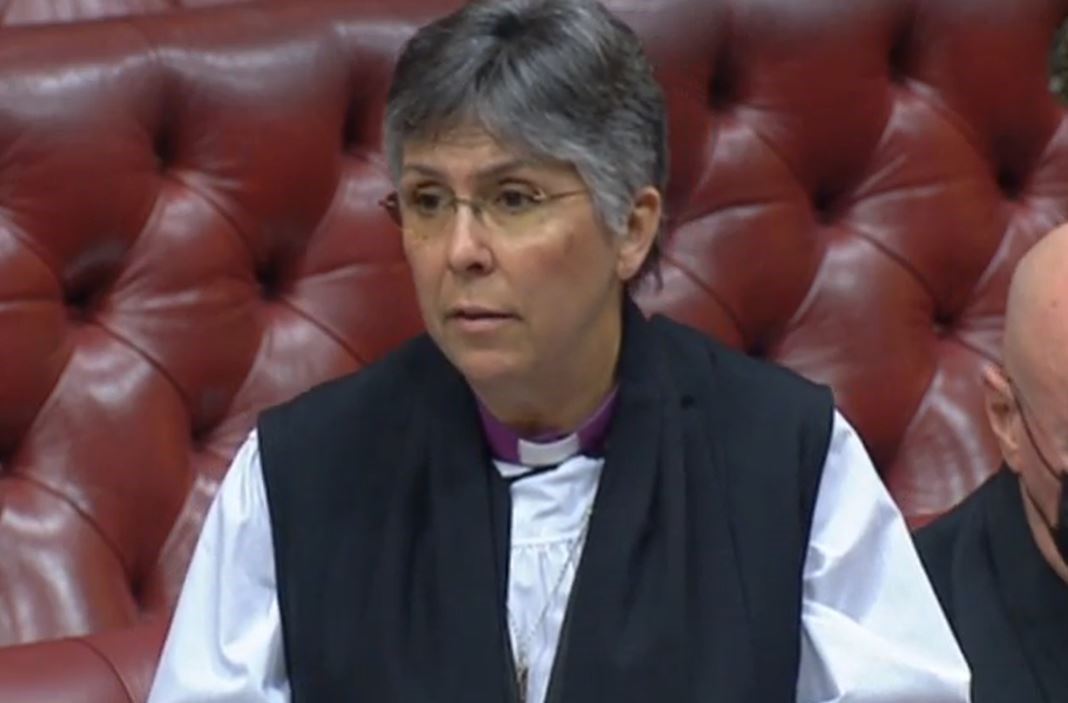
The Lord Bishop of Chelmsford: My Lords, in moving Amendment 91 I am grateful to my friends the noble Lords, Lord Scriven and Lord Blunkett, for their support. The noble Lord, Lord Scriven, is in his seat and the noble Lord, Lord Blunkett, was in touch with me today to apologise for not being able to be here this evening.
I want to keep my comments as short as possible, given the hour and the fact that some of the issues have already been debated in Committee. However, there is merit in discussing the value of a sunset provision, now that each of the Bill’s clauses has been scrutinised.
The fundamental issue, which I fear has not yet been fully addressed by the Government Benches, is that we are being asked to make a permanent judgment on the safety of Rwanda on the basis of the yet to be implemented arrangements outlined in the treaty. This is, of course, against the opinion of our highest court. Furthermore, it is simply not arguable on any rational basis that Rwanda is safe at present, when, as the Minister himself has conceded, Rwanda is moving towards having the required protections in place.
Continue reading “Safety of Rwanda (Immigration and Asylum) Bill: Bishop of Chelmsford moves amendment introducing sunset clause to bill” The Church of England in Parliament
You must be logged in to post a comment.