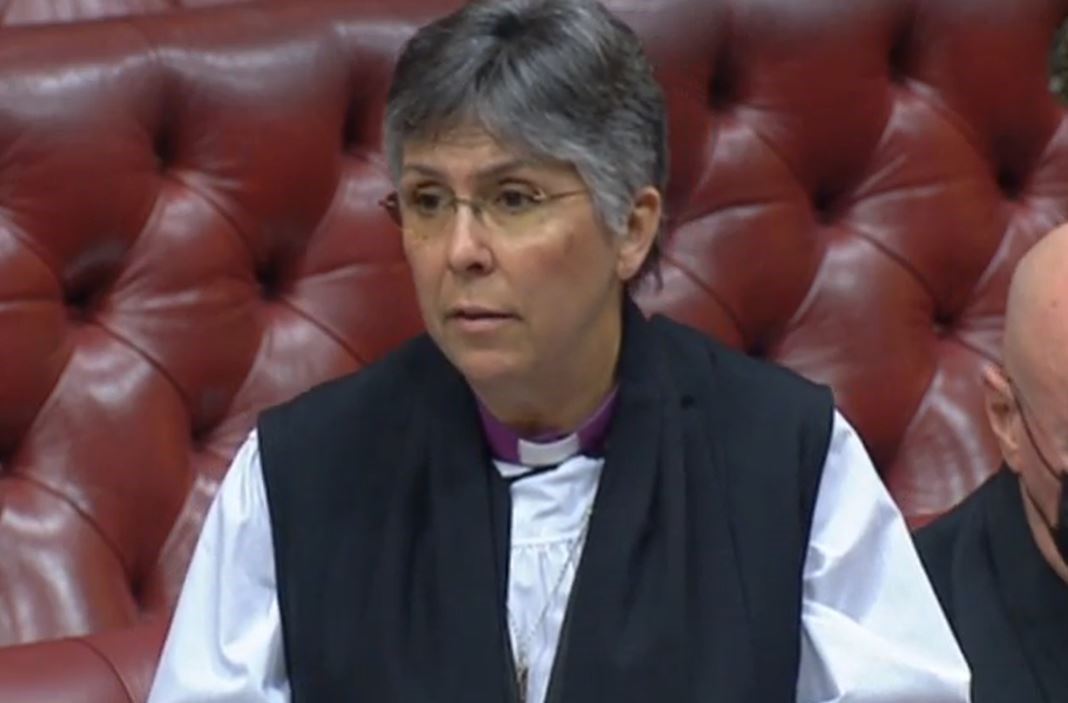
Public Order Bill: Bishop of St Albans highlights concerns of excessive police powers

On 1st November 2022, the House of Lords debated the Public Order Bill in its second reading. The Bishop of St Albans spoke in the debate, highlighting concerns that the bill would grant excessive powers to the police:

The Lord Bishop of St Albans: My Lords, I think many of us in this debate will have a feeling of déjà vu. No matter how many pieces of legislation come through here granting the police additional powers, it seems that they are never enough. It seems we are always one more public order provision away from solving the problem.

Along with other noble Lords, I want to support the police and the rule of law. We are grateful for all the police do; they stand in our place and, very often, have to take very difficult decisions. But we already have the Public Order Act 1986, which grants the police powers to place restrictions on protests and to prohibit those which threaten to cause serious disruption to public order. We already have the Criminal Justice and Public Order Act 1994, which introduced the offence of aggravated trespass. We have the offence of obstruction of a highway and the Protection from Harassment Act 1997, which allows for civil injunctions to prevent protesters demonstrating in a way which causes harm or harassment. As recently as last year, remarkably extensive powers, including on noisy and disruptive protests, were granted in the Police, Crime, Sentencing and Courts Act 2022.

Continue reading “Public Order Bill: Bishop of St Albans highlights concerns of excessive police powers”
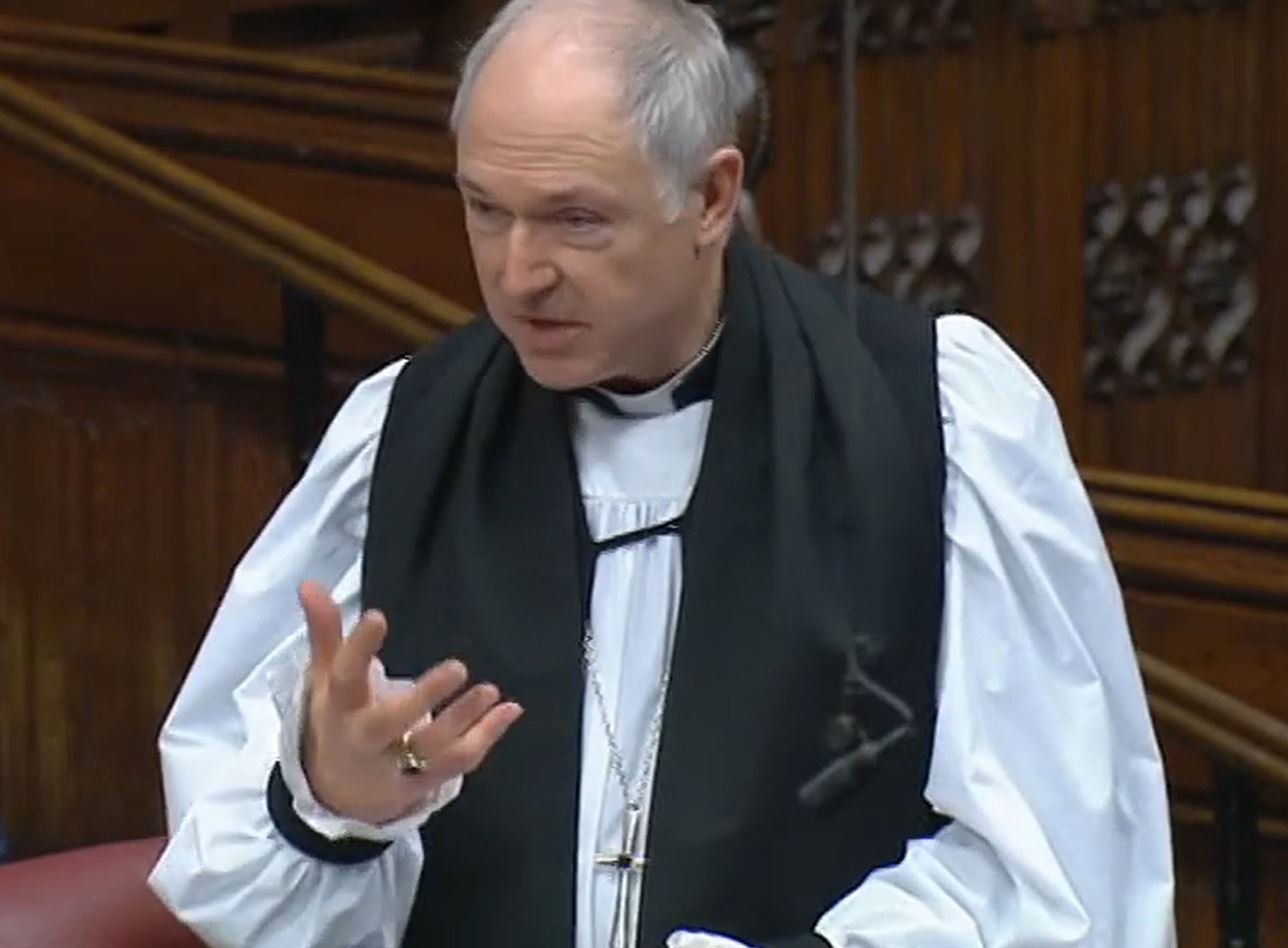
Genocide Determination Bill: Bishop of Exeter speaks in support

On 28th October 2022, the House of Lords debated the Genocide Determination Bill, brought forward by Lord Alton of Liverpool, in its second reading. The Bishop of Exeter spoke in support of the bill:

The Lord Bishop of Exeter: My Lords, I support the Bill and, in company with others, pay warm tribute to the noble Lord, Lord Alton, for his perseverance and passion for justice for the victims of genocide. We are united in this House and on these Benches in our condemnation of what is a manifest evil, that which the Coalition for Genocide Response describes as “the crime of crimes”. My colleague the Bishop of Truro, whom I hope will join us in this House before too long, three years ago published his report on the persecution of Christians, to which the noble Lord, Lord Browne, just referred. Your Lordships will recall that His Majesty’s Government accepted all its recommendations in full. Recommendation 7 asked the Government to:

“Ensure that there are mechanisms in place to facilitate an immediate response to atrocity crimes, including genocide through activities such as setting up early warning mechanisms to identify countries at risk of atrocities, diplomacy to help de-escalate tensions and resolve disputes, and developing support to help with upstream prevention work.”

It is the mechanisms with which we are concerned in the Bill.

Continue reading “Genocide Determination Bill: Bishop of Exeter speaks in support”

Coroners (Determination of Suicide) Bill: Bishop of St Albans sets out proposals; Bishop of Exeter supports

On 28th October 2022, the Bishop of St Albans brought a revised version of his Coroners (Determination of Suicide) Bill before the House of Lords for its second reading. The Bishop of Exeter spoke in support of the bill. The bill was read and sent to a Committee of the Whole House:

The Lord Bishop of St Albans: That the Bill now be read a second time.

My Lords, I declare my interest as a vice-chair of Peers for Gambling Reform.

I am glad to bring before the House the Coroners (Determination of Suicide) Bill, now in its third iteration. This latest version is significantly different from the previous two; it has taken on board many of His Majesty’s Government’s criticisms and attempted to resolve them. Indeed, the Minister who dealt with the Bill in the previous Session, the noble Lord, Lord Wolfson of Tredegar, had hoped to speak today from the Back Benches but has to be in court. He has, however, given his permission to say that he supports the aims of the Bill. Because we have tried to respond to the points made by the Government, I will listen attentively to the Minister as he outlines their response, given that I believe their concerns have largely been dealt with.

The genesis of the Bill is the frustration that many of us in your Lordships’ House have felt when we have tried to bring in sensible reforms to the Wild West of online gambling, which is causing untold suffering in communities across our nation. More than a third of a million adults in our country are now diagnosed with a gambling addiction. More than 62,000 teenagers, who in law are not even allowed to gamble, have been diagnosed with a gambling problem. With an estimated more than 400,000 suicides every year due to problem gambling, we need to address this problem in a sensible way. On a number of occasions when I and other noble Lords have raised the issue in the House, the Government have resisted our attempts to bring some order to this sector, simply claiming, “We don’t understand the size of the problem.” The Bill is a proposal for one way of obtaining more data.

Continue reading “Coroners (Determination of Suicide) Bill: Bishop of St Albans sets out proposals; Bishop of Exeter supports”

Bishop of Durham’s Bill to remove the two-child limit for universal credit passes to next stages

The Bishop of Durham tabled a motion for his Universal Credit (Removal of Two Child Limit) Bill to be discharged from the committee stage on 26th October 2022. No amendments had been tabled by other Members to the Bill, so it passed Committee Stage and proceeds to its final Lords stage, Third Reading:

The Lord Bishop of Durham: That the order of commitment be discharged.

My Lords, I understand that no amendments have been set down to this Bill and that no noble Lord has indicated a wish to move a manuscript amendment or to speak in Committee. Unless, therefore, any noble Lord objects, I beg to move that the order of commitment be discharged.

Motion agreed.

Hansard

Votes: Energy Prices Bill

On 24th October 2022, the House of Lords debated the Energy Prices Bill in its committee stage. Votes were held on amendments in which Bishops took part.

Continue reading “Votes: Energy Prices Bill”

Energy Prices Bill: Bishop of Manchester raises concerns on heating churches and the need for clarification of terms

On 19th October 2022, the House of Lords debated the Energy Prices Bill in its second reading. The Bishop of Manchester spoke in the debate, welcoming the bill whilst raising several points of concern:

The Lord Bishop of Manchester: My Lords, I am pleased to speak on this important and urgent piece of legislation. I declare my interest as deputy chair of the Church Commissioners’ board of governors. We own stocks in energy companies. In the light of today’s developments in the other place, I should perhaps also declare that I regularly eat tofu.

It is clear that the ongoing cost of living crisis and energy insecurity necessitate swift and comprehensive action. It is estimated that this will adversely impact up to 100,000 households in one of my local authorities, Manchester, this winter. A report published in August by the University of York predicted that more than three quarters of UK households—53 million people—will have been pushed into fuel poverty by January next. It is therefore very welcome that the Government are taking action to help the public and businesses survive the coming winter. It is also good to have the clarity set out in the Bill on the energy price guarantee and the energy bill relief scheme.

However, welcoming the Bill does not mean that I, or my colleagues on these Benches when they are here, believe that it is a latter-day Mary Poppins—practically perfect in every way. While we fully recognise the urgency of this legislation, we hope that His Majesty’s Government will take seriously the calls to amend certain of its details before we reach Committee next week.

Continue reading “Energy Prices Bill: Bishop of Manchester raises concerns on heating churches and the need for clarification of terms”

Social Housing (Regulations) Bill: Bishop of Chelmsford speaks in support of amendments

On 18th October 2022, the House of Lords debated the Social Housing (Regulations) Bill in its report stage. The Bishop of Chelmsford spoke in the debate, in support of amendments tabled by Baroness Pinnock and by Baroness Hayman of Ullock:

The Lord Bishop of Chelmsford: My Lords, it is good to see this important Bill continuing its progression through this House. I begin by declaring my specific interests as the Church of England’s lead bishop for housing and as a beneficiary of the Church Commissioners.

I add my support to Amendment 1 in the name of the noble Baroness, Lady Pinnock. As the energy crisis unfolds, it is surely wise to address the issue of energy efficiency in the social housing sector in a systematic way, by including it as a fundamental objective. Many who live in social homes are among those with the lowest incomes, so they are already struggling to meet their energy bills right now. In addition to immediate relief and support, we also need to address energy efficiency to ensure true affordability in the long term.

Continue reading “Social Housing (Regulations) Bill: Bishop of Chelmsford speaks in support of amendments”

Health and Social Care Levy (Repeal): Bishop of London speaks in debate

On 17th October 2022, the House of Lords debated a bill to repeal the Health and Social Care Levy. The Bishop of London spoke about the importance of sustainable funding for the health and social care systems:

The Lord Bishop of London: My Lords, I have some technical questions about the implications of repealing this levy, but they prompt more significant questions about the sustainability of health and social care funding, as other noble Lords have already suggested. The sustainability of health and social care is hugely important to me, not just as a former Government’s Chief Nursing Officer, but as a bishop. This is about funding a service well with a long-term view, so that those who work hard to care for us have the resources to do the job. This is about the fact that every person is of great value in God’s sight and should be treated with dignity and equity. This is about a thriving economy because, without a healthy population, we will not have an economy that grows.

When the levy was introduced, the then Financial Secretary wrote to the Treasury Select Committee to justify it, saying that

“it would not be possible to fund this from existing tax revenues, nor would it be responsible to fund it through borrowing.”

This uncertainty about the direction does not inspire confidence that the Government have a sustainable plan to fund health and social care. If repealing this levy will not affect health and social care funding, can the Minister guarantee that a detailed breakdown of how this tax cut will be funded will be set out clearly?

Continue reading “Health and Social Care Levy (Repeal): Bishop of London speaks in debate”

Energy Bill: Bishop of Carlisle calls for more community-led energy generation

On 19th July 2022 the House of Lords debated the Government’s Energy Bill at its Second Reading:

The Lord Bishop of Carlisle: My Lords, I take many of the cogent and very well-informed points that have already been made in this debate, not least the one made by the noble Lord, Lord Howell, on the need for international co-operation. Even so, I welcome all three pillars of this Bill. Its stated direction could offer at least a step forward towards the goal of net-zero carbon.

I suggest in particular two rather domestic but, I hope, practical areas that could, in my view, do with further development in the Bill; namely, local renewable energy generation, as raised by the noble Baroness, Lady Hayman, and carbon capture, which has been addressed by the noble Lord, Lord Whitty, and the noble Baroness, Lady Sheehan.

In both cases, I hope noble Lords will forgive special reference to Cumbria, where I live. It is currently engulfed in a very contentious debate about the Woodhouse Colliery near Whitehaven that is not nearly as straightforward as it might first appear. Cumbria also has the “energy coast”—originally coal, then nuclear and now, increasingly, renewables. It has the Walney Extension offshore wind farm, which has more than 20% of the UK’s wind farm generating capacity. What is more, as a county, we have more than 50% of all the potential small-scale hydropower generation in the north-west.

Continue reading “Energy Bill: Bishop of Carlisle calls for more community-led energy generation”

Schools Bill: Bishop of Carlisle supports amendments on regulation of home schooling

The Bishop of Carlisle spoke in a debate on the Schools Bill in its second day of Report Stage, on 18th July 2022, in support of amendments on home schooling and the home school register. His speech is below, followed by those of other peers:

The Lord Bishop of Carlisle: My Lords, I speak on behalf of my right reverend friend the Bishop of St. Albans, who has two amendments in his name, 

Amendments 66 and 94. His name is also listed on Amendments 65 and 66A, in the name of the noble Lord, Lord Lucas.

Amendments 65, 66 and 66A continue to take issue with the proposals for details of the means by which a child is being educated to be included on the register. Amendment 66 would replace this with a determination of suitability, and provide for visits by the local authority for determining that suitability to be recorded. However, further to communication with the Department for Education and the Minister, we understand that their interpretation of the word “means” does not relate to the educational content or methods of home educating but simply to the providers of the education, since separate rules for registration will pertain to out-of-school education. We have been informed that this framework will be set out in the future statutory guidance. This is a much more positive interpretation than had previously been supposed, but if this is the interpretation I am not sure why it could not have been contained within the primary legislation rather than prescribed at a later date. Amendment 66A, from the noble Lord, Lord Lucas, would naturally resolve that problem.

Continue reading “Schools Bill: Bishop of Carlisle supports amendments on regulation of home schooling”