
On 8th March 2017 the House of Lords voted on three amendments to the Government’s Higher Education and Research Bill. The Bishop of Oxford, the Bishop of Worcester, and the Bishop of Chester took part in the votes. Continue reading “Votes: Higher Education and Research Bill”
Category: Bills
Legislation before Parliament
Higher Education and Research Bill: Bishop of Oxford moves amendment on Archbishop degree awarding powers
 On 8th March 2017, the Bishop of Oxford, the Rt Revd Dr Steven Croft, moved an amendment on behalf of the Bishop of Winchester to the Government’s Higher Education and Research Bill. The amendment, which was accepted by the Government, meant that the Archbishop of Canterbury’s historic powers to award degrees would be unchanged by the Bill.
The Lord Bishop of Oxford: My Lords, my right reverend friend the Bishop of Winchester is unable to be in his place this evening, but I bring before your Lordships his Amendment 119A. I am grateful to the Minister for the constructive discussions we have had with him and his officials, and for co-sponsoring this amendment. Continue reading “Higher Education and Research Bill: Bishop of Oxford moves amendment on Archbishop degree awarding powers”
Votes: EU (Notification of Withdrawal) Bill – that the Bill should not proceed
On 7th March 2017 the House of Lords considered the Government’s EU (Notification of Withdrawal) Bill at Third Reading. A vote was called on a Liberal Democrat motion that the Bill should not pass.Six Lords Spiritual took part in the vote.
Continue reading “Votes: EU (Notification of Withdrawal) Bill – that the Bill should not proceed”
EU (Notification of Withdrawal) Bill: Archbishop of York speaks on amendment about Northern Ireland impact
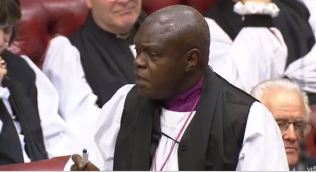 On Tuesday 7th March 2017, the House of Lords considered the Government’s EU (Notification of Withdrawal) Bill at Report stage and Third Reading. Labour Peer Lord Hain moved Amendment 5, seeking to ensure the Prime Minister give an undertaking to support the right of Northern Irish people to claim Irish citizenship as per the Belfast Agreement in negotiations following the triggering of Article 50. The Archbishop of York, the Most Revd and Rt Hon John Sentamu welcomed the probing amendment for raising awareness of the issue.
The Archbishop of York My Lords, it is a real delight to follow the noble and right reverend Lord, Lord Eames. When he was Archbishop of Armagh he invited me endless times to visit Northern Ireland, even during the terrible Troubles. As a result we ended up spending a lot of holidays in that particular part of Ireland. It is a very beautiful, wonderful place. The noble Lords, Lord Hain and Lord Reid, spoke with insight. I would like to follow in their footsteps on this wonderful probing amendment that the noble Lord, Lord Hain, says he is not going to put to a vote. Continue reading “EU (Notification of Withdrawal) Bill: Archbishop of York speaks on amendment about Northern Ireland impact”
Votes: EU (notification of Withdrawal) Bill – parliamentary approval of Brexit deal
On 7th March 2017 the House of Lords considered the Government’s EU (Notification of Withdrawal) Bill at Report. A vote was called on a cross-party amendment to give parliament an approval vote on a negotiated Brexit deal. Ten bishops took part. Continue reading “Votes: EU (notification of Withdrawal) Bill – parliamentary approval of Brexit deal”
EU (Notification of Withdrawal) Bill: Bishop of Chester on difficulties of amendment on parliamentary approval of Brexit deal
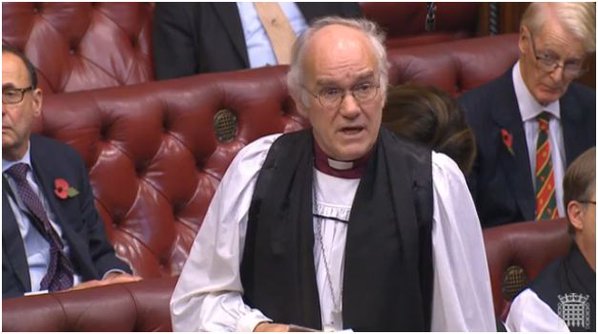 On Tuesday 7th March 2017, the House of Lords considered the Government’s EU (Notification of Withdrawal) Bill at Report Stage and Third Reading. A cross-party amendment led by Lord Pannick sought to ensure that Parliament had final approval of any Brexit deal negotiated with the EU by the Prime Minister. The Bishop of Chester, the Rt Revd Peter Forster, spoke in the debate on the amendment.
The Lord Bishop of Chester My Lords, whether Article 50 notification is revocable or irrevocable is a matter of policy or law. I believe that we could interrupt the process of leaving the EU only by another referendum. I think this is the point that the noble Lord, Lord Lawson, touched upon. In fact, the noble Baroness, Lady Altmann, made the same point at the beginning of her speech. If in two years’ time Parliament were seen to be blocking the departure of the United Kingdom from the European Union without another referendum, there would be a serious political situation in our country. Continue reading “EU (Notification of Withdrawal) Bill: Bishop of Chester on difficulties of amendment on parliamentary approval of Brexit deal”
EU (Notification of Withdrawal) Bill: Archbishop of York on difficulties of amendment giving parliament the final say on Brexit deal
 On Tuesday 7th March 2017, the House of Lords considered the Government’s EU (Notification of Withdrawal) Bill at Report Stage and Third Reading. A cross-party amendment led by Lord Pannick sought to ensure that Parliament had final approval of any Brexit deal negotiated with the EU by the Prime Minister. The Archbishop of York, Most Revd and Rt Hon John Sentamu, spoke in the debate on the amendment.
The Archbishop of York My Lords, I hope you will permit me to think aloud; these are not yet crystallised thoughts. I heard the exchanges between the noble Lords, Lord Pannick, Lord Hannay and Lord Forsyth, and I still want to work out some of the complications. For me, Amendment 3 provides for the intrusion of Parliament into the negotiation processes—which I do not think should happen—in such a way that it could prevent any deal ever being reached, because we would be involving ourselves in the processes. Continue reading “EU (Notification of Withdrawal) Bill: Archbishop of York on difficulties of amendment giving parliament the final say on Brexit deal”
Votes: EU (Notification of Withdrawal) Bill – second referendum
On 7th March 2017 the House of Lords considered the Government’s EU (Notification of Withdrawal) Bill at Report. A vote was held on an amendment from Liberal Democrat Peer Lord Newby to hold a second referendum on the outcome of Brexit negotiations . Seven Lords Spiritual took part. Continue reading “Votes: EU (Notification of Withdrawal) Bill – second referendum”
EU (Notification of Withdrawal) Bill: Archbishop of Canterbury – second referendum would ‘add to divisions’ in society
 On Tuesday 7th March 2017, the Lords considered the Government’s EU (Notification of Withdrawal) Bill at Report stage and Third Reading. Liberal Democrat Peer, Lord Newby, tabled an amendment seeking a national referendum on the final Brexit deal. The Archbishop of Canterbury, Most Revd & Rt Hon Justin Welby, spoke against the amendment.
The Archbishop of Canterbury My Lords, I apologise to the House for not having been present at earlier stages of the Bill, for medical reasons beyond my control. The benefit for your Lordships is that I will not be on my feet for long.
I was disappointed to miss the excellent debates at early stages. What unites us in this House, across all Benches, is how seriously we take our role as scrutineers. On our best days, we approach each question not on the basis of tribe or loyalty, but on the strength of the argument and how it might work for the common good of the whole country. On these Benches, we are not a party, nor do we follow a Whip. Today will see a significant number of Bishops appearing, not because we hold ourselves out as constitutional experts but because we are deeply embedded in every local community in England. We may dress the same, but we have independent minds, as anyone observing church politics recently will be well aware. So I speak today not in a corporate but in a personal capacity. Continue reading “EU (Notification of Withdrawal) Bill: Archbishop of Canterbury – second referendum would ‘add to divisions’ in society”
Higher Education and Research Bill: Bishop of Oxford supports amendment on disabled student needs
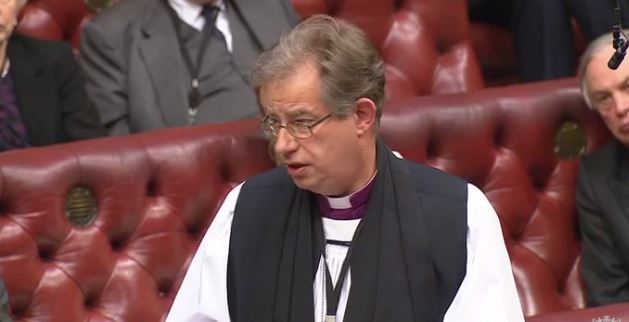 On the 6th March 2017, Baroness O’Neill tabled an amendment to the Government’s Higher Education and Research Bill at its Report Stage, to strengthen the requirements on universities to take account of the needs of disabled students. The Bishop of Oxford, the Rt Revd Steven Croft, spoke in support of the amendment, though it was subsequently not put to a vote.
The Lord Bishop of Oxford: My Lords, I add my voice in support of Amendment 7 in the names of the noble Baroness, Lady O’Neill, and the noble Lord, Lord Addington, and the two related amendments—Amendments 94 and 98—proposed by the noble Lord, Lord Addington.
Disabled young people are about half as likely to hold a degree-level qualification as those without a disability. True opportunity of access needs to make certain that everything possible is done to ensure that every student who wishes to partake in further study is able to do so and to succeed to the fullest of their potential with reasonable adjustments being made for them. Continue reading “Higher Education and Research Bill: Bishop of Oxford supports amendment on disabled student needs”
 The Church of England in Parliament
You must be logged in to post a comment.