On 20th February 2017 the House of Lords held the first in a two-day debate on the Government’s EU (Notification of Withdrawal) Bill. The Bill would give the Government authority to begin the process of withdrawal from the European Union. The Bishop of Southwark, Rt Revd Christopher Chessun, spoke in the debate:
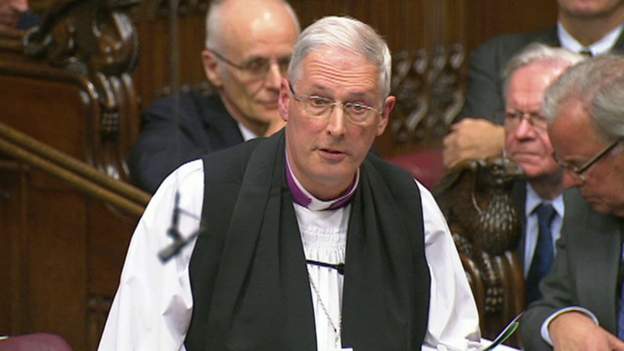
The Lord Bishop of Southwark:As many in your Lordships’ House are aware, my diocese covers most of south London and east Surrey. The voters there opted to remain in the European Union on 23 June 2016 by some margin; in the borough of Lambeth, where I live, nearly 80% of those voting opted to remain. Only in Sutton and in Surrey did votes tip the other way. What I have occasionally heard articulated, but have yet to see in action, is how the aspirations of those people—and indeed, if one thinks more widely, Londoners in general, or Scots, or the people of Northern Ireland or simply people under the age of 45—are to be taken into account. The majority of all these groups voted to remain. If we adopt a model for leaving the EU that ignores them, we risk a regional divide, generational resentment and a threat to the union.
Continue reading “EU (Notification of Withdrawal) Bill – speech by Bishop of Southwark”
 The Lord Bishop of Chester: My Lords, this is an important amendment because it touches upon the bigger issue of the impact of artificial intelligence on all sorts of aspects of our lives. There is a law called Moore’s law, which says that every two years the power of computers doubles. That has been true over the past 20 or 30 years and we should assume that that power will continue to develop. Artificial intelligence in all its impacting forms will be more and more prevalent in our society and more and more potent in the hands of terrorists in the years to come.
 On 1st February 2017, the House of Lords debated the Government’s Technical and Further Education Bill at its Second Reading. The Bishop of Norwich, Rt Revd, Graham James welcomed its proposals.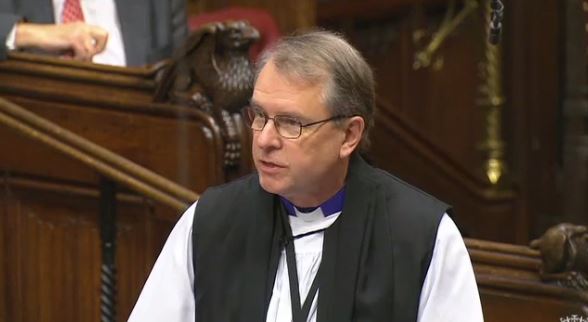
 The Lord Bishop of Durham: My Lords, it is my privilege to have added my name to this amendment. My favourite Christmas card of the past year came from a refugee from Burundi. Last summer, when I visited Burundi, I accessed the rector of the university that she had had to flee and arranged for her qualifications from that university to be released and forwarded to her in this country so that she could commence university, which she will do in September this year. It was a huge relief to her because without that piece of paper she would have had to return and undertake A-levels. In her Christmas card she not only thanked me, but said that it was being able to access higher education straightaway that made her feel welcome and wanted, and that we believed in integrating her into our country.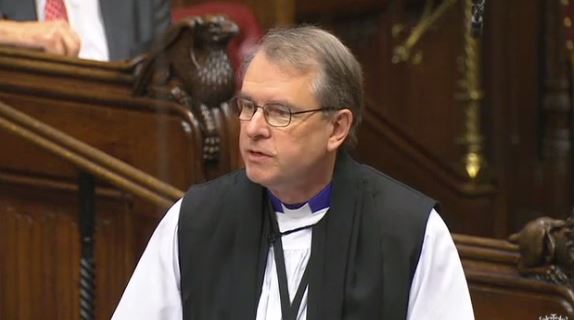
 The Archbishop of York: My Lords, the amendment is asking the bodies concerned to seek advice from the commission and those who advise that tells them it would be good to do it this way. Because of its permissive nature, I hope the Minister will see this as helping. As somebody from a minority ethnic group, I have always benefited from the human rights commission. The advice that I have just mentioned is not intrusive; it is a good thing. Universities should hold before themselves, in all their aspects, a mirror, to see whether their leadership, in different places, reflects the nature of the university.

You must be logged in to post a comment.