
On 1st March 2017 the House of Lords considered the Government’s EU (Notification of Withdrawal) Bill at committee. A vote was called on an amendment from Labour Peer Baronss Hayter. Five Lords Spiritual took part. Continue reading “Votes: EU (Notification of Withdrawal) Bill”
Category: Bills
Legislation before Parliament
Votes: Neighbourhood Planning Bill
On 28th February 2017 the House of Lords voted on an amendment to the Government’s Neighbourhood Planning Bill. The Bishop of St Albans took part in the vote.The Archbishop of York spoke in favour of the amendment. Continue reading “Votes: Neighbourhood Planning Bill”
Neighbourhood Planning Bill: Archbishop of York supports amendment on community value of pubs
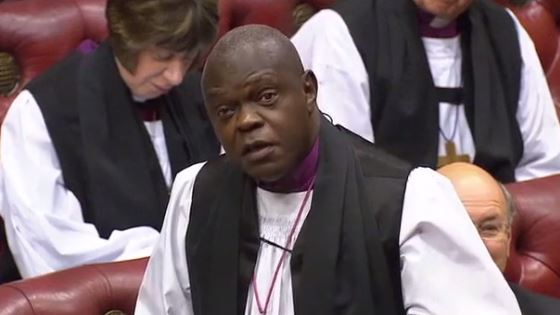 On 28th February 2017 the House of Lords considered the Government’s Neighbourhood Planning Bill at Report Stage. The Archbishop of York, Most Revd and Rt Hon John Sentamu, spoke in favour of an amendment to ensure planning permission had to be granted for a change of use for pub buildings. The amendment was passed at a vote. Continue reading “Neighbourhood Planning Bill: Archbishop of York supports amendment on community value of pubs”
EU (Notification of Withdrawal) Bill: Bishop of Newcastle highlights contribution of Newcastle University to North East economy
 On 27th February 2017, Labour Peer Baroness Quin moved an amendment to the Government’s EU (Notification of Withdrawl) Bill, requiring Government to undertake an impact assessment of the impact of Brexit on the North-East of England. The Bishop of Newcastle, the Rt Revd Christine Hardman, spoke to the amendment to highlight the contribution of Newcastle University to the North-East economy. The amendment was later withdrawn after debate.
Bishop of Newcastle: My Lords, I declare an interest as a member of the court of Newcastle University. The amendment tabled by the noble Baroness, Lady Quin, and the noble Lord, Lord Shipley, asks for an impact assessment of the effect of Brexit on the economy of the north-east. When we think about that economy, perhaps our thoughts turn first to the EU funding that the economy receives and then to the manufacturing sector. But the city of Newcastle is deeply enriched by the presence of two first-class universities, and there are 50,000 students in Newcastle. Tomorrow a report will be released to the media which details the extraordinary contribution of Newcastle University to the economy of the north-east. Continue reading “EU (Notification of Withdrawal) Bill: Bishop of Newcastle highlights contribution of Newcastle University to North East economy”
Bishop of Southwark supports Homelessness Reduction Bill
On 24th February 2017 the House of Lords considered the Homelessness Reduction Bill, a Private Member’s Bill from Lord Best and Bob Blackman MP. The Bishop of Southwark, Rt Revd Christopher Chessun, spoke in support:
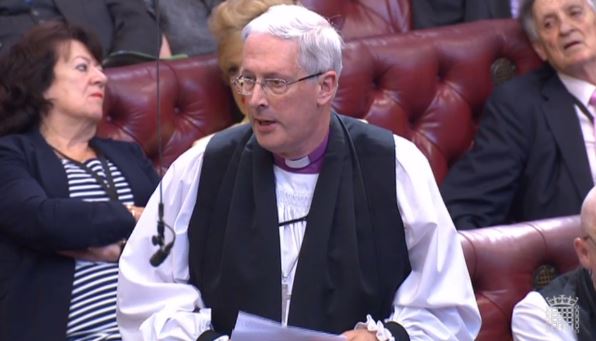 The Lord Bishop of Southwark: My Lords, in common with the sentiments already expressed, I strongly support this Bill with its emphasis on the reduction of homelessness. Like others, I am heartened by the cross-party work that has been done, not least by the Government, to bring this important legislation to this point. I congratulate the noble Lord, Lord Best, on his sponsorship of the Bill and, in another place, Mr Bob Blackman, the Member for Harrow East. I trust that we will expedite matters at all stages of the Bill and fully endorse what was said by my friend the right reverend Prelate the Bishop of Rochester. Continue reading “Bishop of Southwark supports Homelessness Reduction Bill”
Bishop of Rochester supports Homelessness Reduction Bill
On 24th February 2017 the House of Lords considered the Homelessness Reduction Bill, a Private Member’s Bill from Lord Best and Bob Blackman MP. The Bishop of Rochester, Rt Revd James Langstaff, spoke in support:
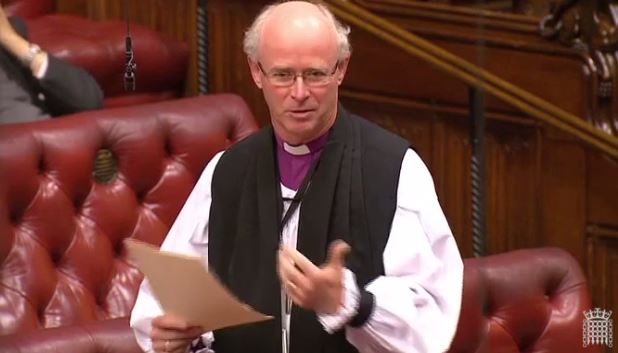 The Lord Bishop of Rochester: My Lords, I declare my interest as the chair of the organisation Housing Justice and thank the noble Lord, Lord Best, for his sponsorship of this Bill in your Lordships’ House. I also add my thanks to Bob Blackman, the Member for Harrow East, for his initiative in bringing forward the Bill in the other place. Before turning to the specifics of the Bill, I will echo the final points made by the noble Lord about the connection between the wider issues of housing supply and housing finance and the sharper end of homelessness which we see on our streets and in other manifestations. It would be such a tragedy if some of those wider matters were not tackled and frustrated the good intentions of this Bill. Continue reading “Bishop of Rochester supports Homelessness Reduction Bill”
Votes: Neighbourhood Planning Bill
On 23rd February 2017 the House of Lords voted on an amendment to the Government’s Neighbourhood Planning Bill. The Archbishop of York took part in the vote: Continue reading “Votes: Neighbourhood Planning Bill”
Neighbourhood Planning Bill: Archbishop of York supports amendment on planning regulations
 On 23rd February the House of Lords considered the Government’s Neighbourhood Planning Bill at Report Stage. The Archbishop of York, Most Revd & Rt Hon John Sentamu spoke in support of an amendment from Lord Stunell on planning authority regulations.
The amendment was put to a vote and passed by 113 votes to 107.
Amendment 18
Moved by Lord Stunell
18: Clause 13, page 14, line 5, at end insert—
“(2A) No regulations shall be made under subsection (1) that would have the effect of preventing a local planning authority from requiring a condition that would otherwise be in conformity with the national planning policy framework.”
The Archbishop of York: My Lords, first, I apologise to the noble Baroness, Lady Cumberlege. I was whispering to her because the spirit was on me, and was saying, “Preach it, sister, preach it”, as she referred to a document as a bible.* Continue reading “Neighbourhood Planning Bill: Archbishop of York supports amendment on planning regulations”
Neighbourhood Planning Bill: Archbishop of York supports amendment on new towns
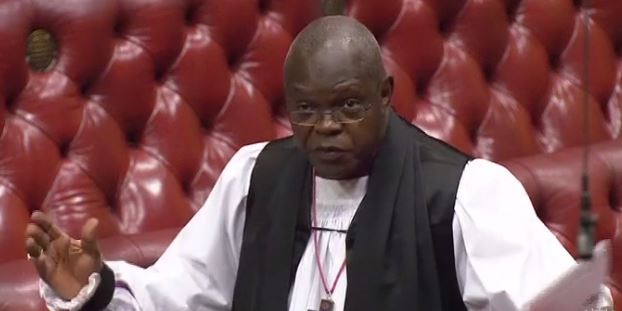 On 23rd February the House of Lords considered the Government’s Neighbourhood Planning Bill at Report Stage. The Archbishop of York, Most Revd and Rt Hon John Sentamu spoke in support of an amendment from Baroness Parminter on new towns. Baroness Parminter said “The amendment introduces the principle of localism to the New Towns Act to enable the delivery of the highest quality new garden villages and towns by locally accountable elected local planning authorities rather than, as at present, any such development corporation being established on the initiative of a local authority and agreed by the Secretary of State”. The amendment was withdrawn after debate and following assurances from Government.
The Archbishop of York: My Lords, I spoke at Second Reading about building flourishing communities, not just houses, and emphasised the contribution of affordable housing and green spaces to communal life. If land has been compulsorily purchased, surely the powers need to be given back to the local community to decide what kind of housing will go there. The Government have been very good at taking measures to increase the supply of affordable housing. However, the number of completed social rented homes has decreased from just under 40,000 in 2010-11 to just 6,550 in 2015-16, and affordable housing completions more generally, including other tenures, are at the lowest level for 24 years. The recent government housing White Paper showed a greater focus on homes to rent and it is important that that includes genuinely affordable social homes to rent, which is the only affordable housing tenure suitable for those on the lowest incomes. Continue reading “Neighbourhood Planning Bill: Archbishop of York supports amendment on new towns”
Votes: Digital Economy Bill
On 22nd February 2017, several bishops took part in three votes on the Government’s Digital Economy Bill. Continue reading “Votes: Digital Economy Bill”


You must be logged in to post a comment.