Bishop of Peterborough Raises Plight of Missionaries in North Korea

On 18th March 2014 Lord Alton of Liverpool asked Her Majesty’s Government “what assessment they have made of the findings of the United Nations commission of inquiry into human rights in North Korea.”

The Bishop of Peterborough, Rt Rev Donald Allister, asked a supplementary question:14.02 Peterborough
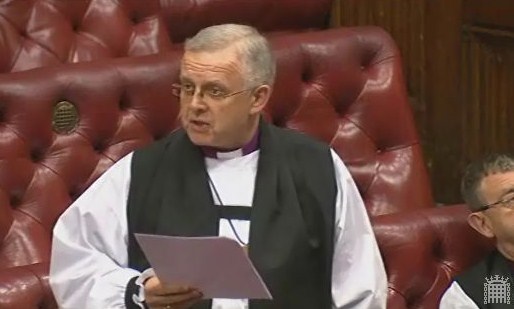
The Lord Bishop of Peterborough: My Lords, can the Minister confirm recent reports of the possible execution of 33 people for allegedly plotting to overthrow the regime by their association with the South Korean missionary, Kim Jung-wook? What efforts are being made to urge the North Korean authorities not to proceed with such executions and to respect freedom of religion?

Baroness Warsi: We are aware of these terrible reports. Of course, this relates to the suspicion that these individuals were involved with the creation of an underground church under the support of Kim Jung-wook, a South Korean who was arrested by the DPRK last year. As noble Lords are aware, freedom of religion and belief is a key priority for the Foreign and Commonwealth Office and we make those views clear to the North Koreans. I am sure that the right reverend Prelate will accept that we have only so many mechanisms with which to make our opinions known on this matter.

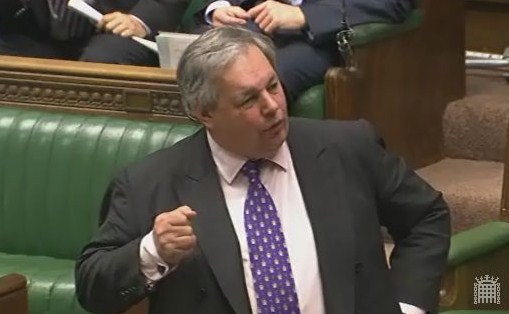
Church Commissioner Rt Hon Sir Tony Baldry MP answers written questions from Pamela Nash MP

Second Church Estates Commissioner, Rt Hon Sir Tony Baldry MP, answered a number of written questions from Pamela Nash MP on the Church of England, Churches and LGBT people. 

Church of England

Pamela Nash: To ask the right hon. Member for Banbury, representing the Church Commissioners, what assessment the Church Commissioners have made of recent trends in the proportion of Church of England congregations that are(a) from black and Asian minority ethnic groups, (b) women, (c) disabled people and (d) from low-income groups.

14.01 CCQ BaldrySir Tony Baldry: The most recent assessment of the proportion of Church of England congregations that are women and from Black and Asian minority ethnic groups was in the 2007 Congregational Diversity Audit. This was the first time such a survey had been conducted, and therefore no trends are yet available. It did not record information on people with disabilities and those from low-income groups.

The 2007 Diversity Audit showed that Black and Black British adults were more likely to belong to Church of England local congregations than their White counterparts. This results in a stronger picture of congregational strength in those dioceses where the presence of Black and Black British adults is high, for example, urban areas. Continue reading “Church Commissioner Rt Hon Sir Tony Baldry MP answers written questions from Pamela Nash MP”

Palace at Bath and Wells: Church Commissioners’ Written Answers

Second Church Estates Commissioner, Rt Hon Sir Tony Baldry MP, answered two written questions from Tessa Munt MP on the Church Commissioners plans for the Palace at Wells.

Tessa Munt: To ask the right hon. Member for Banbury, representing the Church Commissioners, what consideration the Church Commissioners gave to the historical or other interest of the residence at the Bishop’s Palace at Wells before planning alternative accommodation for the bishop in accordance with section 4 of the Episcopal Endowments and Stipends Measure 1943.

The Palace at Bath and Wells (picture courtesy of bishopspalace.org.uk)

Sir Tony Baldry: Section 4 of the Episcopal Endowments and Stipends Measure 1943 applies only where the Commissioners propose to exercise a power conferred by that Measure—that is to say, to transfer a house to the diocesan authority, convert it for use for other purposes, sell, let or otherwise dispose of it, or demolish it or part of it. The Commissioners have not exercised any of those powers in relation to the Palace, as the intention is that the Bishop will continue to work and worship there. Continue reading “Palace at Bath and Wells: Church Commissioners’ Written Answers”

Egypt: Written Questions from Bishop of Coventry

On March 18th 2014 the Bishop of Coventry, Rt Rev Christopher Cocksworth, received answers to two written questions about Egypt: election monitoring and the suspension of export licences for equipment that could be used for internal repression. Continue reading “Egypt: Written Questions from Bishop of Coventry”

Archbishop of Canterbury Raises Concern About Conflict in Central African Republic, South Sudan

Updated: The Archbishop of Canterbury asked three written questions of Government, on conflict in the Central African Republic and on sexual violence and war crimes in South Sudan. They were responded to on 10th and 11th March 2014 by the Foreign Office Senior Minister of State, Baroness Warsi.  The questions and their replies are below.

Central African Republic

(via Parliament.uk)

ImageThe Archbishop of Canterbury: To ask Her Majesty’s Government what steps they are taking to support the stabilisation of the conflict in the Central African Republic, particularly in ensuring that sectarian violence does not develop into inter-religious conflict.

 The Senior Minister of State, Department for Communities and Local Government & Foreign and Commonwealth Office (Baroness Warsi) (Con): We are greatly concerned by the situation on the ground in the Central African Republic (CAR). The UK provided £15 million to the humanitarian appeal and a further £2million to the African Union to cover some of the African-led International Support Mission to CAR (MISCA)’s operation. Continue reading “Archbishop of Canterbury Raises Concern About Conflict in Central African Republic, South Sudan”

Restorative Justice: Bishop of Peterborough Calls For Greater Use

Baroness Gardner of Parkes asked Her Majesty’s Government how many offenders received multiple cautions in the past year; and what plans they have to review the guidance to the police on the use of cautions for serious crimes.

The Bishop of Peterborough asked a supplementary question:14.02 Peterborough

The Lord Bishop of Peterborough: My Lords, the Minister mentioned restorative justice. Does he agree that, alongside limited use of cautions, a greater use of restorative justice interventions could be of great help, both in reducing reoffending and in supporting victims?

Lord Faulks: My Lords, I agree with the right reverent Prelate. There is a great case for restorative justice in appropriate cases, and it is indeed an option for it to be part of the conditional caution. There is increasing approval in this House and outside of its use.

(via Parliament.uk)

Bishop of Norwich presses Government on sustainability of GP numbers

NHS: General Practitioners

(via Parliament.uk)

The Bishop of Norwich asked a written question of Government, on the number of GPs available for primary care needs in the next five years. He received an answer from the Parliamentary Under-Secretary of State for Health, Earl Howe, on 10th March 2014. The question and reply are below.

The Lord Bishop of Norwich:

The Bishop of Norwich, Rt Revd Graham James

To ask Her Majesty’s Government what steps they are taking to ensure that there are adequate numbers of general practitioners (GPs) available for primary care needs in England over the next five years in the light of the age profile of current practising GPs, their increasing role as commissioners, and the impact of the introduction of revalidation for all doctors.

The Parliamentary Under-Secretary of State, Department of Health (Earl Howe): The Department set up Health Education England (HEE) to deliver a better health and healthcare workforce for England. HEE is responsible for ensuring a secure workforce supply for the future balancing need against demand, taking into account factors such as the age profile of the existing workforce, the impact of technology, and new drugs. Continue reading “Bishop of Norwich presses Government on sustainability of GP numbers”

FGM: Bishop of St Albans asks Government about counselling support

Baroness Prosser asked Her Majesty’s Government what steps they are taking to ensure that government departments work together to identify girls at risk of female genital mutilation and provide them with the necessary support.

The Bishop of St Albans asked a supplementary question:14.03 Bishop of St Albans

The Lord Bishop of St Albans: My Lords, I welcome the Secretary of State for Education’s commitment to provide the guidelines to schools on protecting children who are at risk of genital mutilation. Will the noble Baroness tell the House what further steps are being taken to provide for and to support properly trained counsellors who really understand the cultural background to this issue so that we are not only protecting children but supporting those who are at risk or may already have been abused?

Baroness Jolly: Work is going on with local communities. A £100,000 grant has been given to set up training so that people could work with NGOs and local schools to pick up exactly the type of issue that the right reverend Prelate has outlined.

(via Parliament.uk)

Vocational Education: Bishop of Chester Responds to Government Announcement

The Bishop of Chester, the Rt Revd Peter Forster responded to the Government statement on a new vocational qualifications reform plan. The Bishop welcomed the need to reform vocational education and expressed a concern that continued narrowing of curricula, he also urged the Government to ensure the soft skills needed by employers were also valued.

The Lord Bishop of Chester: My Lords, I warmly welcome the Statement in its intention. Clearly there needs to be a greater focus on vocational qualifications in FE but the danger is that the move towards focusing ends up with narrowness. I think that was the concern expressed by the noble Lord, Lord Young, in his response. Indeed, we just heard of the need to learn about life as well as a particular skill. Continue reading “Vocational Education: Bishop of Chester Responds to Government Announcement”

Academy Chains & Inspection: Bishop of Chester Question

Baroness Hughes of Stretford asked Her Majesty’s Government, following the decision to remove 10 academies from the E-ACT Academy chain, what action they are taking to ensure that other chains are managing schools satisfactorily.

The Bishop of Chester asked a supplementary question.

The Lord Bishop of Chester: My Lords, I should like to return to the issue of inspection. In as much as the multichain bodies are involved in the governance of all the academies in their chain, and Ofsted inspects governance, why does Ofsted not also inspect the chains themselves?

Lord Nash: Ofsted looks at the support that chains are giving to their schools, and we have a very tight grip on the governance of all the chains. We have been in discussions with 50 chains to strengthen their governance arrangements

(via Parliament.uk)