Bishop of Chelmsford calls for implementation of Low Commission findings on legal aid

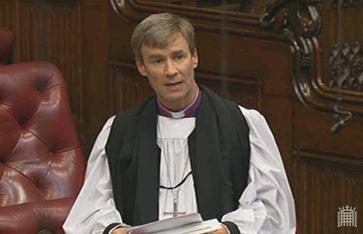
On 7th July 2014, Lord Bach asked Her Majesty’s Government, 15 months after the coming into force of the Legal Aid, Sentencing and Punishment of Offenders Act 2012, what is their assessment of the effect of the Act on the legal advice system in relation to social welfare law in England and Wales. The Bishop of Chelmsford, the Rt Revd Stephen Cottrell, asked a supplementary question:
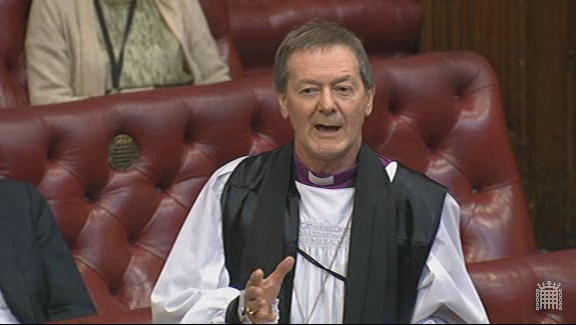
14.06.09 Chelmsford 3The Lord Bishop of Chelmsford: My Lords, I, too, should like to make reference to the Low commission. The church, faith communities and charities are all too keenly aware of the impacts of some of the cuts in legal aid on the poorest communities in our country. Sometimes a professional lawyer is needed. Would the Minister still regard the proposals of the Low commission for a nationally resourced strategy to provide support and legal advice as an important priority?
Lord Faulks: My Lords, as I said in response to the debate, it was a valuable contribution. The LASPO reforms were implemented only in April 2013; it is relatively early days. We are considering carefully the effects of these reforms. We have not ruled out the possibility of further changes but, at the moment, the various steps we are taking are helping to ensure that those who need representation are receiving it.

Bishop of Truro highlights church support for independent inquiry into abuse cases

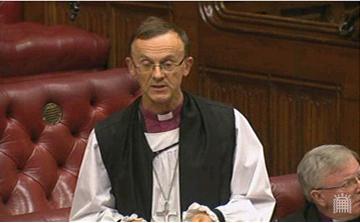
On 7th July 2014, a Government statement on an inquiry into child abuse was repeated in the House of Lords. The Bishop of Truro, the Rt Revd Tim Thornton, asked a question about Church involvement in the matter.

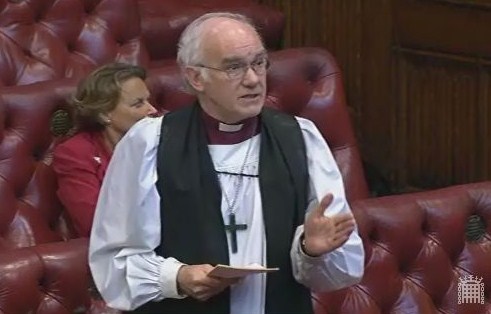
Bishop of Truro 20.6.13The Lord Bishop of Truro: My Lords, I welcome the Statement. The church is keen to be involved in any such overarching inquiry. A question was asked in the other place about whether the church is involved in this matter. Is the Minister aware that my friend the most reverend Primate the Archbishop of Canterbury wrote to the Home Secretary some weeks ago asking for an inquiry such as this? The church is very willing to be involved. In a situation such as this—in which, inevitably and sadly, people involved in various authorities at a high level would be related to other authorities and institutions—it is crucial that such an inquiry is allowed to go wherever it needs to go. The church and other organisations and institutions should explicitly be involved in this matter. Perhaps I may add as chairman of the Children’s Society that we would be keen to stress that the voice of children and young people should be always in the centre of one’s thoughts on any matters such as this. If any matters come to light through this inquiry that need to be directed to the police, that will, one hopes, happen and they will be dealt with swiftly and decisively.

Lord Taylor of Holbeach: I pay tribute to the role of the church in the care of children. I am sure that the Home Secretary will note the offer of involvement in the review and these inquiries. I am delighted that the right reverend Prelate has raised this issue. The involvement of church activists in the national group to tackle sexual violence against children and vulnerable people is an important start.

(via Parliament.uk)

Bishop of Worcester calls for action on sexual violence in South Sudan

On July 7th 2014, the Bishop of Worcester, the Rt Revd John Inge, received an answer to a written question on South Sudan.

WorcesterThe Lord Bishop of Worcester: To ask Her Majesty’s Government what assessment they have made of the prevalence of sexual violence in the conflict in South Sudan; whether they are planning to deploy suitable experts from the Stabilisation Unit to strengthen and support efforts in South Sudan to respond; and, if so, when.

The Senior Minister of State, Department for Communities and Local Government & Foreign and Commonwealth Office (Baroness Warsi) (Con): We are deeply concerned by reports of human rights violations and abuses in South Sudan, including the widespread use of sexual violence. We fully support the work of the Africa Union Commission of Inquiry and echo the call in the recent UN Human Rights Council resolution for thorough and genuine investigations into all human rights violations and abuses and for the perpetrators to be brought to justice.

The UK is funding a project with non-governmental organisation Non Violent Peaceforce to establish women’s protection teams in Northern Bahr El Ghazal. This project aims to tackle sexual violence in communities affected by insecurity around the border with Sudan by establishing and training women’s peacekeeping teams to work within communities. We continue to raise the issue of human rights, and of sexual violence specifically, with South Sudanese Ministers. The Parliamentary Under-Secretary of State for Foreign and Commonwealth Affairs, my hon. Friend the Member for Boston and Skegness (Mr Simmonds), discussed the issue with the Foreign Minister of South Sudan at the Global Summit to End Sexual Violence in Conflict on 11 June. Our Ambassador also raises these issues regularly with the Government of South Sudan.

There are currently no plans to send additional experts from the Stabilisation Unit to South Sudan. However, we keep all such plans under constant review.

(via Parliament.uk)

Bishop of Oxford updates Government on appointment of new Bishop of Guildford and progress of women bishops legislation

On 3rd July 2014, the Conservative Peer Lord Trefgarne asked Her Majesty’s Government whether the Prime Minister is yet in a position to make a recommendation to Her Majesty the Queen in respect of a new Bishop for Guildford. The Bishop of Oxford, the Rt Revd John Pritchard, asked a supplementary question.

AerialCathedral
Guildford Cathedral

The transcript of the original question and all supplementary questions is reproduced below: Continue reading “Bishop of Oxford updates Government on appointment of new Bishop of Guildford and progress of women bishops legislation”

Bishop of Worcester asks about protection of civilians in South Sudan (Written Questions)

On 2nd July 2014, the Bishop of Worcester, the Rt Revd John Inge, received answers to three written questions on South Sudan.

WorcesterThe Lord Bishop of Worcester: To ask Her Majesty’s Government what support they are offering members of the Intergovernmental Authority on Development to stop small arms entering South Sudan.

The Senior Minister of State, Department for Communities and Local Government & Foreign and Commonwealth Office (Baroness Warsi) (Con): The members of the Intergovernmental Authority on Development (IGAD) have played an important role in the mediation efforts and have consistently called for both parties to respect the cessation of hostilities to solve the ongoing crisis in South Sudan and commit fully to the mediation process. Although South Sudan is not subject to an UN Arms Embargo, we have been clear that the actions of its neighbours should not in any way exacerbate the conflict. South Sudan has been subject to an EU Arms Embargo since its independence. Continue reading “Bishop of Worcester asks about protection of civilians in South Sudan (Written Questions)”

Bishop of Oxford calls for action on sexual violence in Syria

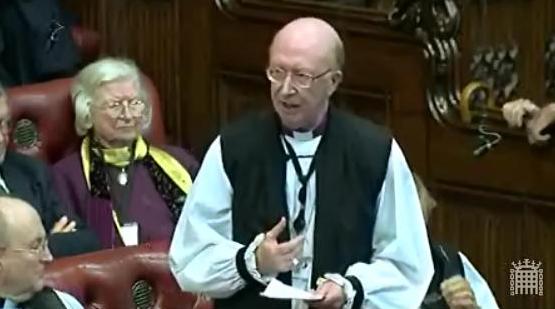
On 2nd July 2014, Conservative Peer Baroness Jenkin of Kennington asked Her Majesty’s Government for their assessment of the alleged sexual violence crimes committed against Syrian civilians in Syria.The Bishop of Oxford, the Rt Revd John Pritchard, asked a supplementary question.

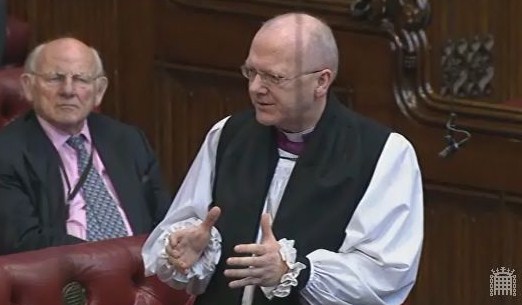
11.12.15 Bishop of OxfordThe Lord Bishop of Oxford: My Lords, given that discussion of sexual violence is always a very sensitive subject in any culture, will the Minister give assurance that the Preventing Sexual Violence Initiative team that is working in Syria will draw in responsible, enlightened religious leaders to combat the stigma that is so often associated with these awful crimes? This can prevent the kind of recriminations and rejection by communities and families that can result from them.

Baroness Warsi: The right reverend Prelate makes an incredibly important point. Faith as part of the solution to dealing with sexual violence was an important element of the summit, and we hosted two very successful fringe events. One involved a coalition mainly of church leaders, called We Will Speak Out. The other was at ministerial level where we hosted Sheikh Bin Bayyah, the Archbishop of Canterbury and the Archbishop of Westminster, Cardinal Vincent Nichols, and discussed the way in which we can get faith communities to be the first point of support in both providing protection and changing the culture that perpetuates the culture of impunity.

(via Parliament.uk)

Second Church Estates Commissioner highlights role of Leicester Cathedral in commemorating King Richard III

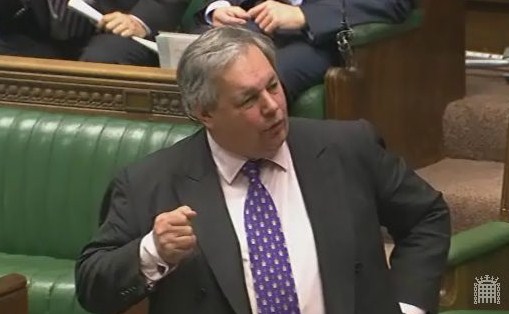
In the House of Commons on 1 July 2014, the Second Church Estates Commissioner, the Rt Hon St Tony Baldry MP, took part in oral questions to the Secretary of State for Justice. He asked a supplementary question on the commemoration of King Richard III, which was answered by the Minister of State, the Rt Hon Simon Hughes MP.


King Richard III

14.01 CCQ BaldrySir Tony Baldry (Banbury) (Con): As the Minister said, Richard III was the King of all England, not just of York or Yorkshire. Is he aware that the Dean and Chapter of Leicester Cathedral see it as their responsibility to rebury the remains of King Richard and to commemorate his memory on behalf of the whole nation, and not just for Leicester or York?

Simon Hughes: I have every confidence that the Dean and Chapter of Leicester cathedral will do that job for the nation. I understand that they intend to apply for an extension so that it may be done in the spring of next year. I believe that it will be a great credit to Leicester and will bring great joy to the people of Leicestershire that a King of England is buried in their county.

(via Parliament.uk)

Bishop of Derby urges caution over response to recent violence in Middle East

On 1st July 2014, the Baroness Warsi made a statement on the Middle East Peace Process. The Bishop of Derby, the Rt Revd Alastair Redfern, asked a question about what the government is doing to promote a measured response to the recent events in the Holy Land.

DerbyThe Lord Bishop of Derby: On behalf of these Benches, we associate ourselves with the condolences to the families and the widespread grief on all sides. We welcome the statement by the unity Government but an inevitable reaction to grief, especially with the death of the young, is anger. Yet grief is something that is never handled by anger; it requires time for reflection, engagement and a deeper kind of approach to the issue at stake. Can the Minister assure us that, in our work to seek peace, we will do everything we can to mitigate the knee-jerk reaction of anger and invite people to think more deeply about the human content of grief and how to deal with it?

Baroness Warsi: We will of course do that. The right reverend Prelate makes important points, but I think he would also say—and on a very personal basis, I acknowledge this as a mother—that it must be incredibly difficult to reach that second phase when you have just lost your children.

(via Parliament.uk)

Bishop of St Albans supports efforts to encourage young people to vote

On 1st July 2014, Liberal Democrat peer Lord Storey asked Her Majesty’s Government what plans they have to encourage educational establishments to take part in National Voter Registration Day 2015. The Bishop of St Albans, the Rt Revd Alan Smith, asked a supplementary question.

Bishop of St AlbansThe Lord Bishop of St Albans: My Lords, the Question is about encouraging educational establishments to encourage a whole new generation of people to engage in the electoral process. Of course, next year is a hugely significant year, with the 800th anniversary of Magna Carta. Can we not only encourage our schools to use this as an opportunity to really inspire people to think about civil participation, citizenship and so on but find some imaginative ways to give people the information in the educational packs that will be used next year?

Lord Wallace of Saltaire: My Lords, certainly. We trust that the churches will play their own role, and perhaps we will have mentions in sermons of civic duty and what one should render unto Caesar as well as unto God.

(via Parliament.uk)

Bishop of Chester asks question on assessment of needs of dyslexics in higher education

On 30th June 2014, Liberal Democrat peer Lord Addington asked Her Majesty’s Government how the assessment of complex needs for dyslexics will be achieved under the new Disabled Students’ Allowance arrangements. The Bishop of Chester, the Rt Revd Peter Forster, asked a supplementary question.
14.03 Bishop of ChesterThe Lord Bishop of Chester: My Lords, I declare an interest in that my younger son has just graduated successfully and has benefited from the computer and software for someone with dyslexia. People with dyslexia often flourish later in the educational process as they gain their coping mechanisms. Does this not mean that it is even more important to make sure that this support is fully in place, not least at university?
Lord Ahmad of Wimbledon: The right reverend Prelate makes an important point, and I congratulate him on his son’s successful graduation. The point he makes is perfectly valid. I have already mentioned that we will be looking at a full equality impact assessment before laying the regulations. I am sure that part and parcel of that process, and the discussion around those regulations, will be to cover the points that the right reverend Prelate has made.