Iran – Written Question

On 13th May 2014, the Rt Revd Christopher Cocksworth, Bishop of Coventry, received an answer to a written question on Iran.
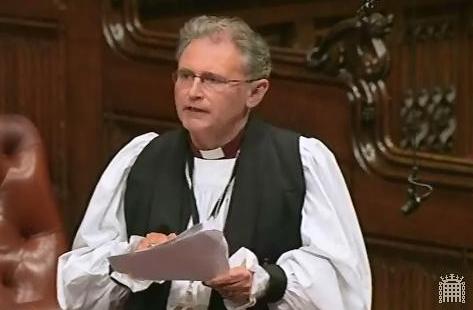
13.10 Bishop of CoventryThe Lord Bishop of Coventry: To ask Her Majesty’s Government whether the question of human rights and freedom of religion and belief was amongst the range of international issues discussed by the Foreign Office’s Political Director, Sir Simon Gass, when he met senior Iranian officials whilst visiting Iran in April.

Baroness Warsi: Human rights were not amongst the issues discussed by Sir Simon Gass on his visit to Iran in April: his interlocutors did not have responsibilities in this area. However, the UK’s non-resident Chargé d’Affaires discussed human rights with a range of Iranian government officials during his visit to Iran on 12 March 2014. He raised the use of the death penalty, freedom of religion and the workings of the criminal justice system. Prior to that, the Secretary of State for Foreign and Commonwealth Affairs, my Rt. Hon. Friend the Member for Richmond (Yorks) (Mr Hague), raised Iran’s human rights records with Iranian foreign minister Zarif at the UN General Assembly on 23 September 2013.

(via Parliament.uk)
Energy, Consumer Credit Advertising and Iran – Written Questions

On 13th May 2014, the Rt Revd Alan Smith, Bishop of St Albans, received answers to written questions on petroleum gas and oil, consumer credit advertising, and Iran.


14.03 Bishop of St AlbansEnergy: Petroleum Gas and Oil

The Lord Bishop of St Albans: To ask Her Majesty’s Government how they intend to ensure the continuing affordability of liquid petroleum gas and oil for those households which are not on mains gas supply.

The Parliamentary Under-Secretary of State, Department of Energy and Climate Change (Baroness Verma): Her Majesty’s Government is acutely aware of the difficulties people have experienced with the price of liquid petroleum gas and heating oil. The price of LPG and oil is influenced by a range of factors, including crude oil prices (the major factor), refinery capacity, stock levels, distribution costs and retail margins.

Continue reading “Energy, Consumer Credit Advertising and Iran – Written Questions”

Bishop of St Albans receives answers to written questions on benefits, electricity and housing

On 12th May 2014, the Rt Revd Alan Smith, Bishop of St Albans, received answers to three written questions on benefits, electricity and housing.

Benefits

14.03 Bishop of St AlbansThe Lord Bishop of St Albans: To ask Her Majesty’s Government what assessment they have made of the financial impact on people on low incomes of uprating most cash benefits and tax credits by one per cent from April 2013 rather than in line with inflation.

The Parliamentary Under-Secretary of State, Department for Work and Pensions (Lord Freud): For 2013/14, the main rates of working-age benefits, statutory payments and tax credits were up-rated by one per cent in the Social Security Benefits Up-rating Order 2013. The Welfare Benefits Up-rating Act 2013 provided for the one per cent increase to apply for 2014/15 and 2015/16. Both of these were accompanied by Impact Assessments.

As part of his ongoing public sector equality duty under the Equality Act 2010 to monitor impacts on “protected groups”, the Secretary of State continues to monitor the impacts of the Welfare Benefits Up-rating Act 2013 in light of any changes to the underlying rate of inflation. The underlying rate of inflation for increases in 2014/15 is similar to that forecast by the Office for Budget Responsibility and used in the Impact Assessment. It is therefore likely that the impacts on affected households will be broadly similar to those detailed in the Impact Assessment.

(via Parliament.uk)

Continue reading “Bishop of St Albans receives answers to written questions on benefits, electricity and housing”

Bishop of Oxford asks for Government assurances on nurse / patient ratios in NHS

On 12th May 2014 Baroness Kennedy of Cradley asked Her Majesty’s Government “what steps are being taken to ensure adequate levels of nursing staff in the National Health Service.”

The Bishop of Oxford asked a supplementary question, drawing parallels between staffing obligations and the situation of Thanet Clinical Commissioning Group, which had been warned about disregarding NICE guidelines on another case:

11.12.15 Bishop of OxfordThe Lord Bishop of Oxford: My Lords, given the court ruling last week against  Thanet Clinical Commissioning Group, saying that it was obliged to follow NICE guidelines unless a special factor could be determined that would justify departure, will Her Majesty’s Government give an assurance that the same test will apply to NHS trusts in regard to the ratio of nurses and patients?

Earl Howe: The guidance issued today by NICE on staffing ratios, to which I think the right reverend Prelate is specifically referring, is in draft, but the deputy chief executive of NICE has stressed that there are no floor or ceiling numbers on the required number of nursing staff that can be applied either across the whole of the NHS or in a particular ward setting. What the profession is seeking, and what NICE is looking to give it, is a reference tool or guideline that will enable it to judge correct staffing levels in accordance with the particular circumstances of a ward and the skill mix of the staff on that ward. It is a guideline rather than a mandatory prescription.

(via Parliament.uk)

Apprenticeships – Written Questions

On 6th May 2014, the Rt Revd Alan Smith, Bishop of St Albans, recieved answers to two written questions on the subject of apprenticeships.

14.03 Bishop of St AlbansThe Lord Bishop of St Albans: To ask Her Majesty’s Government what percentage of apprentices enter into employment with the company to which they were apprenticed after their apprenticeship scheme has finished.

Lord Ahmad of Wimbledon (Con): We publish information on learning outcomes on the Further Education Choices website to help better inform learner choices. This website presents information on learner outcomes with any employer as well as other destinations:

http://fechoices.skillsfundingagency.bis.gov.uk

Continue reading “Apprenticeships – Written Questions”

Bishop of Worcester raises concerns about use of sexual violence in Central African Republic (Written Questions)

On 6th May 2014, the Rt Revd John Inge, Bishop of Worcester, recieved answers to two written questions on the Central African Republic.

WorcesterThe Lord Bishop of Worcester: To ask Her Majesty’s Government what assessment they have made of the extent to which sexual violence has been used by all parties to the conflict in the Central African Republic.

Lord Wallace of Saltaire: Reports suggest that sexual violence in conflict is widespread in the Central African Republic (CAR). UN Security Council Resolution 2149 on CAR authorises a UN Peacekeeping Operation which will, as part of its mandate, be required to help to prevent sexual violence, and contribute to efforts to identify and prosecute perpetrators. The UK is also looking to provide funding to the African Union (AU)’s response to the urgent needs of CAR’s victims of sexual violence, and to track and report on specific occurrences of sexual violence. We encourage CAR to endorse the Declaration of Commitment to End Sexual Violence in Conflict and to attend the Global Summit to End Sexual Violence in Conflict, in London in June 2014.


Continue reading “Bishop of Worcester raises concerns about use of sexual violence in Central African Republic (Written Questions)”

Egypt – Written Question

On 6th May 2014, the Rt Revd Christopher Cocksworth, Bishop of Coventry, recieved an answer to a written question on the current situation in Egypt.

The Lord Bishop of Coventry: To ask Her Majesty’s Government what is their assessment of the independence of the judiciary in Egypt.

13.10 Bishop of CoventryThe Senior Minister of State, Department for Communities and Local Government & Foreign and Commonwealth Office (Baroness Warsi): The new Egyptian constitution, adopted in January 2014, states that the judicial system is independent, and allows the judiciary its own budget, and to appoint the Prosecutor General and members of the Supreme Constitutional Court. We do, however, have some concerns over recent judicial decisions, including the sentencing to death of 529 people in Minya on 24 March. Reports that many of the defendants were tried in their absence and may not have been represented properly are deeply troubling. We have been urging the Egyptian authorities to ensure that the rights of defendants are fully respected in all cases.

(via Parliament.uk)

Egypt: Aid and Reform- Written Question

On 9th April 2014 the Bishop of Coventry received a written answer to a question on Egypt.

13.10 Bishop of Coventry The Lord Bishop of Coventry: To ask Her Majesty’s Government what consideration they have given to making development aid to Egypt contingent on political and judicial reform.[HL6392]

Baroness Northover (LD): DfID does not have a country office or bilateral programme in Egypt but provides support through the Arab Partnership Fund and the British Embassy in Cairo. The Arab Partnership seeks to support political and economic reform in Egypt, focusing on accountability, improved governance, public voice and economic opportunity. Assistance is not provided through or to the Egyptian Government, but is channelled through civil society and international financial institutions in support of long-term reform.

(via Parliament.uk)

Apprenticeships and Professional Registration- Written Question

On 9th April 2014 the Bishop of St Albans received an answer to a written question on apprenticeships:

Question Asked by The Lord Bishop of St Albans:

14.03 Bishop of St AlbansTo ask Her Majesty’s Government what steps they have taken to link apprenticeships to professional registration in order to establish recognised industry standards for apprenticeship and traineeship schemes. [HL6576]

Lord Ahmad of Wimbledon (Con): We are reforming Apprenticeships by putting employers in the driving seat of designing new Apprenticeship standards. These will include skills and any specific requirements for professional registration, so that on completion a successful apprentice can achieve professional registration where appropriate.

Traineeships are a flexible programme aimed at providing young people with skills and experience they need to be able to compete for Apprenticeships and other sustainable jobs. At the core of Traineeships are work preparation training, English and maths and a work experience placement with an employer. Links to professional registration are not a requirement for Traineeships, but providers have the flexibility to add additional content which could include sector-specific training or qualifications where these are publicly funded.

(via Parliament.uk)

Schools: attainment by ethnic minority pupils

In the House of Lords on 8th April 2014 Baroness Benjamin asked Her Majesty’s Government ‘what steps they are taking to raise the academic attainment levels of black British students, and especially those of Caribbean descent?’ The Bishop of St Albans asked a supplementary question:

14.03 Bishop of St Albans


The Lord Bishop of St Albans: My Lords, what assessment have Her Majesty’s Government made of the impact on educational attainment of the absorption of the Ethnic Minority Achievement Awards into the dedicated schools grant, which was done some months ago?

Lord Nash: The impact was substantial. I will have to write to the right reverend Prelate to give him more details.

(via Parliament.uk)