Bishop of Oxford asks Government for update on peace negotiations in Syria

On the 8th October 2013, Lord Dykes asked Her Majesty’s Government what assessment they have made of the prospects for a United Nations-led settlement in Syria supported by the European Union, the United States, Russia and China.

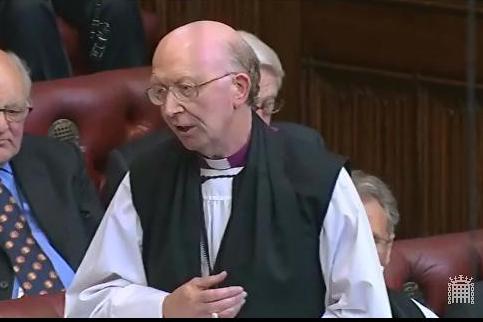
Bishop of OxfordThe Lord Bishop of Oxford: It is well known that to have a peace process that works all the relevant parties must be gathered together, not just the moderates. Can the Minister assure us that, at Geneva II, the more extreme nations will be involved, including Iran, Saudi Arabia and so on, as well as the opposition groups, both internal and external? Will they all be there?

The Senior Minister of State, Department for Communities and Local Government & Foreign and Commonwealth Office (Baroness Warsi): The right reverend Prelate may be aware that the Geneva communiqué was for the first time adapted and supported by the UN Security Council as part of this resolution. That effectively means that the opposition and the regime have committed to being part of the Geneva II process. Which other states are part of that process depends very much on what they would be prepared to endorse, and whether they would be prepared to agree to the Geneva communiqué. At this stage, Iran has not done that.

(via Parliament.uk)

Second Church Estates Commissioner answers written question on zero hour contracts

On the 12th September 2013 Sir Tony Baldry MP answered a written question from Chris Ruane concerning the employment of persons directly or indirectly employed by the Church Commissioners on a zero hour contract14.01 CCQ Baldry Continue reading “Second Church Estates Commissioner answers written question on zero hour contracts”

Liverpool Care Pathway – Bishop of Bristol receives written answers

On 9th September 2013, the Bishop of Bristol, the Rt Revd Mike Hill, received an answer to two written question on the Liverpool Care Pathway.

14.03 Bishop of BristolThe Lord Bishop of Bristol: To ask Her Majesty’s Government what plans they have to ensure that quality statement six (holistic support—spiritual and religious) of the National Institute for Health and Care Excellence’s 2011 quality standard for end of life care for adults is embedded in the end of life care proposals to replace the Liverpool Care Pathway.

To ask Her Majesty’s Government whether the Healthcare Chaplaincy is considered a “specialist service”, as referred to in recommendation 22 of the Independent Review of the Liverpool Care Pathway.

The Parliamentary Under-Secretary of State, Department of Health (Earl Howe): The Government’s intention is for the Liverpool Care Pathway to be phased out over the next 6-12 months in favour of an individual approach to end of life care for each patient, with a personalised care plan backed up by condition-specific guidance and a named senior clinician responsible for its implementation.

Spiritual and religious support is an essential part of first-class end of life care. However we have yet to set out the specific responses to the Independent Review’s recommendations. Over the coming weeks, the Department will be working with partner organisations, stakeholders and charities across health and care to inform a full system-wide response to the Review’s recommendations later in the autumn.

(via Parliament.uk)

Second Church Estates Commissioner answers written question on ethical investment

On 4th September 2013 Sir Tony Baldry MP answered a written question from Helen Goodman concerning the category limits of the Church Commissioners’ Ethical Investment Policy14.01 CCQ Baldry Continue reading “Second Church Estates Commissioner answers written question on ethical investment”

Bishop of Wakefield – EU Justice and Home Affairs measures (Written Answer)

On 5th August 2013, the Bishop of Wakefield, the Rt Revd Stephen Platten, received an answer to a written question on European Union Justice and Home Affairs measures.

Bishop of Wakefield PlattenThe Lord Bishop of Wakefield: To ask Her Majesty’s Government whether, prior to their decision on 9 July to opt out of 130 European Union Justice and Home Affairs measures as provided for by the Lisbon Treaty, guarantees were provided by the European Commission that the United Kingdom would be able to opt back in to various police and justice provisions.

The Minister of State, Ministry of Justice (Lord McNally): Protocol 36 to the Treaties places an obligation on the UK and the Union institutions to, “…seek to re-establish the widest possible measure of participation of the United Kingdom in the acquis of the Union in the area of freedom, security and justice without seriously affecting practical operability of the various parts thereof, while respecting their coherence”. We are confident that we will be able to reach agreement on a sensible final package of measures that the UK will formally apply to rejoin.

Of course it is not possible to predict the final outcome of the discussions with EU institutions, but following the Governments announcement on 9 July the Commission made clear in a press release that it “respects the UK Government’s choice to opt out, which is in line with the Treaty, and welcomes the UK intention to also opt back into certain measures”.

(via Parliament.uk)

Bishop of Derby asks Government what funding has been provided to churches to help tackle violence against women (Written Answer)

On 30th July 2013, the Bishop of Derby, the Rt Revd Alastair Redfern, reveived an answer to a written question on the subject of violence against women.

Bishop of DerbyThe Lord Bishop of Derby: To ask Her Majesty’s Government, further to the Written Answer by Baroness Northover on 9 July (WA35), what funding has been provided to churches and faith-based organisations from the Violence against Women and Children Research and Innovation Fund.

Baroness Northover: The initial competitive tenders for Women and Children Research and Innovation programme were issued in May 2013, and we expect contracts to be in place by the end of the year.

The innovation grants will specifically target support to developing country organisations and will be open to partnerships between international and local organisations, including churches and faith-based organisations.


(via Parliament.uk)

Bishop of Guildford presses Government on use of force in juvenile prisons

On 29th July 2013, Lord Sheldon asked Her Majesty’s Government what steps they are taking to reduce the number of suicides of children in prisons. The Bishop of Guildford, the Rt Revd Christopher Hill, asked a supplementary question:

guildfordThe Lord Bishop of Guildford: Would the Minister care to comment, in the light of the reports of HM Inspectorate of Prisons of May this year on the increased violence at Ashfield and Feltham—it is 10 years to this month since the Commission for Racial Equality produced its report on Feltham—on the desirability of the elimination of the use of batons and routine strip searches in juvenile prisons?

Lord McNally: Every inclination I have is in that direction. Carrying on the policy of the previous Administration, we have tried to make sure that order and discipline in young people’s institutions of various kinds are maintained with the minimum of physical intervention and with the maximum attention on trying to manage difficult situations. A lot of the training addresses how the staff themselves are able to manage down situations before they become violent. However, we also have a duty of care to our staff and a duty of care to other inmates in these institutions, who may become victims of uncontrolled violence.

(via Parliament.uk)

Bishop of Birmingham highlights needs to gender equality goal in post-2015 development agenda

On 25th July 2013, Lord McConnell of Glenscorrodale asked Her Majesty’s Government what steps they will take to follow up the report of the United Nations High-level Panel on the Post-2015 Development Agenda. The Bishop of Birmingham, the Rt Revd David Urquhart, asked a supplementary question:

01.04.14 Bishop of BirminghamThe Lord Bishop of Birmingham: Like other noble Lords, I applaud the Prime Minister’s initiative and leadership in this area and encourage him to press on. In view of the importance that the report attaches to gender equality and empowerment, can the Minister confirm that the Government will look to next year’s UN Commission on the Status of Women, which starts in March, to build consensus among UN member states on this matter, ahead of any final negotiations on the post-2015 development agenda?

Baroness Northover: I can assure the right reverend Prelate that we are already doing that. A great deal of work went into ensuring that this year’s CSW could reach agreement. It required a lot of work but we were delighted that that agreement was reached. We are already working on the next one and are delighted that the second of the 12 goals is on gender equality.

(via Parliament.uk)

Bishop of Chester asks Government for update on Green Deal project

On 25th July 2013, Lord Empey asked Her Majesty’s Government whether they have plans to reduce VAT on the retrofitting of existing buildings to encourage energy saving and job creation. The Bishop of Chester, the Rt Revd Peter Forster, asked a supplementary question:

14.03 Bishop of ChesterThe Lord Bishop of Chester: My Lords, the Minister has twice referred to the Green Deal as the Government’s policy response to the issue. Can he tell the House how the take-up of the Green Deal is progressing in relation to the hopes that were expressed?

Lord Newby: My Lords, the Green Deal is a new project with a 20-year life ahead of it. Up to the end of June, some 44,479 assessments had been made and 3,500 installations had received cashback payments. In addition, 78% of people with a Green Deal advice report said that they had, were getting or would get energy-saving measures installed, which demonstrates a very high level of consumer interest.


(via Parliament.uk)

Bishop of Derby receives answers to questions on food banks and sexual violence in conflict

On 25th July 2013, the Bishop of Derby received written answers to questions on the topics of food banks and sexual violence in overseas conflicts. The original questions and their answers are reproduced below.

Food Banks

Bishop of DerbyThe Lord Bishop of Derby: To ask Her Majesty’s Government what incentives are provided to supermarkets to donate waste food to food banks at the end of trading.

The Parliamentary Under-Secretary of State, Department for Environment, Food and Rural Affairs (Lord De Mauley): The Government does not currently offer incentives to supermarkets to redistribute surplus food. We do however recognise the good work of organisations that redistribute surplus food to provide access to nutritional meals for those who may otherwise struggle. In addition, most major retailers already have partnerships with redistribution charities. In 2012, Defra held a meeting with retailers and food distribution charities to explore the current barriers to redistribution. The Waste and Resources Action Programme is working with Fareshare and FoodCycle to deliver a trial to increase food redistribution from retail stores.

(via Parliament.uk)

**

Overseas Conflict: Sexual Violence

The Lord Bishop of Derby: To ask Her Majesty’s Government, further to the Written Answer by Baroness Northover on 9 July (WA35), what consideration has been given to inviting religious leaders from recipient countries to attend the high level event in the autumn designed to mobilise global leadership to prevent sexual violence in conflict.

Baroness Northover: The Call to Action event in the autumn will highlight the actions the international community needs to take for the protection of women and girls in emergencies. The UK’s commitment to addressing sexual violence in conflict and, more broadly, in tackling the many forms of violence against women and girls that manifest themselves in emergencies. Preparations for the event are underway and officials are considering what role religious leaders might play.


The Lord Bishop of Derby: To ask Her Majesty’s Government, further to the Written Answer by Baroness Northover on 9 July (WA35), whether the proposed technical training and guidance for field staff and advisers will include advice on how to engage with religious communities when providing humanitarian support to the victims of sexual violence in conflict.

Baroness Northover: The guidance and training for DfID advisers and staff is based on the United Nations Inter-Agency Standing Committee Guidelines for Gender-based Violence Interventions in Humanitarian Settings. These guidelines draw attention to the role that religious leaders and groups can play in the provision of psychological and social support, and in encouraging survivors of violence to seek appropriate care.

(via Parliament.uk)