On 8th December 2017 the Archbishop of Canterbury, Most Revd and Rt Hon Justin Welby, led a debate in the House of Lords, ‘That the House takes note of the role of education in building a flourishing and skilled society.’ The Archbishops’ opening and closing speeches are below in full:
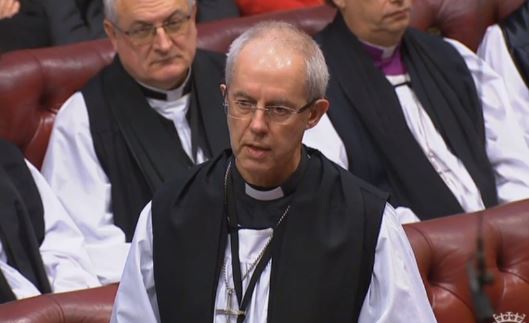 The Archbishop of Canterbury: My Lords, I am grateful to the usual channels for making time once again for me to lead a debate in your Lordships’ House. It is now something of a tradition for an Archbishop’s debate to be held in early December. Though a little later and less well established than the John Lewis advert, the appearance of an Archbishop on the order paper is a sure sign that Christmas is just around the comer.
Last year, I led a debate on shared national values, which featured some extremely impressive and thoughtful speeches. I am sure that today’s debate will be equally impressive, and I am grateful to so many of your Lordships for making time to attend. I look forward to your contributions, and it will be an especial pleasure to hear the first speech from the noble, reincarnated and right reverend Lord, Lord Chartres. I am also delighted that the noble Lord, Lord Sacks, will be speaking today. He has told me—and obviously we all understand—that he will have to leave before the wind-up to get home in time for the Sabbath. But it is very good that he has come here at all.
There is a link between today’s debate on education and the previous one on shared values. What I hope to give today is an outline of the sort of values that we suggest, from these Benches especially, should underpin our education system, and the structures that might support them, so that we might create a society where individual and mutual flourishing become the norm.
Continue reading “Archbishop leads Lords debate on the role of education in building a flourishing and skilled society.”

 On the 18th December 2017 Lord Whitty led a debate on the report of the European Union Committee – Brexit: trade in non-financial services (18th Report, Session 2016-17, HL Paper 135). The Bishop of Leeds, the Rt Revd Nick Baines spoke in the debate:
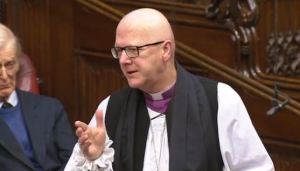 The Lord Bishop of St Albans: I too thank the noble Lord, Lord Bird, for this debate. I want to make just a couple of points in the time I have.
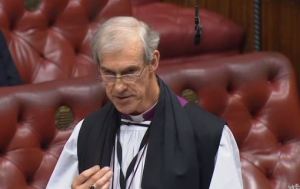 The Lord Bishop of Carlisle: My Lords, I, too, thank the noble Lord, Lord Bird, for securing this debate. As we have just heard, poverty cannot be measured simply in economic terms. It affects every area of a person’s life and, as a recent Demos report put it:
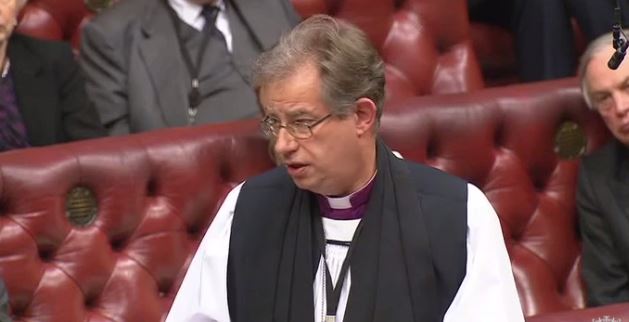 The Lord Bishop of Oxford: My Lords, like other speakers, I am grateful to the most reverend Primate the Archbishop of Canterbury for his leadership in this debate and in much else.
 The Lord Bishop of Gloucester: I too thank the most reverend Primate for bringing forward today’s debate, and indeed for naming the recently established Church of England Foundation for Educational Leadership, of which I am privileged to be a trustee.
 The Lord Bishop of Ely: My Lords, as the lead Bishop for education in this House, I am grateful to my most reverend friend for the opportunity to address the crucial place of education in providing value and enabling every member of our society to contribute and flourish. We must continue to develop the curriculum to suit our developing industrial and commercial needs. This means that we must work to nurture and support our children and young people so that they may be employable on the grounds of their skills and their rich and steadfast character, and give them the support and foundations for good mental health that will be necessary throughout their lives, as we have already heard.
 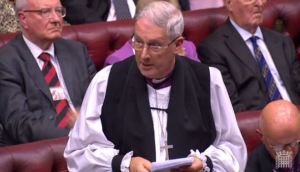 The Lord Bishop of Southwark: My Lords, I have come to your Lordships’ House today from Lambeth Palace, where I have been chairing the Zimbabwe round table. Also present at that meeting was the Bishop of Harare, the right reverend Dr Chad Gandiya, who is staying with me on his brief visit to this country. Yesterday Bishop Chad met with Rory Stewart, the Africa Minister. My conversations with Bishop Chad have further informed my own thinking on Zimbabwe—a country with which I have a long association, particularly through close links between my diocese and four of the five Anglican dioceses in Zimbabwe.
  The Lord Bishop of Portsmouth: My Lords, one of the duties in which I take particular pleasure is chairing the governors at Ripon College, Cuddesdon, just outside Oxford, a theological college at which men and women are prepared for ministry. It is known by those associated with it more colloquially as a vicar factory. Notices around the college remind the residents that, after night prayer or Compline, they are expected to abide by what is known as the great silence. It is not, I suspect, adhered to with the same severity as in years past. Indeed, one has a sense that the silence masks all kinds of feverish activity, all of it associated with theology, of course.
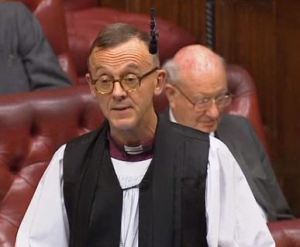 The Lord Bishop of Worcester: My Lords, I, too, am very grateful to the noble Lord, Lord Boateng, for securing this debate and, like the noble Lord, Lord Ouseley, pay tribute not only to his eloquent introduction but to all he has done in this area. We owe him a great debt of gratitude.
 The Church of England in Parliament
You must be logged in to post a comment.