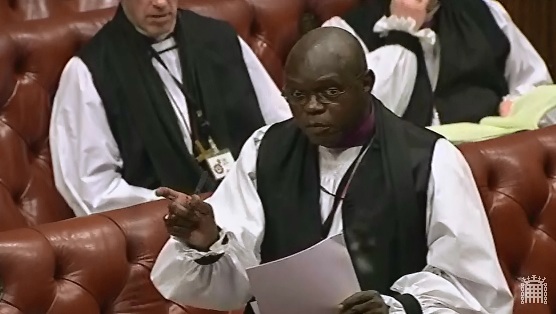
Archbishop of York calls for investment and devolution for the north of England

Continue reading “Archbishop of York calls for investment and devolution for the north of England”

Bishop of Portsmouth leads debate on welfare of armed forces and their families


portsmouth241016On the 9th January 2017, the Bishop of Portsmouth, Rt Revd Christopher Foster, led a short debate in the Lords, to ask the Government “what is their assessment of the role of the Armed Forces Covenant in ensuring that those who serve or who have served in the Armed Forces, and their families, are treated with fairness and respect.” Earl Howe, the Minister of State for the Ministry of Defence, responded on behalf of the Government. Both their speeches are reproduced below in full. The speeches of other Members in the debate can be read here.
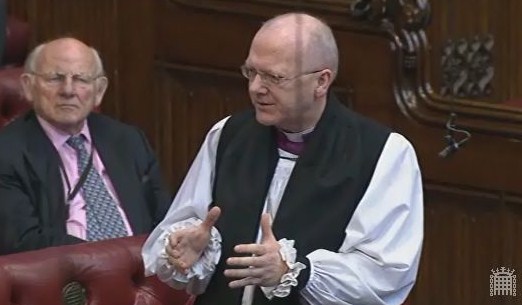

The Lord Bishop of Portsmouth: My Lords, it is both a privilege and a responsibility to ask this Question and open this debate on the impact of the Armed Forces covenant. It is a privilege because, despite my day job, opportunities to talk about good news do not occur as often as you might think, and a responsibility because it is clear that there is work to be done as service personnel and their families still suffer disadvantage and do not always receive the consideration that they need. Continue reading “Bishop of Portsmouth leads debate on welfare of armed forces and their families”

Bishop of St Albans on importance of welfare system that leaves no one hungry

On 21st December 2016 Lord Farmer led a short debate in the Lords, to ask Her Majesty’s Government “what progress they are making in rolling out Universal Credit, and what assessment they have made of its impact”. The Bishop of St Albans, Rt Revd Alan Smith, took part in the debate:

Bishop of St AlbansThe Lord Bishop of St Albans: My Lords, I too thank the noble Lord, Lord Farmer, for this important debate. On behalf of these Benches, I take the opportunity to thank the Minister for his very considerable contribution, drive and service to this House, and wish him well as he leaves the Front Bench.

I think it is true to say that very few in this House disagree with the stated aims of universal credit—to simplify the benefits system and ensure that work always pays. However, I also suspect that there are quite a few of us in this House and, indeed, on these Benches, who fear that on occasion Her Majesty’s Government may have lost sight of that aim. Indeed, it seems that successive cuts to the welfare budget have been prioritised as an easy way of balancing the Government’s finances. Continue reading “Bishop of St Albans on importance of welfare system that leaves no one hungry”

Bishop of Durham stresses need for continued focus on child poverty

Bp Durham June 2015 bOn 20th December 2016,  Baroness Corston moved “that the House take note of the Report from the Social Mobility Committee (Session 2015-16, HL Paper 120)”. The Bishop of Durham, the Rt Revd Paul Butler, spoke in the debate, to welcome the report and highlight the continued importance of a focus on child poverty. 

The Lord Bishop of Durham My Lords, I thank the noble Baroness, Lady Corston, for tabling this important debate and for her and her committee’s work, which has produced such a helpful and clear report. I also look forward to the maiden speech of the noble Lord, Lord Fraser of Corriegarth.

The findings of the report are of particular importance to those of us in the north-east. According to the Growing Up North project, 4% of young people leaving school in London go on to an apprenticeship whereas the figure is 11% in the north-east. The inequality in provision between academic and vocational routes compounds the inequalities between the north and south of England. Therefore, the current problems with the system are not only failing individual young people but, in some instances, they are failing particular communities. It is with the young people of my diocese and region in mind that I welcome the solutions offered in the report. Continue reading “Bishop of Durham stresses need for continued focus on child poverty”

Bishop of Chelmsford: in a ‘post-truth’ era, proper regulation can offer newspapers salvation

On 20th December 2016, Lord Best moved that the House “take note of the Report from the Communications Committee Press Regulation: where are we now? (3rd Report, Session 2014–15, HL Paper 135)”. The Bishop of Chelmsford, the Rt Revd Stephen Cottrell, who is a member of the Communications Committee, spoke in the debate.

Chelmsford 251115The Lord Bishop of Chelmsford My Lords, I too thank the noble Lord, Lord Best, for bringing this debate to the House and for his wise and winsome chairing of the Select Committee on Communications. I speak as a member of that committee. I was not part of the committee that produced this report—that illustrates just how long it has taken for it get here—so I also thank my predecessors on the committee for all their work.
However, as the report makes clear and as has been well illustrated by the contributions so far, the situation is far from satisfactory and questions to government remain unanswered. As the noble Lord, Lord Best, has already explained, in the past few weeks the committee has again been burrowing into the detail of the issues and considering the present impasse. I shall not go over those details again; the noble Lord outlined them superbly, but I think that we could conclude that the carrot is not very tasty and the stick seems so severe that it is unlikely ever to be wielded. Continue reading “Bishop of Chelmsford: in a ‘post-truth’ era, proper regulation can offer newspapers salvation”

Bishop of Portsmouth on defence and diplomacy challenges post-Brexit

On 8th December 2016 the House of Lords debated a motion from Lord Sterling of Plaistow, “That this House takes note of the impact of the withdrawal from the European Union on the United Kingdom’s armed forces and diplomatic service.” The Bishop of Portsmouth, Rt Revd Christopher Foster, spoke in the debate:

portsmouth241016The Lord Bishop of Portsmouth: My Lords, there are few constants or certainties in Brexit other than that Britain’s future will be markedly different. Brexit will have far-reaching implications for our place in Europe and the wider world. From a security perspective, the decision to leave the EU represents as significant a shift as the decision in the late 1960s to withdraw from bases east of Suez. If that was not daunting enough, Brexit also represents the biggest administrative and legislative challenge that a Government have faced since 1945, and is likely to shrink government departments’ bandwidth to engage with other issues. Continue reading “Bishop of Portsmouth on defence and diplomacy challenges post-Brexit”

Bishop of Birmingham supports move to reduce the size of the House of Lords

birmingham-211016c On the 5th December 2016, the House of Lords debated and approved a motion from Lord Cormack “to resolve that this House believes that its size should be reduced, and methods should be explored by which this could be achieved.” The Rt Revd David Urqhart, the Bishop of Birmingham and Convenor of the Lords Spiritual, spoke in the debate, supporting the motion. 


Bishop of Birmingham: My Lords, I am pleased to be able to contribute to this important debate and am grateful to the Campaign for an Effective Second Chamber, in which we are allowed to participate from time to time, for bringing it to us today. I am also grateful for the remarks of the noble Lords and noble Baronesses who have already spoken. I have written down that I share their widely shared view that the House is too large, and I shall start on that point. Continue reading “Bishop of Birmingham supports move to reduce the size of the House of Lords”

Bishop of Gloucester on building strong local communities of shared values

On the 2nd December 2016 the Bishop of Gloucester, the Rt Revd Rachel Treweek, spoke in the debate led by the Archbishop of Canterbury on shared  values and their role in shaping public policies. She highlighted the compassionate hospitality which this country has shown generations of refugees alongside the work she is undertaking in Gloucestershire to build community, standing ‘with’ rather than ‘othering’ people to promote human flourishing. 

gloucesterThe Lord Bishop of Gloucester: My Lords, I thank my noble friend the most reverend Primate the Archbishop of Canterbury on his foresight in tabling this debate on shared values. I also add my own congratulations to the noble Lord, Lord McInnes of Kilwinning, and the noble Baroness, Lady Bertin, on their poignant and insightful maiden speeches.

In the diocese of Gloucester, I have recently been talking to young people about body image and reflecting with them on how their true worth begins deep within, the place from which true values emerge and are lived. Last Saturday, I hosted a huge community party in Cheltenham to publicly launch our new vision for the diocese of Gloucester. The vision has emerged from conversations in local communities, urban and rural, involving about 6,000 people, churchgoers and otherwise, discussing what sort of church they want to see in their communities.The vision is one of human flourishing and transformation, emanating from those words of Jesus from the gospel of John:

“I have come that they may have life, and have it to the full”.

That is a good starting place when it comes to talking about values. Continue reading “Bishop of Gloucester on building strong local communities of shared values”

Bishop of Ely highlights role of church schools in fostering shared values

On the 2nd December 2016 the Bishop of Ely, the Rt Revd Stephen Conway spoke in a debate led by the Archbishop of Canterbury on shared values and their implications for public policy making. The Bishop of Ely spoke about the importance of character education in developing values and the role played by church schools in fostering good links between children of all faiths and none.

ElyThe Lord Bishop of Ely: My Lords, I thank my friend the most reverend Primate for securing this timely and essential debate. I applaud the noble Lord, Lord McInnes, on his excellent speech, not least on drawing together our concern for values with opportunity for our children and young people. When we talk about British values, we should be aiming not at the lowest common denominator but, as the noble Baroness, Lady Warsi, said, at the highest ideals that we want to promote for and with our children.
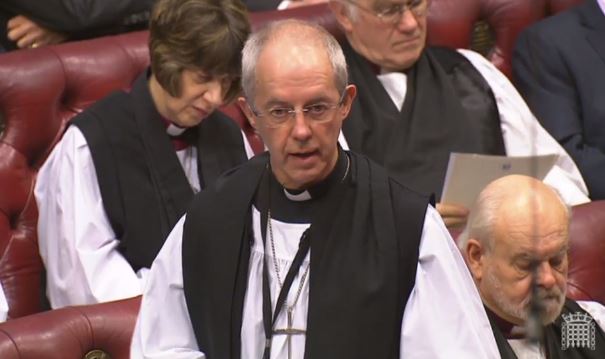
Character education is all set to be the foundation for the kind of person we want each child to become: a member of society who not only understands the world, but cares about it, is equipped to continue in the good and recognise and challenge the bad and is courageous enough to bridge divides and extend the hand of friendship. The Church of England vision for education actively seeks to provide an education that fosters this. Character education is about educating children not only to become efficient economic units, but to flourish in all areas of their lives, and enjoy life in all its fullness, as Jesus says in the Gospel of John. Fundamental to this is the nurturing of virtues as the intrinsic building blocks of a rounded human life with concrete outcomes in behaviour and service. St Paul takes the life of virtue beyond what had previously been categorised when he wrote in the Letter to the Galatians about the “fruits of the spirit”: love, joy, peace, forbearance, kindness, goodness, faithfulness, gentleness and self-control.

Archbishop of Canterbury leads Lords debate on shared values

On 2 December 2016 the Archbishop of Canterbury, the Most Revd and Rt Hon Justin Welby, led a debate in the House of Lords “That this House takes note of the shared values underpinning our national life and their role in shaping public policy priorities.” His opening and closing speeches are below. The Bishops of Ely and Gloucester also spoke in the debate.

abcvalues5

The Archbishop of Canterbury: My Lords, I am most grateful to the usual channels for making this debate possible. I should also like to thank noble Lords who have made the time and taken the trouble to attend today in considerable numbers, the Minister, the noble Lord, Lord Bourne, and those who look after us so well in this House.

In case noble Lords are wondering what the Motion is [laughter]…I decided to change it at the last minute…It reads:

“The Lord Archbishop of Canterbury to move that this House takes note of the shared values underpinning our national life and their role in shaping public policy priorities”.

It will be an especial pleasure to hear maiden speeches from the noble Baroness, Lady Bertin, and the noble Lord, Lord McInnes of Kilwinning. The noble Baroness brings her knowledge of communications, issues of disability among children and education. The noble Lord will enable us to have a wider view of issues in Scotland.

The UK, especially perhaps England, is a pragmatic country with a bias towards the empirical over the theoretical. Not for us the cries of “liberty, equality and fraternity”, to be followed by years of bloodshed to ensure true fraternity was established. Rather, ours is an untidiness of cumulative reforms and changes, worked out in practice through the highways and byways of our constitution. We relish the irony of a constitution that works in practice but never could in theory.

Great times of change in mood and culture demand from us a reimagining of what we are about as a nation. As we move into a post-Brexit world, alongside the other events that buffet and deflect us, unless we ground ourselves in a clear course and widely accepted practices, loyalties and values—what I will call values in this speech—we will just go with the wind. Continue reading “Archbishop of Canterbury leads Lords debate on shared values”