Bishop of Derby speaks about the Importance of Women’s Economic Empowerment

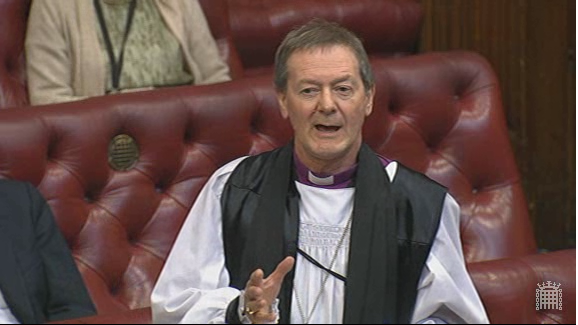
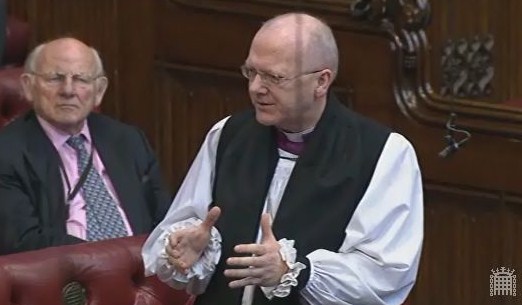
DerbyOn 5th March 2015 the Bishop of Derby, the Rt Revd Alastair Redfern, spoke in a debate to mark International Women’s Day, entitled ‘this House takes note of women’s economic empowerment and the progress in achieving it that has been made in the United Kingdom and internationally.’

The Bishop spoke about the importance of increasing workplace diversity in the UK, as well as the work of Christian Aid in empowering women overseas, alongside the need to challenge the myth that women taking jobs will displace men.

Baroness Garden responded for the Government and addressed a number of the points raised by the Bishop. Her comments can also be found below.


The Lord Bishop of Derby: My Lords, I rise with some trepidation to be the first man to speak in this debate, particularly having been gently chided by the noble Baroness, Lady Bottomley, about wearing a dress. Still, perhaps that is suitable bridging attire at this moment in the debate. I am also very conscious that the church could be seen to be behind the curve on this issue, as has been mentioned, and I hope that noble Lords can see that we are trying very hard to catch up and make proper progress. I want to do three things in this short address. I want to take up the theme that the noble Baronesses have talked about, the international perspective; look at some issues in the UK; and say what we might learn in terms of policy priorities.

Continue reading “Bishop of Derby speaks about the Importance of Women’s Economic Empowerment”

Bishop of St Albans speaks in debate on mental health services

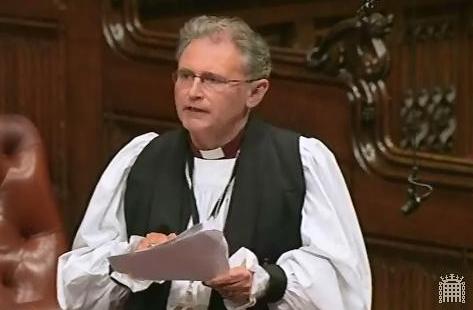
On 25th February 2105, the Earl of Listowel led a short debate in the House of Lords, to ask Her Majesty’s Government what plans they have to improve mental health services for infants, children and young people, for care leavers, and for adults with care experience. The Bishop of St Albans, the Rt Revd Alan Smith, spoke in the debate, focusing his remarks on the risk of suicide amongst young people suffering from mental health issues.

Bishop of St AlbansThe Lord Bishop of St Albans: My Lords, the terrible reality of the effects of mental health could not have been more powerfully illustrated than by the story reported in the press last week of 18 year-old Edward Mallen. He was not one of “those unfortunates”—he had 12 A* GCSEs and was predicted to achieve three A* A-levels; he had got grade 8 piano and a place at Girton to read geography—but he rapidly descended, over quite a short time, into depression and died under a train. Not only is it an affront to think of that young life, with all its potential and opportunities, suddenly being lost with his death, but the scars will stay with all the members of his family for the rest of their lives. Continue reading “Bishop of St Albans speaks in debate on mental health services”

Human Fertilisation and Embryology (Mitochondrial Donation) Regulations 2015 – speech by Bishop of Carlisle

14.06.09 Bishop of CarlisleOn 24th February 2015 the House of Lords considered a Motion to Approve the Human Fertilisation and Embryology (Mitochondrial Donation) Regulations 2015, alongside a Motion from Lord Deben not to approve the Regulations but to set up a Joint Committee of Parliament to consider the issues in more detail. 

The Bishop of Carlisle, Rt Rev James Newcome, spoke during the debate, setting out his own position and that of the Church of England on the question of Mitochondrial Donation (also known as ‘three parent babies’). 

Earl Howe  concluded the debate on behalf of the government. An extract from his remarks can also be found below.

Concluding the debate, Lord Deben put his amendment to a vote, which was defeated: Contents 48; Not-Contents 280. The Bishops of Carlisle, Ely, St Albans and Worcester voted in favour of the amendment by Lord Deben. The Bishop of Norwich voted against the amendment. The Bishop of Bristol abstained. Continue reading “Human Fertilisation and Embryology (Mitochondrial Donation) Regulations 2015 – speech by Bishop of Carlisle”

Bishop of Truro leads debate on local welfare assistance for those in crisis

On 10th February 2015, the Bishop of Truro, Rt Rev Tim Thornton, led a debate in the House of Lords on local welfare assistance schemes and help for those in crisis. The full text of his speech is below, followed by those of Peers who participated. The Bishop of Portsmouth, Rt Rev Christopher Foster, also spoke in the debate towards the end.

Welfare Assistance Schemes

Question for Short Debate

7.30 pm

Asked by The Lord Bishop of Truro

To ask Her Majesty’s Government what steps they are taking to ensure that local welfare assistance schemes provide effective support to people in crisis and will continue to be able to do so.Bishop of Truro 20.6.13

The Lord Bishop of Truro: My Lords, I am very grateful indeed for this opportunity to raise a very important issue by putting some questions to the Government on, and raising matters relating to, local welfare assistance schemes. In doing so, I declare my interest that I am chair of the Children’s Society, a national charity which has conducted quite a lot of research in this area and to which I shall refer. Continue reading “Bishop of Truro leads debate on local welfare assistance for those in crisis”

Bishop of Portsmouth speaks in debate on Universal Credit conditionality

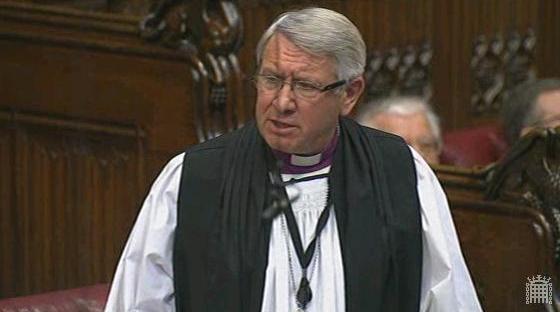
On 4th February 2015, Liberal Democrat Peer Lord German led a question for short debate in the House of Lords, to ask Her Majesty’s Government what are the results of the review into the setting of universal credit conditionality when children are in distress. The Bishop of Portsmouth, the Rt Revd Christopher Foster, took part in the debate. Speaking from personal experiences, the Bishop spoke of the need to provide greater flexibility and generosity in the suspension of conditionality of universal credit payments when children are in distress, particularly in circumstances where a child has lost a parent.

14.04.09 Portsmouth maiden speech 1The Lord Bishop of Portsmouth: My Lords, I am grateful to the noble Lord, Lord German, for prompting this debate about the review of universal credit when children are in distress. I speak this evening particularly about the distressing and challenging circumstances of the death of a parent, carer or sibling. I speak not only because I have experience as a priest alongside parents in such situations, as do so many of my clergy colleagues, and because I now support clergy in my diocese of Portsmouth ministering to those facing such deaths, but because of personal experience in my family. Continue reading “Bishop of Portsmouth speaks in debate on Universal Credit conditionality”

Bishop of St Albans praises role of small business in UK economy

On 3rd February 2015, the Bishop of St Albans, the Rt Revd Alan Smith, took part in a question for short debate in the House of Lords, led by Conservative Peer Lord Risby, on what steps the Government are taking to encourage the growth of small businesses. The Bishop focussed his brief remarks on support for new small businesses, in particular regarding advice and funding. He suggested that more could be done to support the development of community finance initiatives. 

Bishop of St AlbansThe Lord Bishop of St Albans: My Lords, there is no doubt that we need to create a culture in which entrepreneurial skill is encouraged and supported. Small businesses form a vital part of our national landscape and are integral to the flourishing of our society. The social capital that we all seek depends on strong partnerships: partnerships between manufacturing, finance and chambers of commerce; between new entrepreneurs and established businesses; and between local and national government and the universities, as well as the voluntary and faith sectors. Continue reading “Bishop of St Albans praises role of small business in UK economy”

Bishop of Southwark takes part in debate on Palestinian statehood

On 29th January 2015, Lord Steel of Aikwood moved that the House of Lords take note of the Resolution of the House of Commons of 13 October 2014 that “this House believes that the Government should recognise the state of Palestine alongside the state of Israel, as a contribution to securing a negotiated two-state solution”, and that this recommendation has also been adopted by the European Parliament, and the Parliaments of Sweden, France, Ireland, Portugal and Luxembourg. The Bishop of Southwark, the Rt Revd Christopher Chessun, spoke during the debate on the motion. He reflected on a recent visit to the region, as an Anglican participant in the annual visit of the Holy See’s co-ordination group of bishops in support of the church in the Holy Land. He raised questions about how best to protect the rights of minority groups in the region and the need for a strong commitment to religious freedom to ensure the participation of all parts of the population in diplomatic and reconciliation efforts.

Southwark 2The Lord Bishop of Southwark: My Lords, I was privileged earlier this month to spend a week in Gaza and the West Bank. I went as an Anglican participant in the annual visit of the Holy See’s co-ordination group of bishops in support of the church in the Holy Land. It was very challenging to see at first hand the current situation in Gaza and more widely in the West Bank.

Continue reading “Bishop of Southwark takes part in debate on Palestinian statehood”

Bishop of Ely takes part in debate on education reform

On 29th January 2015, the Bishop of Ely, the Rt Revd Stephen Conway, took part in Baroness Perry of Southwark’s take note debate in the House of Lords on the progress of the Government’s school reforms. The Bishop, who recently took over the role of Chair of the Church of England’s National Society, focused his speech on the success of reforms in Church schools – including through the transition of many secondary schools into academies and the development of imaginative and collaborative ways to protect rural schools. He noted the Church’s focus on the development of free schools in areas of deprivation, the importance of high-quality training and recruitment of teachers, the importance of character education alongside other parts of the curriculum, and the hope that a holistic approach could be taken to education, to ensure that the next generation are best prepared for the future.

14.10.16 Bishop of Ely 1The Lord Bishop of Ely: I am very grateful to the noble Baroness for securing this timely debate, not least as I have just taken over as chair of the Church of England’s National Society, which is responsible for our schools. We talk about urgency and the long term, and our picture goes back until at least 1811, with the foundation of the National Society. We have planted thousands of schools, determined that every child in the country should have access to a decent education regardless of their capacity to pay for it. The church continues to want to be involved in the reform and improvement of education across the board, not just in church schools but across primary schools, community schools, secondary schools and the university sector. Continue reading “Bishop of Ely takes part in debate on education reform”

Bishop of Derby calls for stronger partnerships to tackle human rights abuses in East Africa

On 27th January 2015, the Bishop of Derby, the Rt Revd Alastair Redfern, took part in a short debate in the House of Lords on Her Majesty’s Government’s assessment of recent events in Eritrea and Ethiopia, and of their impact on migration to western Europe. He called for strong partnerships with the EU and UN to tackle the issues in East Africa, including the limits on religious freedom, and suggested that faith and voluntary groups could be key partners in opening up opportunities in the region.

DerbyThe Lord Bishop of Derby: My Lords, I, too, thank the noble Lord, Lord Chidgey, for his comprehensive and challenging analysis and assessment. I will make some general remarks and then one or two specific points.

This complex situation is partly because the region is very unstable and there is a lot of movement from both of these countries to Saudi Arabia and the Yemen, as well as to Europe. Such an unstable context requires some big picture approaches. Then there is the conflict between Ethiopia and Eritrea, as the noble Lord, Lord Avebury, has clearly explained. That complexity makes a neat solution very difficult. Continue reading “Bishop of Derby calls for stronger partnerships to tackle human rights abuses in East Africa”

Bishop of Southwark gives maiden speech in debate on the Local Government Finance Settlement

On the 22nd January 2015 the Bishop of Southwark gave his maiden speech to the House of Lords on the subject of the Local Government Finance Settlement. Bishop Christopher introduced himself his interests to the House in the usual manner before turning to address the debate. Speaking about the importance of local government Bishop Christopher addressed the impact cuts to funding have on people in greatest need, the importance of early intervention alongside the ease of losing sight of people in need during complex financial discussions instead of focusing on ensuring human flourishing. The Bishop was formerly welcomed to the House in the usual manner by Baroness Donaghy and the Mininster Lord Ahmad.

Southwark 2The Lord Bishop of Southwark (Maiden Speech): My Lords, I address your Lordships’ House on this first occasion with some trepidation. As I was advised not to drift into preaching mode, I will resist the temptation to expound on the interesting passage from scripture that the noble Lord has just quoted.

As a student of history, I am conscious of the dignity and importance of this House in the life of our nation, and I am acutely aware of the privilege of sharing in your Lordships’ deliberations. Throughout my life I have been inspired by the model of service found in the life of Jesus Christ, and I am humbled when I reflect on where that service has led me—not least, now, to your Lordships’ House. I will seek to serve to the best of my ability, using the gifts that God has given me. Continue reading “Bishop of Southwark gives maiden speech in debate on the Local Government Finance Settlement”