Levelling Up and Regeneration Bill: Bishop of Leeds supports new definition for affordable homes

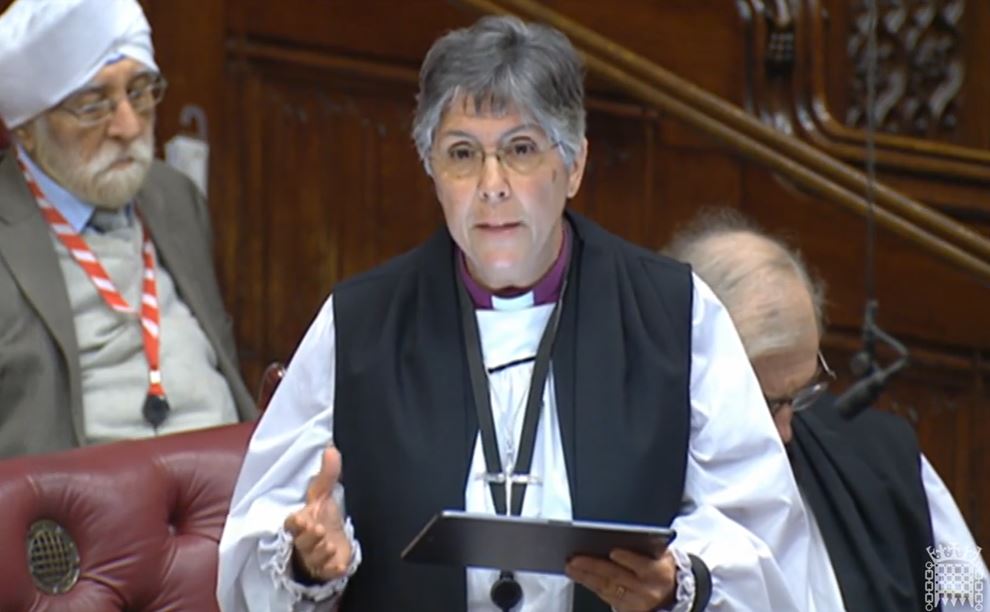
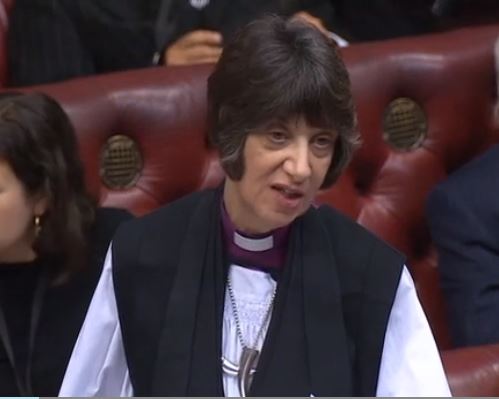
On 20th April 2023, the House of Lords debated amendments to the Levelling Up and Regeneration Bill. The Bishop of Leeds spoke in favour of an amendment that would tie the definition of “affordable homes” to median income:

The Lord Bishop of Leeds: My Lords, I shall speak in support of Amendment 242 in the name of the noble Lord, Lord Stunell. I do so having consulted the Bishop of Chelmsford, who leads for the Church of England on housing but is unable to be here today. It is clear, I think, that we need to rethink what genuinely affordable housing is and how an adequate supply can be delivered. In London, the south-east and many other areas across the country, the current affordable housing for rent definition of 20% below market rates makes little difference to those on a median income, let alone those in most need. Without redefinition, we will continue to work under the illusion that homes classed as affordable are helping to solve the housing affordability crisis, when for the most part they are not.

Of course, we need a multifaceted approach to solve the lack of affordable homes. I was interested to learn from the Bishop of Chelmsford that Vicky Ford MP has been addressing this in relation to Chelmsford. During her 10-minute rule Bill debate on 22 February, she spoke to the shortage of affordable housing we face locally and nationally. Her Affordable Housing (Conversion of Commercial Property) Bill would apply affordable housing obligations to conversions of commercial property to residential occupancy. The Bill is due its Second Reading in the Commons on 26 May, and we certainly hope that it will make some progress.

Continue reading “Levelling Up and Regeneration Bill: Bishop of Leeds supports new definition for affordable homes”

Bishop of Oxford and Bishop of Leeds support statements of purpose for Online Safety Bill

On 19th April 2023, the House of Lords debated the Online Safety Bill in its first day of the committee stage. The Bishop of Oxford and the Bishop of Leeds each spoke in support of an amendment to the bill tabled by Lord Stevenson of Balmacara, setting out seven main purposes of the bill:

The Lord Bishop of Oxford: My Lords, it is a pleasure to follow other noble Lords who have spoken. I too support this key first amendment. Clarity of purpose is essential in any endeavour. The amendment overall sets out the Bill’s aims and enhances what will be vital legislation for the world, I hope, as well as for the United Kingdom. The Government have the very welcome ambition of making Britain the safest country in the world to go online. The OSB is a giant step in that direction.

As has been said, there has been remarkable consensus across the Committee on what further measures may still be needed to improve the Bill and on this first amendment, setting out these seven key purposes. Noble Lords may be aware that in the Christian tradition the number seven is significant: in the medieval period the Church taught the dangers of the seven deadly sins, the merits of the seven virtues and the seven acts of mercy. Please speak to me later if a refresher course is needed.

Amendment 1 identifies seven deadly dangers—I think they are really deadly. They are key risks which we all acknowledge are unwelcome and destructive companions of the new technologies which bring so many benefits: risks to public health or national security; the risk of serious harm to children; the risk of new developments and technologies not currently in scope; the disproportionate risk to those who manifest one or more protected characteristics; risks that occur through poor design; risks to freedom of expression and privacy; and risks that come with low transparency and low accountability. Safety and security are surely one of the primary duties of government, especially the safety and security of children and the vulnerable. There is much that is good and helpful in new technology but much that can be oppressive and destructive. These seven risks are real and present dangers. The Bill is needed because of actual and devastating harm caused to people and communities.

Continue reading “Bishop of Oxford and Bishop of Leeds support statements of purpose for Online Safety Bill”

Bishop of Leeds supports motion to regret on secondary legislation regarding Manston Detention Facility

The Bishop of Leeds spoke in support of a Motion to Regret tabled by Baroness Lister of Burtersett on 18th March 2023:

“That this House regrets that the Short-term Holding Facility (Amendment) Rules 2022 (SI 2022/1345) remove important safeguards and reduce the standards for the lawful detention beyond 24 hours of migrants, including children and vulnerable adults, at the immigration detention facility in Manston, Kent; that the Home Office has not consulted on these changes nor provided an adequate policy justification for them; and that this potentially contentious legislation was brought into effect while the House was in recess.”

The Lord Bishop of Leeds: My Lords, I support the Motion to Regret in the name of the noble Baroness, Lady Lister. The Government were clearly right to openly acknowledge that the Manston short-term holding facility had been operating outside of legal requirements and that action was needed to improve conditions at the site. Therefore, the decision then to use secondary legislation not only to extend the length of detention powers at such facilities but to reduce the required safeguarding standards must be highly regrettable. It cannot be right that, when the immigration estate fails to meet legislation passed by this House, the response is simply to rewrite the rules. I am reading a lot about the Soviet Union at the moment, and there is an echo of that: if the five-year plan was not met, you simply changed reality to meet what you were going to get.

Continue reading “Bishop of Leeds supports motion to regret on secondary legislation regarding Manston Detention Facility”

Levelling Up & Regeneration Bill: Bishop of St Edmundsbury and Ipswich supports development of housing for older people

On 18th April 2023, the Bishop of St Edmundsbury and Ipswich spoke in support of amendments to the Levelling Up and Regeneration Bill regarding the importance of housing for older people:

The Lord Bishop of St Edmundsbury and Ipswich: I shall speak very briefly in support of the group of amendments, on none of which would I dare wish to claim to be an agnostic. I particularly support Amendment 207 proposed by the noble Lord, Lord Best, to which my colleague the right reverend Prelate the Bishop of Chelmsford has added her name. The amendment addresses the important role of local authorities to consider older groups’ housing needs when developing local plans. Together with Amendment 221 from the noble Lord, Lord Best, these changes to the Bill would deliver a more effective response to the shortfall in appropriate housing for older people at all levels of government.

Continue reading “Levelling Up & Regeneration Bill: Bishop of St Edmundsbury and Ipswich supports development of housing for older people”

Levelling Up and Regeneration Bill: Bishop of St Edmundsbury and Ipswich supports amendments aimed at reducing carbon emissions

On 18th April 2023, the House of Lords debated the Levelling Up and Regeneration Bill in committee. The Bishop of St Edmundsbury and Ipswich spoke in support of amendments to the bill that would ensure planning decisions by local authorities and other conducive to reducing carbon emissions:

The Lord Bishop of St Edmundsbury & Ipswich: My Lords, I speak in general support of this group of amendments. I agree with those who have said that they are both crucial and urgent. Specifically, I speak in support of Amendment 309 in the name of the noble Lord, Lord Teverson. I will take a leaf out of the book of the noble Baroness, Lady Young, in that, despite the points I will make having been made, I will barrel on regardless. I will not, necessarily, reflect on what my dying words might be.

Continue reading “Levelling Up and Regeneration Bill: Bishop of St Edmundsbury and Ipswich supports amendments aimed at reducing carbon emissions”

Bishop of St Albans supports improved public transport for rural communities

The Bishop of St Albans spoke in a debate on transport network investment on 30th March 2023, emphasising the need for better public transport routes in rural communities, particularly relating to funding for bus routes:

The Lord Bishop of St Albans: My Lords, I thank the noble Lord, Lord Berkeley, for securing this debate. It is a vital area for us. Those of us who live in the south-east of England are aware of the huge strains that are being put on ordinary people’s lives day by day, and on our businesses, through the problems with our transport system, not least with public transport.

I am also aware that this matter touches so many other areas of concern at the moment, such as our desire to work for a net-zero carbon future and the question of how we can get people off the roads as much as possible and on to good, fast, efficient public transport. I am aware that this means having a long-term policy on active transport; we need to work out how to get a sea change in what we expect and what we can offer. I was therefore pleased to hear the announcement by His Majesty’s Government of the provision of additional funding for transport in the recently published Statement. However, as has already been pointed out, it raises an awful lot of questions, not just about what was in it but what was not in it.

I declare my interest as president of the Rural Coalition. I want to focus my comments mainly on the rural dimension of public transport policy. Nearly 10 million of this country’s 67 million people live in rural areas—one in six of us. Sadly, there was little in the Government’s announcement to bring cheer to rural inhabitants. I and others who care about rurality and the long-term sustainability of the countryside entirely accept that we cannot expect anything like the levels of public transport and roads that our urban colleagues take for granted.

Continue reading “Bishop of St Albans supports improved public transport for rural communities”

Bishop of St Albans speaks in support of the UK performing arts sector

The Bishop of St Albans spoke in a debate on support for the performing arts sector in the UK on 30th March 2023, advocating for a long term settlement of grants to support the arts and emphasising the cultural and social value of the arts sector:

The Lord Bishop of St Albans: My Lords, I too am grateful to the noble Baroness, Lady Featherstone, for securing this debate and share the concerns of many other noble Lords about the challenges facing BBC musicians and the need to support small venues and touring programmes. The case has been made eloquently.

I am also grateful for the Library briefing, but I note that it begins—as has already been quoted—

“In 2022 music, performance and visual arts contributed an estimated £11.5bn to the UK economy.”

Have we really reached the point where we primarily describe the arts by the financial contribution that they make? Can we not imagine a world where the House of Lords Library produces briefings which say that, in the past year, 39,000 people had their minds opened and changed because of the plays they saw at the National Theatre; scores of people entered into the grim reality of migrants because they went to something at the National Theatre and then came back and signed up to some campaigning organisation to support them; and 40,000 people felt that they touched eternity in that breathtaking silence at the end of the Rachmaninoff “Vespers”? Can we not somehow talk about enriching the human soul? That is surely what it is about. We cannot and must not measure the performing arts primarily in financial terms but in the way that they expand our imaginations, unlock our sympathies and confront us with alternative realities that take us out of our comfort zones and demand that we engage with them.

Continue reading “Bishop of St Albans speaks in support of the UK performing arts sector”

Archbishop highlights increased risk of climate change-driven conflict and migration

On 30th March 2023 the House of Lords held a short debate on a Motion from Lord Naseby: To ask His Majesty’s Government what plans they have to introduce new economic policies to address the challenges of climate change in developing countries, particularly those that are members of the Commonwealth.

The Archbishop of Canterbury: My Lords, I am grateful to the noble Lord, Lord Naseby, for tabling this Question. In his travelogue, he mentioned, to my alarm, the areas for which I am directly responsible—I suppose because they could not go anywhere else—notably, the Falkland Islands, Antarctica, Sri Lanka and Bermuda; I do not know what is going to happen to Kent.

The OECD’s most recent States of Fragility report found that, in 2022, 23% of the world’s population were living in fragile contexts, often linked to climate change, but 73% of the world’s extreme poor were. This figure is projected to rise to 86% of the world’s poor on the lowest incomes by 2030. For the Anglican Communion, within 165 countries over 150 of them are affected by such changes.

Continue reading “Archbishop highlights increased risk of climate change-driven conflict and migration”

Bishop of Leicester speaks in debate on the need to provide more supported housing

On 30th March 2023, the House of Lords debated the need for more supported housing resources. The Bishop of Leicester spoke in the debate, highlighting the benefits of supported housing in reducing homelessness and referencing the work of local services in Leicester diocese:

The Lord Bishop of Leicester: My Lords, I am grateful to the noble Baroness for securing this debate and bringing to the Committee’s attention the excellent report by Imogen Blood and the University of York for the National Housing Federation.

I would like to use this opportunity to highlight in particular the work of one organisation in Leicester, with which I have had the privilege of working. I will highlight some of the points made in the aforementioned report and also in Homeful, a report by Professor Jo Richardson of De Montfort University in Leicester.

For several years, One Roof Leicester operated a night shelter, providing emergency accommodation for those who would otherwise be sleeping rough. Indeed, it was credited as running the first interfaith night shelter in the UK; for three months, it rotated between multiple places of worship. It then began to offer supported housing for people experiencing homelessness, and the outcomes have been so positive that it has now moved over fully to that model.

Continue reading “Bishop of Leicester speaks in debate on the need to provide more supported housing”

Future of Social Care: Bishop of Carlisle speaks on need to rethink approaches to care

The Bishop of Carlisle also spoke in the debate on the future of social care on 30th March 2023, highlighting the central themes of the Archbishops’ Commission on Reimagining Care, and the need for change in the approach to social care:

The Lord Bishop of Carlisle: My Lords, I have had the great privilege of sitting on both the Adult Social Care Committee and the Archbishops’ Commission on Reimagining Care. I also pay tribute to the outstanding work of their respective chairs, the noble Baroness, Lady Andrews, and Dr Anna Dixon.

When the two reports were published, it came as no great surprise that there were huge areas of overlap. In fact, a careful analysis has revealed at least 17 different points of congruence, ranging from providing everyone with the opportunity to lead a full life, through to appointing a commissioner for care and support and properly implementing the Care Act 2014—all of which have already been mentioned.

As we have heard, the role of unpaid carers, including children, was highlighted in particular by both reports. Because that became such a central feature of the Select Committee’s investigation and report, it is being fully addressed by many noble Lords speaking in this important debate. Rather than repeating their valuable contributions, I, like the noble Lord, Lord Polak, and the noble Baroness, Lady Shephard, want to focus on another area of concern raised by both reports, namely the current difficulty experienced by those who try to navigate the statutory care and support system. Phrases such as a “baffling range of organisations” and a “fog of confusion” abound. As we heard from the noble Baroness, Lady Pitkeathley, whose long-term contribution to this debate we so value, dealing with the complex and circular bureaucracy is time-consuming and frustrating.

Continue reading “Future of Social Care: Bishop of Carlisle speaks on need to rethink approaches to care”