
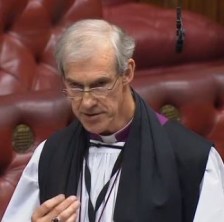
On 25th February 2020 the House of Lords debated a motion from Baroness Whittaker, “To ask Her Majesty’s Government what steps they are taking to implement the recommendations of the report by the House of Commons Women and Equalities Committee, Tackling inequalities faced by Gypsy, Roma and Traveller communities, published on 5 April 2019.” The Bishop of St Albans, Rt Revd Alan Smith, spoke in the debate:
 The Lord Bishop of St Albans: My Lords, Gypsy, Roma and Travelling communities face a great deal of marginalisation, which is why I am so grateful to the noble Baroness, Lady Whitaker—a redoubtable and feisty campaigner in this area—who keeps bringing this before us. I thank her for that. I am glad that we are raising this issue yet again in your Lordships’ House. She has quoted some of the many stats; I can add a few more and I guess that we will all add a few as we go along.
We know that 90% of Traveller children face racial abuse. The Government’s race audit showed that GRT pupils
“had the lowest attainment of all ethnic groups”.
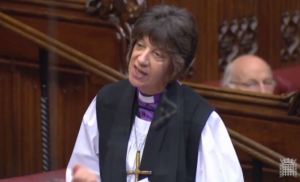 The Lord Bishop of Gloucester: My Lords, I am grateful to those contributing to this subject today who have far greater knowledge than I do, and I will aim to keep my comments brief.
 The Lord Bishop of Worcester: My Lords, I add my congratulations and thanks to the noble Lord, Lord Russell of Liverpool, for securing this debate. I declare an interest: mine is one of the 50,000 or so families who have received support from the adoption support fund. I am immensely grateful for that support. It came at a very difficult time after the death of my wife, my children’s adoptive mother, six years ago, when they were very young. It was invaluable. That is the most important thing I have to say this afternoon. It is a privilege to be able to speak from first-hand experience as an adoptive parent and as someone who has benefited immeasurably from the ASF.
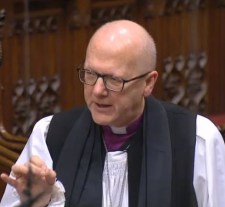 The Lord Bishop of St Albans: My Lords, I too thank the noble Earl, Lord Kinnoull, for obtaining the debate and the noble and learned Lord, Lord Cope of Craighead, for his excellent introduction. For these Benches, and indeed for many Members of your Lordships’ House, trees have a special significance. They feature in the first chapter of the holy scriptures in Genesis and they reappear in the final chapter of the Bible in the Book of Revelation chapter 22, where we find that enigmatic phrase:
 The Lord Bishop of Oxford: My Lords, I declare an interest as a board member of the CDEI and a member of the Ada Lovelace Institute’s new Rethinking Data project. I am also a graduate of the AI Select Committee. I am grateful to the noble Lord, Lord Clement-Jones, for this important debate.
 Andrew Selous (South West Bedfordshire) (Con): It is a pleasure, albeit a sad necessity for many of us, to speak on a debate on this issue yet again in this House. The analysis I have seen from Open Doors and others shows that in the past three years alone more than 10,000 Christians have been killed for their faith—that is a staggering number. We are right to hold this debate today, because, as others have mentioned, the evidence shows that Christians are the target of about 80% of all the acts of religious discrimination or persecution around the world.
 The Lord Bishop of Oxford: My Lords, I warmly welcome this report and this vital debate. Never before in the scale of human history has there been such a wide and deep threat to our ecosystem or to human flourishing that was so clear and predictable on the horizon. Technology alone is not enough.
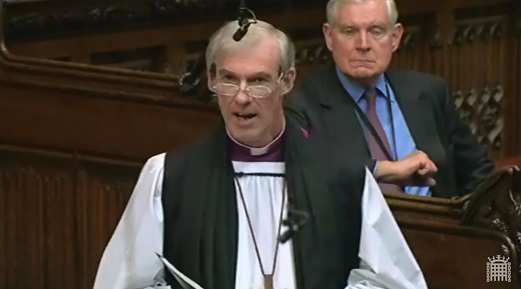 The Lord Bishop of Carlisle: My Lords, this is a very timely debate. I am most grateful to the noble Lord, Lord Hunt of Kings Heath, for securing it. I also look forward very much to the maiden speech of the noble Baroness, Lady Wilcox. We have already heard many statistics with regard to NHS targets and shall no doubt hear many more. But there seems to be general agreement that one of the biggest problems facing the NHS is what many now call a crisis in social
 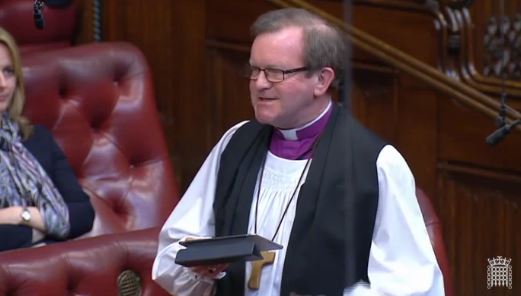 The Lord Bishop of Portsmouth: My Lords, I add my warm welcome to the noble Baroness, Lady Hunt, and congratulations on her fine maiden speech.
 The Lord Bishop of Carlisle: My Lords, I am greatly looking forward to the maiden speech of the noble Baroness, Lady Hunt of Bethnal Green, and I welcome
  The Church of England in Parliament
You must be logged in to post a comment.