
On 19th March 2020 the Home Secretary made a statement on the publication of the Windrush Lessons Learned Review. The statement was repeated in the House of Lords and the Archbishop of Canterbury, Most Revd Justin Welby, responded:
 The Archbishop of Canterbury: My Lords, the publication of this Statement is very welcome indeed. The heartfelt nature of the apology was notable.
I have a couple of questions about the recommendations to put to the noble Baroness. First, one of the historic failures of the Church of England—in many ways as bad as the hostile environment—was the terrible reception that we gave the Windrush generation, the vast majority of whom were Anglicans, when they came here. They were often turned away from Church of England churches, or were given a very weak welcome or no welcome at all. As a result, they went off and formed their own churches, which have flourished much better than ours. We would be so much stronger had we behaved correctly. I have apologised for that, and I continue to do so and see the wickedness of our actions. Continue reading “Archbishop of Canterbury responds to Home Office Windrush Lessons Report”
 The Lord Bishop of Rochester: My Lords, as many have already observed, this Budget comes in extraordinarily unusual circumstances, and in relation to the issues around Covid-19, subsequent to the Budget announcement, the Chancellor has brought forward a number of measures which have been largely well received, and no doubt others will need to follow. While voluntary action in our communities will form much of the day-to-day response to those who are the most vulnerable and potentially isolated across our nation, the sustaining of public services and of businesses is vital for both our social and economic well-being; other speakers have already begun to address some of those issues.
 The Lord Bishop of Portsmouth: My Lords, I begin by humbly making two recommendations of ways in which your Lordships might profitably spend their time.
 The Lord Bishop of Gloucester: My Lords, it is a privilege to participate in this debate, although I am disappointed not to be in New York at the UN Commission on the Status of Women, which was cancelled last week. This event was to celebrate the Beijing Declaration and Platform for Action, published 25 years ago, which saw countries agree to dedicate themselves unreservedly to addressing constraints and obstacles to gender equality, thus enhancing the empowerment of women and girls all over the world. There is still much to do.
  The Lord Bishop of Salisbury: My Lords, the timing of this debate could hardly be better. I also want to thank the noble Lord, Lord Young, for his introduction. The Media and Telecoms 2020 & Beyond conference and the Culture Secretary’s contribution to it inevitably inform a lot of what is to be said. I also wondered whether I need to declare an interest, having been the vicar of St Martin-in-the-Fields for 16 years, given that the first religious service ever broadcast came from there, by the BBC, in January 1924. The link continues. I never made much income from it, but it is a significant relationship with considerable affection for the BBC built into it.
  The Lord Bishop of Southwark: My Lords, I am grateful to the noble Baroness, Lady Tonge, for securing this important debate. I also express my gratitude to the Minister and to his officials for the careful but clear
 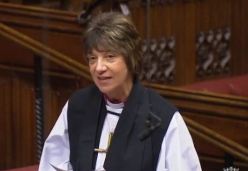 On 27th February 2020 the House of Lords debated a motion from Lord Bates, “to ask Her Majesty’s Government what assessment they have made of the findings of the Checkpoint programme, run by Durham Constabulary, to reduce reoffending rates and custodial sentences.” The Bishop of Gloucester, Rt Revd Rachel Treweek, spoke in the debate:
 The Church of England in Parliament
You must be logged in to post a comment.