Archbishop of York asks about reasons for increased policing of face-masks at protests

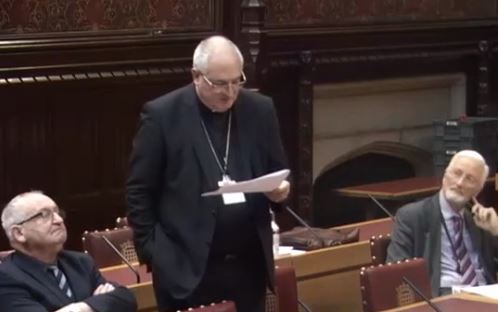
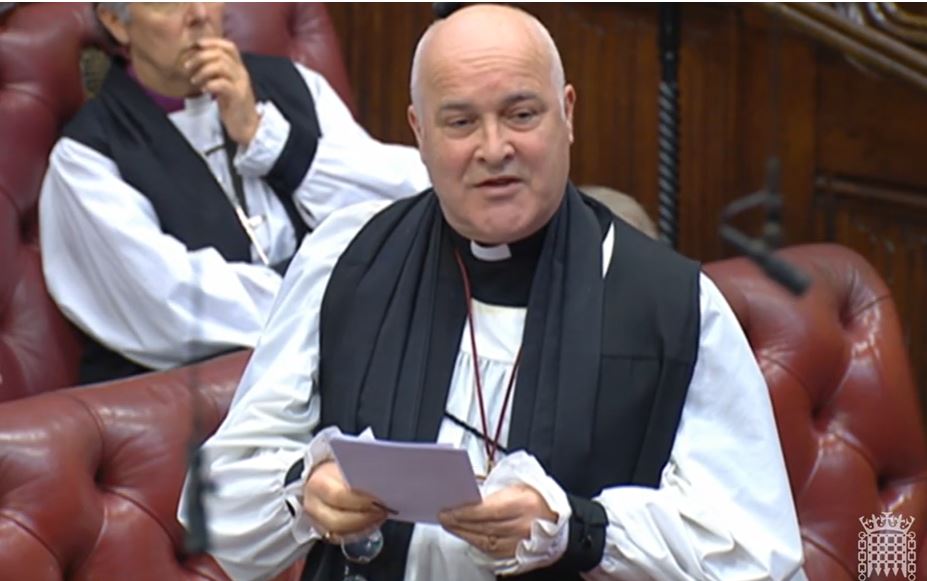
The Archbishop of York asked a question on the issue of face masks being worn at protests on 13th February 2024, following a government statement on new measures being introduced to police these activities:
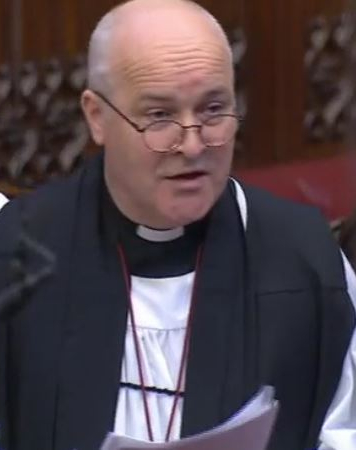
The Lord Archbishop of York: My Lords, like others, I entirely share the views about war memorials and their desecration, and fireworks and flares—there is a lot that is sensible in this. On face coverings, what concerns me is the law which we often do not often think about—the law of unintended consequences. To those dissidents, I would add religious minorities to the list of those who may be concerned about this. I wonder whether the effect of this will be that more people will wear face coverings, not fewer, because they are concerned about facial recognition. I find it hard to understand why this should be a matter for the law. If somebody commits a criminal offence while on a march, we already have the powers to deal with them. If somebody on a peaceful protest chooses to wear a face covering, I find it hard to understand why that, in and of itself, is a problem. The Minister has explained that this will be used only under certain circumstances, but if I have heard him correctly it is around the “risk” of criminal activity and violence. We do not arrest people because we think that they might be doing something. If the protest is peaceful, why should somebody not wear a face mask? I am struggling to understand why this has become such an issue, and I am concerned about minority groups who could be adversely affected by this.

Continue reading “Archbishop of York asks about reasons for increased policing of face-masks at protests”
Archbishop of Canterbury asks about support for Jordan during current conflict in Israel, Gaza, and the West Bank

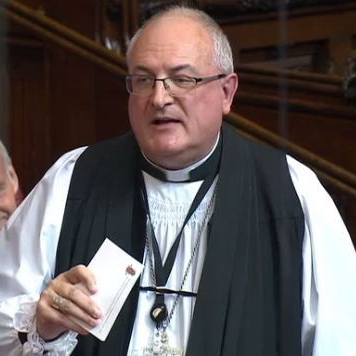
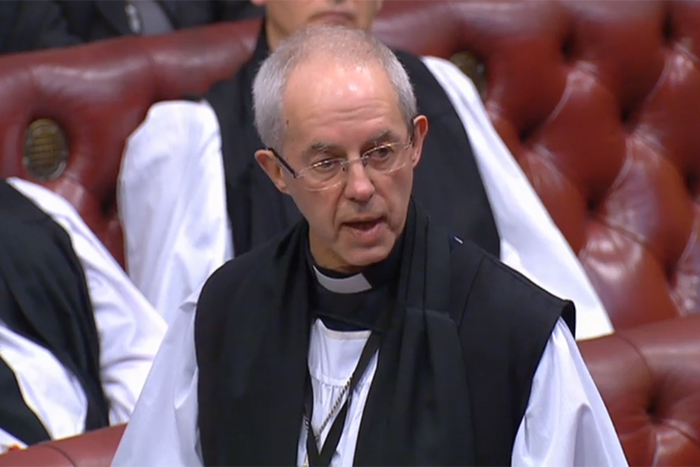
The Archbishop of Canterbury asked a question on what support is being given to Jordan under the pressures of conflict in the West Bank on 13th February 2024, during a session of questions to the foreign secretary on the UK’s future recognition of a Palestinian state:

The Lord Archbishop of Canterbury: My Lords, I welcome very strongly the continued emphasis by the Secretary of State on the two-state solution, and his condemnation of the Hamas terrorist group and his call for the liberation of hostages, as was echoed in a statement this morning from the Bishops. But it is not only in Gaza that we are seeing tragedy; we are seeing it in the West Bank, where it is almost forgotten that very large numbers of Palestinians have been killed by people who live in illegal settlements. One of the countries most affected by that is the Hashemite Kingdom of Jordan. First, what support are His Majesty’s Government giving to the Hashemite Kingdom of Jordan, given its vulnerability and its significant responsibility as guardian of the holy places? If it comes under significant pressure, that would widen the conflict appallingly and dramatically. Secondly, what are the practicalities for Jordan in preparing for or aiding a two-state solution, where the flow of refugees towards it—and it has taken something like half its population in refugees—would be a very threatening process for its destabilisation?

Continue reading “Archbishop of Canterbury asks about support for Jordan during current conflict in Israel, Gaza, and the West Bank”

Archbishop of York asks about non-consensual creation and sharing of intimate images

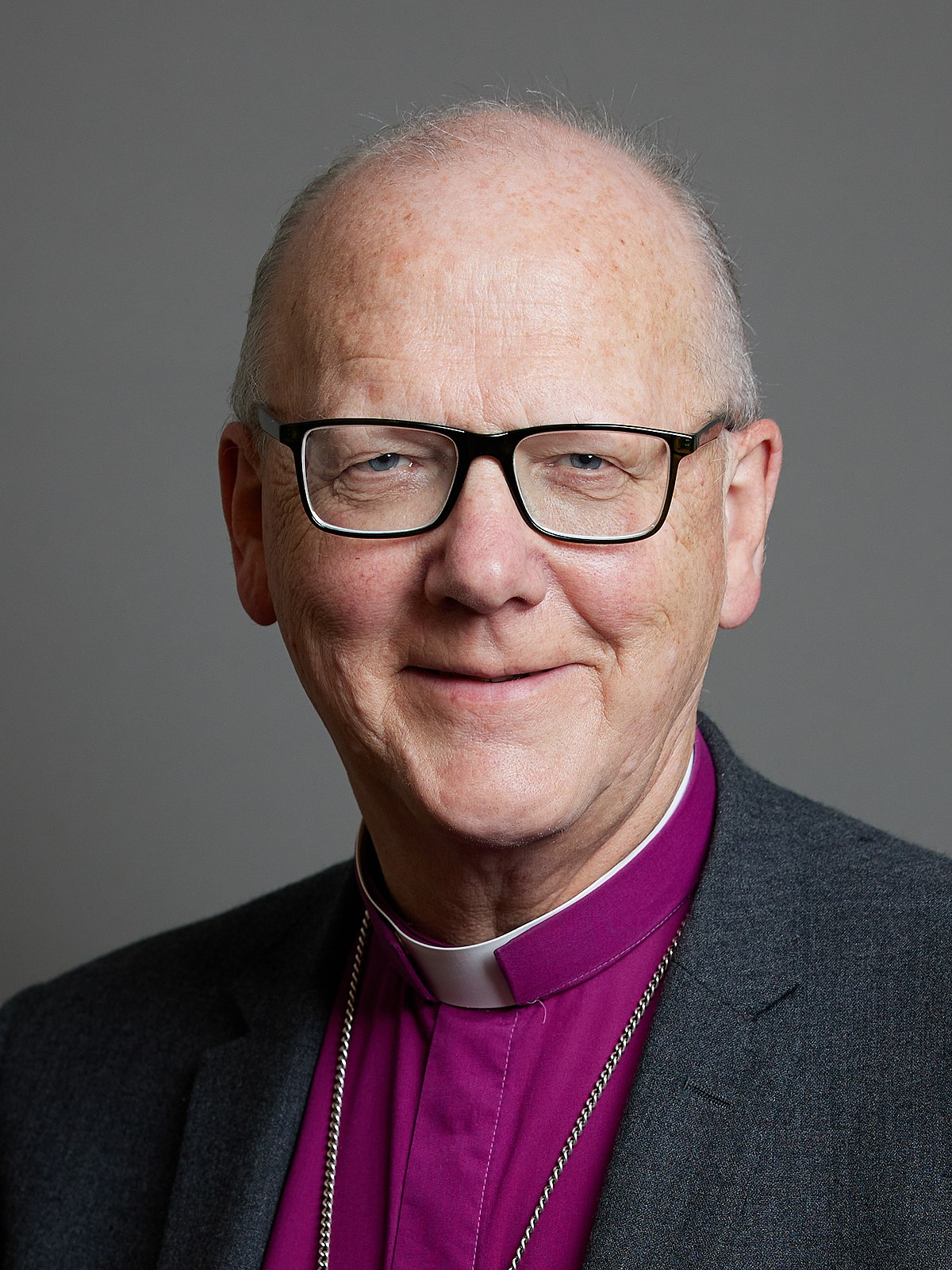
On 13th February 2024, during a discussion on the proliferation of AI being used to create intimate images without consent, the Archbishop of York raised a point of clarification on the difference between malicious and non-malicious sharing of these images:

The Lord Archbishop of York: My Lords, it would be very helpful if the Minister could explain. If I heard him correctly, he said that sharing has a six month ban but for malicious sharing it could be up to two years. Could he explain what non-malicious use would be?

Continue reading “Archbishop of York asks about non-consensual creation and sharing of intimate images”

Bishop of Lincoln asks about methods of improving school attendance

The Bishop of Lincoln asked a questions about application of data analysis to improve pupil attendance and experience in schools on 13th February 2024, during a discussion on the potential of Ofsted reviewing pupil absence rates as part of their inspections:

The Lord Bishop of Lincoln: My Lords, I express gratitude to the Minister for the way in which the data has been produced; I understand that more is to come, and that will be examined in great detail. As an unrepentant pedant, though, I am as interested in the adverbs as the nouns—in how the data is to be applied. How do we get more children across the line in terms of the culture of school? Some years ago, the Children’s Society’s Young Commissioners looked deeply into child poverty in school and how children are identified as those, for instance, receiving free school meals or who are not able to purchase the very expensive school uniforms from the agreed seller. How is school culture being encouraged by government further to change in order to get children across the line? How, indeed, do we expect Ofsted to become the “office of encouragement”?

Continue reading “Bishop of Lincoln asks about methods of improving school attendance”

Bishop of St Albans asks about evictions of indigenous people in Tanzania

The Bishop of St Albans received the following written answer on 13th February 2024:

The Lord Bishop of St Albans asked His Majesty’s Government what assessment they have made of reports of forced evictions by the government of Tanzania of indigenous peoples living in Ngorongoro Conservation Area and in the vicinity of Ruaha National Park.

Continue reading “Bishop of St Albans asks about evictions of indigenous people in Tanzania”

Bishop of St Albans asks about access to essential services for rural communities

The Lord Bishop of St Albans received the following written answer on 13th February 2024:

The Lord Bishop of St Albans: To ask His Majesty’s Government what assessment they have made of the impact of the proposed ‘taxi tax’ on rural communities accessing essential services, particularly healthcare.

Continue reading “Bishop of St Albans asks about access to essential services for rural communities”

Bishop of St Albans asks about the risk of famine in Ethiopia

The Bishop of St Albans received the following written answer on 13th February 2024:

The Lord Bishop of St Albans asked His Majesty’s Government what assessment they have made of (1) the joint report by the UN World Food Programme and Famine Early Warning Systems Network Ethiopia – Food Security Outlook 2023-24: Food assistance needs remain high amid slow recovery of livelihoods in 2024, published in October 2023, which found that “Crisis (IPC Phase 3) and Emergency (IPC Phase 4) outcomes are expected in northern, southern, and southeastern Ethiopia through at least early 2024”, and (2) the risk of famine in Tigray.

Continue reading “Bishop of St Albans asks about the risk of famine in Ethiopia”

Bishop of Chelmsford asks about plans to house asylum seekers at MOD Wethersfield

The Bishop of Chelmsford received the following written answers on 13th February 2024:

The Lord Bishop of Chelmsford asked His Majesty’s Government what is the schedule for, and availability of, transport provided to residents of MDP Wethersfield to leave the site.

Lord Sharpe of Epsom (Con, Home Office): Those living at the site are able to come and go. The process for leaving the site is the same as the rest of our asylum accommodation.

Continue reading “Bishop of Chelmsford asks about plans to house asylum seekers at MOD Wethersfield”

Safety of Rwanda (Asylum and Immigration) Bill: Bishop of Southwark queries timeline for legislation relating to Rwanda treaty

During a debate on the Safety of Rwanda (Asylum and Immigration) Bill on 12th February 2024, the Bishop of Southwark spoke in favour of a group of amendments centred around ensuring that Rwanda not be considered safe until the full implementation of the UK-Rwanda treaty, querying when a new Rwandan Asylum bill required by the treaty would be published and made operational:

The Lord Bishop of Southwark: My Lords, I will speak in favour of this group, particularly Amendments 6, 14 and 20, but I wish to avoid the circularity, as the noble Baroness, Lady Chakrabarti, was saying, that has been inevitable on something so interconnected.

The Home Secretary has said that

“we will not operationalise this scheme until we are confident that the measures underpinning the treaty have been put in place; otherwise, the treaty is not credible”.

Continue reading “Safety of Rwanda (Asylum and Immigration) Bill: Bishop of Southwark queries timeline for legislation relating to Rwanda treaty”

Safety of Rwanda (Asylum & Immigration) Bill: Bishop of Lincoln supports amendments stipulating automatic right of return to the UK for refugees

During a debate on the Safety of Rwanda (Asylum & Immigration) Bill on 12th February 2024, the Bishop of Lincoln spoke in support of amendment 8 to the bill, which would insert a stipulation that those granted refugee status have automatic right of return to the UK into the bill, explaining his experience of Rwanda and urging that the UK not place a burden on the Rwandan people that the country may not be able to cope with:

The Lord Bishop of Ely: My Lords, I rise to speak because I suspect I am in a minority as one of the very few Members of this House who have had direct contact with Rwanda, having had 10 years’ engagement with the diocese of Kigali, the capital city, and the great joy of visiting the country and seeing life outside in the countryside. One of the most moving things of my nearly 40 years of ministry was praying at the national memorial for the holocaust in Kigali with a local bishop who had lost so many members of his family. He was still so distraught that I had to find the words for our prayer together.

I put on record that I have come across so many wonderful Rwandans who would be hugely great examples to us individually of the practice of forgiveness and trying to make life beautiful again after a terrible tragedy. I can think of one instance where I met a priest; most of his family had been murdered, and in an act of forgiveness he took the murderer of his loved ones into what was left of his family, because he felt there was a requirement upon him to demonstrate and show forgiveness in this terrible situation.

Continue reading “Safety of Rwanda (Asylum & Immigration) Bill: Bishop of Lincoln supports amendments stipulating automatic right of return to the UK for refugees”