
On 12th November 2020 Lord Woolley of Woodford asked the Government “what plans they have to maintain the £20 a week increase in Universal Credit (1) for the duration of, and (2) after, the COVID-19 pandemic.” The Bishop of Durham asked a further question:
 The Lord Bishop of Durham [V]: Families in receipt of legacy benefits, such as employment and support allowance, did not benefit from the very welcome £20 a week uplift in benefits. These people are just as likely to be affected by the financial impact of the Covid-19 pandemic and include many disabled people. Will the Government extend the increase in benefits to include those in receipt of legacy benefits, as recommended by the Joseph Rowntree Foundation’s Keep the Lifeline campaign? Continue reading “Bishop of Durham asks about benefit increases to match coronavirus uplift in universal credit payments”
 The Lord Bishop of St Albans: To ask Her Majesty’s Government, further to their decision to launch a one-year Spending Review, whether their multi-year capital allocation for priority infrastructure projects includes projects in rural areas, in particular (1) the Community Housing Fund, especially for rural affordable housing schemes, and (2) the Village Hall Improvement Grant Fund. [HL9791]
  The Lord Bishop of Winchester [V]: My Lords, protecting freedom of religion or belief remains a pertinent issue in the developing world when more than 80% of the world’s population identify with a religion or belief system. My diocese has historic links with the Church of the Province of Myanmar, and during the pandemic many of its clergy have been providing volunteer support in understaffed hospitals. Can the Minister assure the House that, despite the almost £3 billion cut in the UK’s foreign aid budget, Her Majesty’s Government will continue to prioritise international freedom of religion and belief and recognise the contribution of religious groups in the development and support of their communities, particularly in times of crisis?
  The Lord Bishop of Portsmouth [V]: My Lords, I welcome the Government’s desire to protect jobs and livelihoods, but can the Minister confirm that the extension of the furlough scheme until March—a full five months—is based on the assumption and expectation that those jobs, or at least the vast majority of them, will be ready to return to unchanged? That is a bold assumption. If it is not the case, what strategy do the Government have now for addressing the transitional challenges for those whose jobs will disappear? This Statement was made late, in haste. Tackling the jobs issue in March is tackling it too late.
  The Lord Bishop of Gloucester [V]: As has already been noted, if we are serious about eliminating gender violence worldwide, we have to address the root causes. What plans do the Government have to follow Australia’s lead and develop a national primary prevention framework to change the attitudes, behaviours and structures that underpin violence against women and girls?
 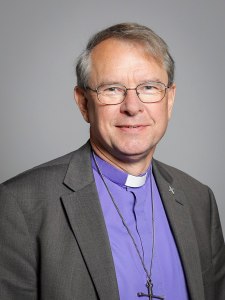 The Lord Bishop of Durham: To ask Her Majesty’s Government, further to the answer by Baroness Williams of Trafford on 21 October (HL Deb, col 1598), when the review into “safe and legal routes to the UK for asylum seekers, refugees and their families” will be completed; and whether that review will be published. [HL9631]
 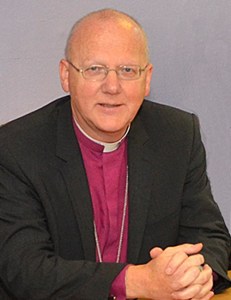 The Lord Bishop of St Albans: To ask Her Majesty’s Government what assessment they have made of NatWest’s announcement of a 48-hour gambling block for debit cards to reduce gambling-related harm; and what action they are taking to encourage other companies in the banking sector to adopt similar policies. [HL9946]

You must be logged in to post a comment.