On 19th November the Bishop of Salisbury asked a question he had tabled to Government, on fuel intensive businesses moving to net zero carbon emission. The exchanges are below, along with the follow-up questions from other Members:
Fossil Fuels: Business
 The Lord Bishop of Salisbury: To ask Her Majesty’s Government, further to the report by the Transition Pathway Initiative Management Quality and Carbon Performance of Energy Companies: September 2020, published on 7 October, what steps they plan to take to encourage fossil fuel intensive businesses to accelerate their move to net zero carbon emissions.
The Parliamentary Under-Secretary of State, Department for Business, Energy and Industrial Strategy (Lord Callanan) (Con): My Lords, the Government have schemes worth nearly £2 billion operating or in development to support our vital energy-intensive industries to decarbonise. These schemes include the industrial energy transformation fund to help companies to reduce their fuel bills and transition to low-carbon technologies, and the industrial decarbonisation challenge to support industry with the development of low-carbon technologies in industrial clusters.
The Lord Bishop of Salisbury: I thank the Minister for his Answer. There have been some welcome and notable commitments, particularly by European oil and gas companies, but overall, the sector is not moving fast enough to align with the Paris agreement. How does the Minister see the Government supporting companies to move faster and have consistent standards for reporting all emissions from scopes 1, 2 and 3 so companies demonstrate alignment clearly in their reporting?
I commend to the Minister the work of the Institutional Investors Group on Climate Change working with TPI to establish a net-zero standard. It would be marvellous if the Government supported these endeavours in the context of their presidency of COP. Continue reading “Bishop of Salisbury asks Government to encourage fossil fuel intensive businesses to accelerate move to net zero carbon emissions”
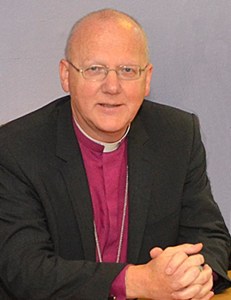 The Lord Bishop of St Albans: To ask Her Majesty’s Government, further to the announcement that Burnley FC are working with the Young Gamers and Gamblers Education Trust to educate staff and supporters about the risks of gambling, what representations they have made to the Premier League to encourage clubs to adopt similar initiatives. [HL10378] Continue reading “Bishop of St Albans asks about gambling advertising, rehabilitation, education and football”
 Parliament met in Westminster and online this week. The Bishop of Salisbury was on duty in the House of Lords and read prayers at the start of each sitting day.
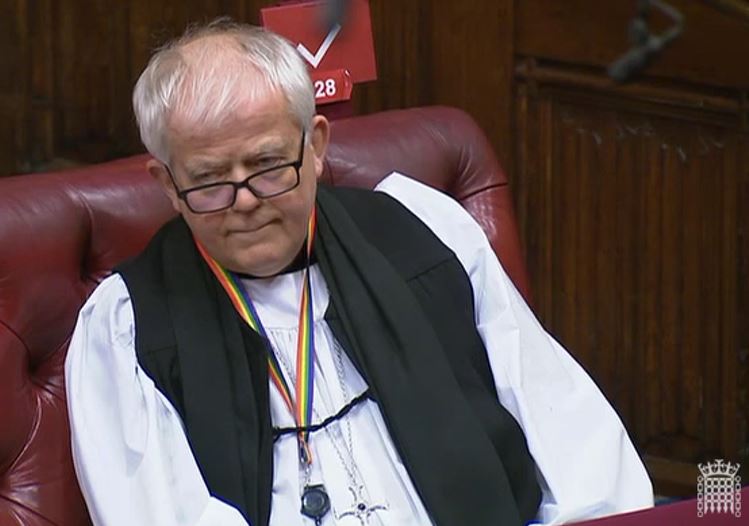
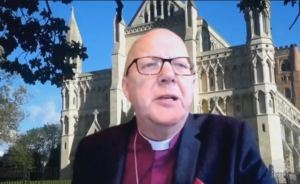 The Lord Bishop of St Albans [V]: My Lords, I am also delighted that the Government have set up the towns fund, which will make a significant contribution to many poorer communities. Nevertheless, it still remains that the Public Accounts Committee has expressed concerns about why some towns were chosen and some were not. In future, will Her Majesty’s Government undertake to publish the objective criteria and evidence that will be used for selection so that everyone can be assured that there is no political influence in making these selections and choices?
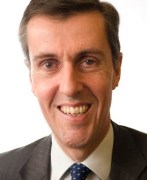 Andrew Selous: It is possible to appeal the decision of a consistory court to the provincial court of the Archbishop, with the permission of the consistory court or of the appeal court, provided that the appeal does not relate to a question of doctrine, ritual or ceremonial. The Provincial Courts of Canterbury and York are known by the names ‘The Court of Arches’ and ‘The Chancery Court of York’.
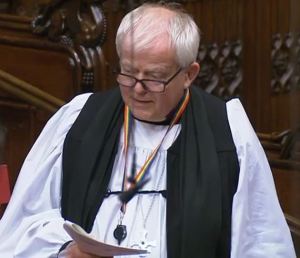 The Lord Bishop of Salisbury: My Lords, neither ship recycling nor Northern Ireland are my territory, though church is sometimes seen as an ark to gather people safely and hazardous materials are a concern for us all. It is important for Northern Ireland to thrive as best it can within the new political arrangements that are still unfolding. The purpose of this SI is clear and not controversial; it is to the benefit of one shipyard in Northern Ireland. The EU has developed a good scheme for overseeing this process and I am sure we will be glad to continue to use it.
 The Lord Bishop of Salisbury: My Lords, Ban Ki-moon, then General Secretary of the UN, said that the Paris climate change talks were the largest and most complex talks he had ever been part of. Some 12,000 people were in the discussions, with another nearly 50,000 gathered around them.
 The Lord Bishop of St Albans: To ask Her Majesty’s Government what assessment they have made of the case for the provision of further security guarantees to assist those living in the Nagorno-Karabakh region; and what steps they are taking to monitor and assess clashes and casualties along the ‘line of contact’ in that region. [HL10014]


You must be logged in to post a comment.