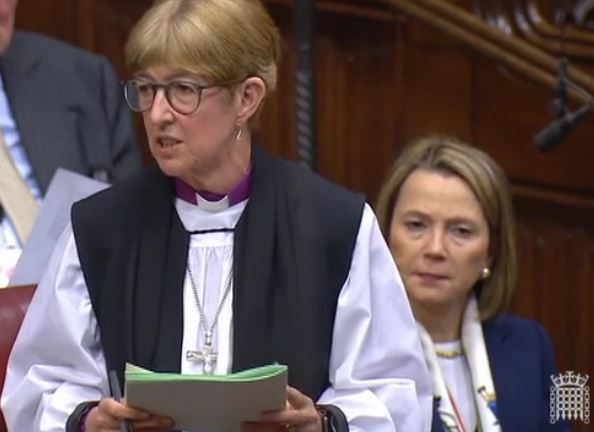
On 25th March 2019 the Bishop of Newcastle, Rt Revd Christine Hardman, asked a question she had tabled, on child and adolescent mental health services:
The Lord Bishop of Newcastle: To ask Her Majesty’s Government what action they are taking to improve children’s and young people’s access to mental health care.
 The Parliamentary Under-Secretary of State, Department of Health and Social Care (Baroness Blackwood of North Oxford) (Con): My Lords, the NHS is on track to meet the Five Year Forward View for Mental Health commitment that 70,000 more children and young people will access treatment each year by 2020-21. Under the NHS Long Term Plan, a further 345,000 children and young people will receive support by 2023-24. Our recent Green Paper sets out our plans to pilot a four-week waiting time for specialist NHS mental health services for children and young people.
The Lord Bishop of Newcastle: My Lords, I thank the Minister for her remarks and welcome the commitment to prioritising investment in mental health care for children and young people. However, data published by the NHS in November showed that only one in four young people with a mental health disorder accessed specialist mental health services in the previous year. I welcome plans from the Government to increase this figure to 100% within the decade, but given that three-quarters of children with a diagnosable mental health condition do not currently get access to the support they need, how will the Government act to help this generation of children who will have moved on to adult services before this rollout is complete?
 On 25th March 2019 the Bishop of St Albans, Rt Revd Alan Smith, received a written answer to a question on problem gambling-related suicide:
 This week in the House of Lords bishops spoke on the Chancellor’s Spring Budget Statement, and refugee family reunion rules post-Brexit. They asked questions about relief efforts after Cyclone Idai, gambling, air pollution, environmental standards for new houses, refugees, the declining bee population, the early years education workforce, and inheritance tax for cohabiting family members. Bishops voted on an amendment to the Offensive Weapons Bill
 The Lord Bishop of Chester: My Lords, over the years, speakers from these Benches have completely supported the thrust behind the Question from the noble Lord, Lord Lexden. It is not only a matter for the Treasury and tax, but a matter of justice. If another party gets into power, perhaps the inheritance tax thresholds might even come down in due course—who knows? This does not seem a strong argument for denying an obvious need for justice in these cases.
 The Lord Bishop of Chester: My Lords, it is a privilege and a challenge to follow such a brilliant speech from someone who knows his way around the subject. If you want to find good things to tax, I always say that you should start with sin: find a new sin and tax it. I rather agree that HS2 is a sin, not for adding capacity, which I am all in favour of, but in doing so in such an unnecessarily expensive way. For me, trains go quite fast enough already and it could have been done far more cheaply without factoring in the speeds in a small country. As I follow the noble Lord’s speech, I think of St Paul, who once began by saying, “I speak as a fool”. I do so too, a little, after that wonderful description of the financial landscape.
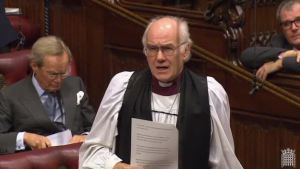 The Lord Bishop of Chester: My Lords, is it not the 28 days that people have to make arrangements, when they change from being asylum seekers to being refugees, that is the difficulty? It takes me more than 28 days to open a bank account if I am on good form, and there are lots of other things that they have to think about. Could the period not be extended beyond 28 days? Universal credit often does not kick in for at least 35 days. The 28-day period is just too tight for people in these circumstances.
 The Lord Bishop of Durham:


You must be logged in to post a comment.