
On 29th January 2020 the House of Lords debated a motion from Baroness Tyler of Enfield, “to ask Her Majesty’s Government how they plan to respond to the ten steps to improve social mobility contained in the Sutton Trust’s Mobility Manifesto, published in November 2019, and the recommendations of the Social Mobility Commission’s 2019 State of the Nation report.” The Bishop of Durham, Rt Revd Paul Butler, spoke in the debate:
 The Lord Bishop of Durham: My Lords, I look forward to the maiden speech of the noble Lord, Lord Choudrey.
Opportunity, aspiration and education are critical to all having the best chance of being socially mobile. Giving children the best start in life is paramount, so we need more health visitors, better-targeted childcare for those least able to afford it and renewed opportunities for parents to interact with others. Will Her Majesty’s Government commit to a proper national early years strategy with an increased share of future spending?
Church of England schools in my diocese have found it difficult to implement our motto that “no child is left behind” because social mobility is a great challenge exacerbated by a poverty of aspiration. According to the Social Mobility Commission’s survey, less than a third of people living in the north-east think that there are good opportunities in our region.
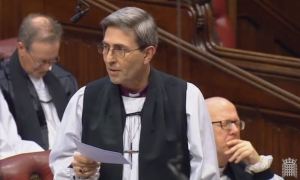 The Lord Bishop of Winchester:
  On 7th October 2019 the Bishop of Winchester, Rt Revd Tim Dakin, received a written answer from Government regarding the Apprenticeship Levy:
 The Lord Bishop of Carlisle: My Lords, I too am most grateful to the noble Lord, Lord Young, for bringing this very important subject to our attention. Like him and both the noble Lords who have spoken, I do not suppose that anybody would argue against the value of apprenticeships, or the principles that undergird the apprenticeship levy. Indeed, the Church of England is a very strong supporter of both, as well as a significant contributor to the levy. If that is an interest, I am glad to declare it. We are keen to play our part in improving skills and increasing productivity throughout the UK workforce, as well as providing more opportunities for young people to find worthwhile employment.
 The Lord Bishop of Winchester: My Lords, among the 4,500 British Steel jobs at risk are many apprenticeship trainees and students enrolled on degree apprenticeships. What action will the Government take to ensure that these apprentices will not lose their training or have their training disrupted, but will be able to continue their training elsewhere in another steel-based firm, or have an equivalent apprenticeship in another place?
 The Lord Bishop of Portsmouth: Is the Minister aware—and, if not, I and perhaps other noble Lords are ready to give examples—of the bureaucratic burdens and delays being experienced? For universities, the added obligation to report to and share data with the Education and Skills Funding Agency, as well as the three usual reports, is exacerbated by an identical reporting requirement for levels 2 and 7, NVQ and postgraduate. The burden seems disproportionate. For large levy-payers, there are unexplained delays in approving new apprenticeship standards. Will the Minister urgently address these to improve take-up?
  On 25th June 2018 Lord Fox tabled an oral question ‘to ask Her Majesty’s Government what assessment they have made of the effectiveness of the Apprenticeship Levy.’ The Bishop of Peterborough, the Rt Revd Donald Allister, asked a follow-up question: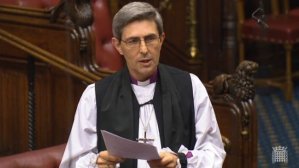
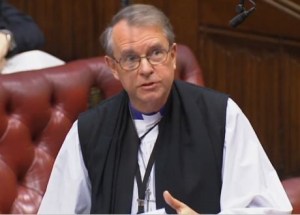 The Lord Bishop of Durham: My Lords, I note the comments already made about apprentices, but it is often those at the beginning of their careers who are most affected and most quickly forgotten. Carillion itself committed to creating 5,000 apprenticeships by 2019, and its website states that around 2,000 students are in training as part of an apprenticeship programme across 13 centres at any one time, so we are not talking about a small number. How can the Minister assure us that those apprentices and students—because some are on student schemes—will be given serious consideration to ensure that their careers are not affected?
  On 1st February 2017, the House of Lords debated the Government’s Technical and Further Education Bill at its Second Reading. The Bishop of Norwich, Rt Revd, Graham James welcomed its proposals.
 The Church of England in Parliament
You must be logged in to post a comment.