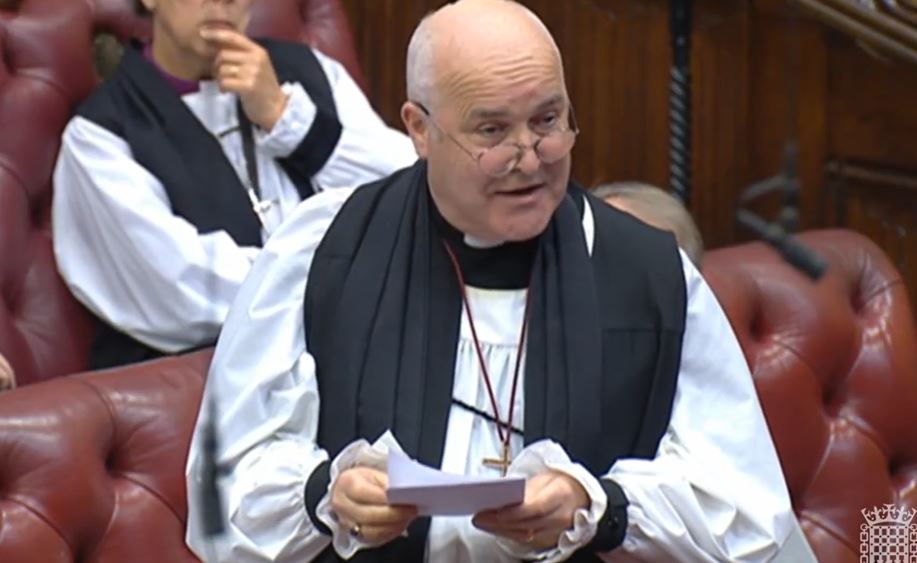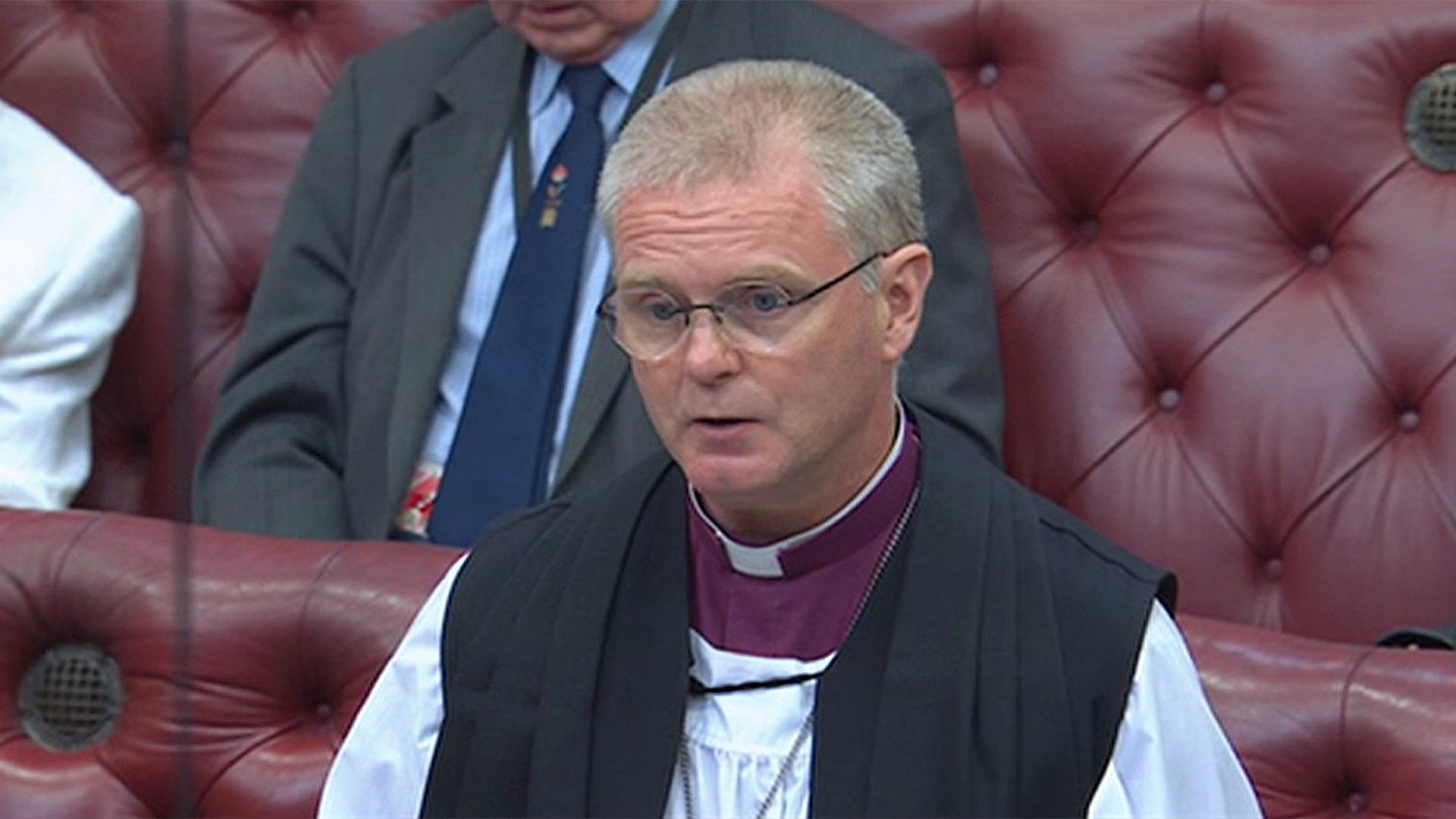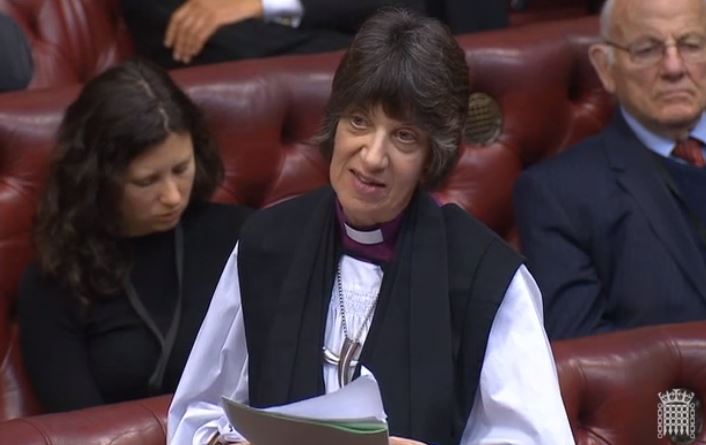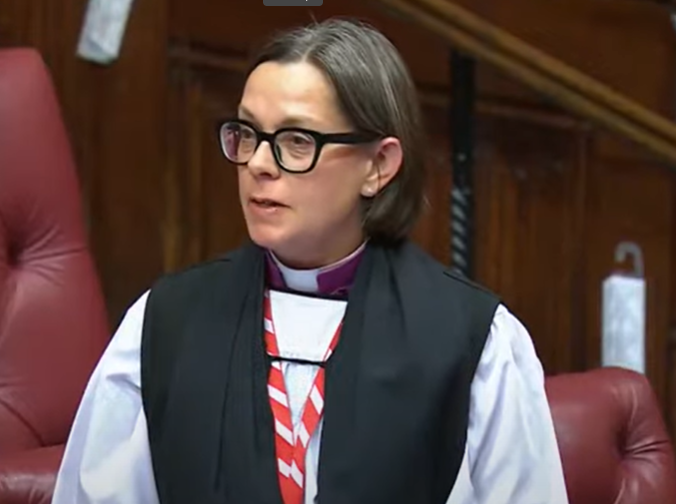
Terminally Ill Adults (End of Life) Bill: Bishop of London supports further safeguards

The Bishop of London spoke during a committee debate on the Terminally Ill Adults (End of Life) Bill on 21st November 2025, supporting amendments aimed at introducing further safeguards and monitoring into the bill:

The Lord Bishop of London: My Lords, I will speak particularly in support of Amendments 181, 45 to 49, 58 and 222. It is a privilege to follow the noble Baroness, Lady Hollins, and the noble Lord, Lord Griffiths, whom I thank for sharing their personal stories. They are a reminder to us that this debate touches some of the deepest things within us, and not only should we be kind to each other but we ought also to be kind to ourselves.

I declare my interests as set out in the register, and particularly that I am vice-president of Exeter Hospice Care, chair of the UK Commission on Bereavement, and patron of AtaLoss. Your Lordships will know that, however many amendments there are to this Bill, I do not feel it will ever be safe. But I want to speak on this group because I believe that these amendments are at the heart of the issue of motivation. I remain concerned about the fact that there is currently no real, deep investigation of the motivation for assisted dying.

Continue reading “Terminally Ill Adults (End of Life) Bill: Bishop of London supports further safeguards”

Terminally Ill Adults (End of Life) Bill: Archbishop of York speaks at second reading, highlighting risks of legislation

The Archbishop of York spoke at the second reading of the Terminally Ill Adults (End of Life) Bill on 19th September 2025, pointing out the need for better palliative care in the UK and the risks of implementing this legislation:

The Lord Archbishop of York: My Lords, it is an honour to follow the noble Baroness, Lady Hollins. I will of course speak for myself, but I also know that I represent views held by many faith leaders—not just Christian leaders—across our nation, with whom I have been in discussion and who have written to me.

Jesus teaches us that how we live our lives in relationship to others is vital for the health of our society and our own personal well-being. We belong with and for each other. The Bill is wrong because it ruptures relationships, serving one need but creating many others.

The noble Lord, Lord Baker, and several others in this important and moving debate gave the game away early on: no Government, he said, will be prepared to provide palliative and social care in the way it is needed, thus revealing that the Bill’s impact will be economic as well as social. Several speakers said there were too many safeguards; others, that provision for assisted dying ought to be expanded.

Continue reading “Terminally Ill Adults (End of Life) Bill: Archbishop of York speaks at second reading, highlighting risks of legislation”

Terminally Ill Adults (End of Life) Bill: Bishop of Chichester stresses sanctity of life

The Bishop of Chichester spoke at the second reading of the Terminally Ill Adults (End of Life) Bill on 19th September 2025, stressing the principle of the sanctity of life and questioning the ethical foundations of the bill:

The Lord Bishop of Chichester: My Lords, it is a privilege to follow the noble Lord, Lord Curry. I begin by acknowledging reverence for all contributors to this debate, which touches on our deepest emotions: lacrimae rerum, the things of which tears are made.

The noble Lord, Lord Carlile of Berriew, reminded us that, since the end of capital punishment, causing the death of another citizen is not allowed in our law, other than in war. The noble Lord, Lord Herbert of South Downs, was not alone in describing the introduction of a provision in law to cause death as a “crossing the Rubicon” moment. Although the right to life, enshrined in law, is a moral principle consistent with the Christian faith, it should not be regarded as the imposition of Christianity on the pluralist democracy we are proud to be. However, many Christians, including myself, see the Bill as crossing the Rubicon, and this is why.

Continue reading “Terminally Ill Adults (End of Life) Bill: Bishop of Chichester stresses sanctity of life”

Terminally Ill Adults (End of Life) Bill: Bishop of Newcastle supports further scrutiny of bill

The Bishop of Newcastle spoke at the second reading of the Terminally Ill Adults (End of Life) Bill on 12th September 2025, touching on her experience of the assisted dying debate in New Zealand and flaws in this legislation:

The Lord Bishop of Newcastle: My Lords, this is not the first country in which I have lived and worked during such a debate as this. I was a Bishop in New Zealand ahead of the referendum on a similar Bill there five years ago. I witnessed the arguments, heard the reassurances and have since followed its implementation, including the pressures on healthcare professionals and the unforeseen consequences from a lack of clarity around process.

Only recently, New Zealand published its five-year review of the Act, highlighting significant practical challenges, concluding that the review committee is ineffective as an oversight body and recommending reforms. Five years on from the passing of a Bill much like the one before us, it would be irresponsible not to take its findings seriously. Most strikingly, the report highlights confused principles for the service and even recommends that the New Zealand Government establish specific principles to underpin the Act. This is no small matter—to be five years into providing the service without clarity on the principles on which it was built. For legislation where the consequences of poor drafting are so high, it is alarming that such principles were not defined from the outset. Yet, almost a year into the passage of this Private Member’s Bill, we are still discussing core concepts, without sufficient detail on how a state-sponsored suicide service would be implemented. That should trouble us all.

Continue reading “Terminally Ill Adults (End of Life) Bill: Bishop of Newcastle supports further scrutiny of bill”

Terminally Ill Adults (End of Life) Bill: Bishop of Southwark raises concerns on effects of bill on vulnerable members of society

The Bishop of Southwark spoke at the second reading of the Terminally Ill Adults (End of Life) Bill on 12th September 2025, expressing concern regarding the effects of the bill on vulnerable members of society, and the sanctity of human life:

The Lord Bishop of Southwark: My Lords, I acknowledge with deep respect that those arguing for the passage of this Bill are often speaking from personal experience of the pain and suffering of someone’s final illness. Yet, along with many other speakers, I have deep concerns about legislating to permit the practice of assisted dying. I caution the House against the remedy of choice in this area. My concern is that those who are most vulnerable in society will become more vulnerable should this Bill find its way on to the statute book.

Related to this, and as a Bishop, I wish to say something on the subject of life, which I believe we must consider in any Bill making provisions for its termination. In the Old Testament, the principal word for life is the Hebrew word “hayim”, a plural noun. This expression signifies both our physical life and our source in God, who is the source of all life. It is a relational term, and, like most societies until our own age, it reflects a view of life as a gift and one lived out with others. It is a sign of the deep richness of the journey of life, which, of course, encompasses mortality and the finality that takes us to our very last breath. We need to be immensely careful in supporting a departure from the practice and wisdom of centuries.

Continue reading “Terminally Ill Adults (End of Life) Bill: Bishop of Southwark raises concerns on effects of bill on vulnerable members of society”

Terminally Ill Adults (End of Life) Bill: Bishop of London opposes legislation and calls for comprehensive funding of palliative care system

The Bishop of London spoke at the second reading of the Terminally Ill Adults (End of Life) Bill, opposing the bill and outlining the need for fully funded palliative and social care services in the UK:

The Lord Bishop of London: My Lords, as the noble Lord, Lord Kamall, has already pointed out, we in this Chamber share the same goal: for people to die with dignity and compassion. They are critical concerns for those who, like me, believe that the Bill is deeply flawed. Noble Lords will know that I am a former government Chief Nursing Officer, and I chaired the UK Commission on Bereavement. As a nurse, a priest, a daughter and a granddaughter, I have had the privilege to be with many people as they die. Most people die well although, as we have heard and will continue to hear, that is not always the case. I have known people to experience some of the most valuable days of their life as it comes to an end, including those with terminal illnesses.

Continue reading “Terminally Ill Adults (End of Life) Bill: Bishop of London opposes legislation and calls for comprehensive funding of palliative care system”

Bishop of London asks about Terminally Ill Adults (End of Life) Bill

The Bishop of London received the following written answer on 16th January 2025:

The Lord Bishop of London asked His Majesty’s Government whether they intend to produce an equalities impact assessment ahead of the coming stages of the Terminally Ill Adults (End of Life) Bill.

Continue reading “Bishop of London asks about Terminally Ill Adults (End of Life) Bill”

Church Commissioners Questions: Church-owned Hospices, Historic Places of Worship, Listed Places of Worship Grant Scheme, People Housebound due to Disability: Church Support, Historic Church Preservation: Northumberland, Al-Ahli Hospital in Gaza

On 28th November 2024, the Second Church Estates Commissioner, Marsha De Cordova MP, gave the following answers to questions from MPs in the House of Commons:

Continue reading “Church Commissioners Questions: Church-owned Hospices, Historic Places of Worship, Listed Places of Worship Grant Scheme, People Housebound due to Disability: Church Support, Historic Church Preservation: Northumberland, Al-Ahli Hospital in Gaza”

Health and Care Bill: Bishop of Carlisle raises concerns on assisted dying

On 26th January 2022, the House of Lords debated the Health and Care Bill in committee. The Bishop of Carlisle spoke on issues of assisted dying contained in amendments to the bill:

The Lord Bishop of Carlisle: My Lords, I recognise and respect the integrity and passion that underlie Amendment 297. However, I rise to agree wholeheartedly and briefly with those noble Lords and noble and learned Lords who have already expressed their significant reservations about it.

There are two problems in particular with that amendment. The first has to do with the many contentious arguments for and against any legislation permitting assisted dying, some of which have already been mentioned. Tempting though it is to rehearse some more of those, I am conscious not only of the time but of the fact that they have already been presented recently and at length, as we have been reminded by the noble and learned Lord, Lord Mackay, at Second Reading of the Assisted Dying Bill here in your Lordships’ House. The ongoing process of that Bill, however slow it may be, should not be undermined. We have also been assured that this is not primarily what Amendment 297 is all about. I might add that the terminology of that amendment is unhelpfully vague. “Vague” is a word that has already been used more than once in the debate today. For instance, we might ask exactly what is meant by “terminally ill” or “medical assistance”.

Continue reading “Health and Care Bill: Bishop of Carlisle raises concerns on assisted dying”

Bishop of Chichester warns of unintended consequences of assisted suicide bill

On October 22nd 2021 Peers debated the Assisted Dying Bill of Baroness Meacher, at its Second Reading.

The Lord Bishop of Chichester: My Lords, I feel constrained to begin with a theological view, as the noble Lord, Lord Lipsey, challenged us to do. It is simply this: in the Christian view, God does not inflict evil on people. Indeed, the man God, Jesus Christ himself, sharing our life, experienced the evil and suffering of the cross in order that we, in the darkest moments of death, might find hope and the recovery of life in heaven. I believe that, in this debate, we have been treading on sacred ground as we have listened to personal stories, and we have done so with reverence.

Most of all, I want to speak about the wider context of vulnerability and to do so from the experience of the parishes where I have served; for example, the sex workers in the back streets of Plymouth, the largely black and Asian communities in Leicester, and the bedsits and overcrowded flats of Hastings, home to people with severe mental health issues and/or drug dependency. At the point of facing terminal illness, such people would reveal overwhelmingly that they have no family, and few friends or responsible partners to assist them through reaching the point of final death. Indeed, in many cases, they have had no experience of being given autonomy or power over their lives; at the end of their lives, they are woefully ill prepared for taking responsibility for their death.

The sanctity of life is central to Christian faith. It is also a view held with honour and conviction by people of other faiths, as we have heard. The Church’s sense of responsibility for all people stems from this conviction—responsibility especially for the vulnerable when they face death too often alone, but, at the moment, with the fundamental bulwark of protection in the law. This was a point made powerfully by the noble and right reverend Lord, Lord Harries, the noble Lord, Lord McColl, and, more recently, the noble Lord, Lord Herbert.

Many contributors have raised significant doubts about the level of trust in the capacity of the judiciary and the medical profession to meet the extraordinary demands of disadvantaged communities when terminal illness and incapacity face them. The call from the noble Lord, Lord Hastings, and others for urgent and sustained investment in palliative care would be a positive and worthy outcome to this important debate on a Bill whose humane intentions I respect profoundly but which, I believe, would lead to unintended consequences and which we should not let pass.

Hansard