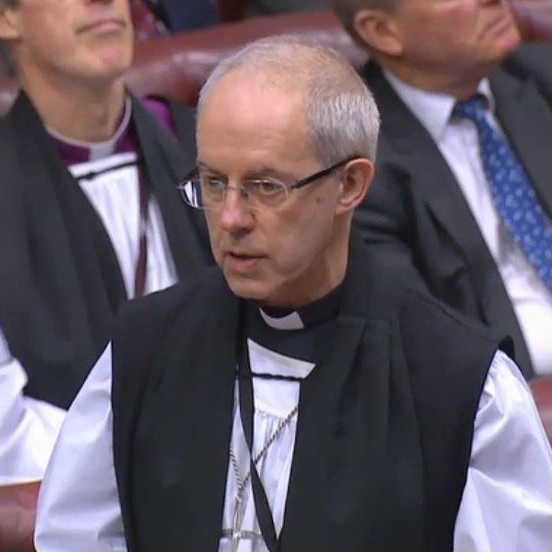
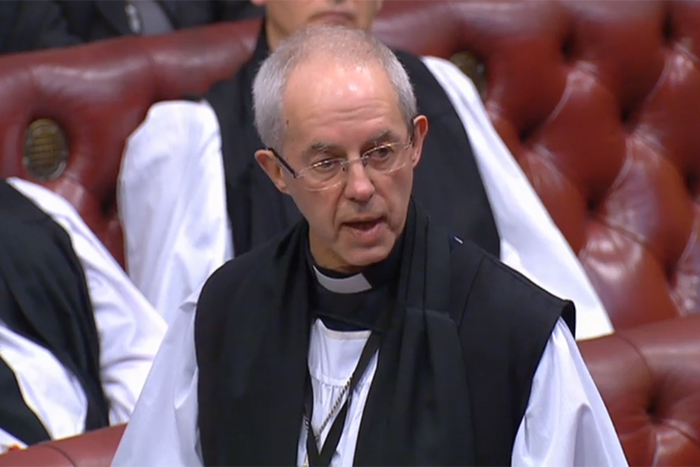
The Archbishop of Canterbury asked a question on the government’s plans for humanitarian support in the event of conflict in Ukraine, during a debate on the escalating tensions between Ukraine and Russia on 26th January 2022:
The Lord Archbishop of Canterbury: First, I associate myself with, particularly, the wise comments of the noble Lord, Lord Cormack. Having listened to the questions, does the noble Baroness the Leader agree that mediation and diplomacy should be pursued until the last moment, seeking to find ways to give both sides the opportunity to withdraw—particularly the Russians from their completely unjustified threats? The one thing we can be sure of is that, once war starts, all control of the situation will be completely lost, possibly for years, and the casualties will be terrible. Secondly, what provision are the Government making, should the worst come to the worst, to support the very large number of refugees and the huge needs for humanitarian support that will inevitably be part of fighting in the late winter in eastern Europe?
“When people are too scared to express their genuinely held and legally protected beliefs, that is very dangerous for democracy.”
On 10th December 2021 in the House of Lords the Archbishop of Canterbury held a debate on freedom of speech. His opening and closing remarks are below, and the full debate including the contributions of Peers and the Opposition and Government response, can be read in Hansard, here.
Moved by The Archbishop of Canterbury: That this House takes note of contemporary challenges to freedom of speech, and the role of public, private and civil society sectors in upholding freedom of speech.
The Archbishop of Canterbury: My Lords, I am most grateful to the Leader of the House, the usual channels, all noble Lords who have taken the trouble to be here today and, especially, the noble Lord, Lord Parkinson, for answering on behalf of the Government in order that we may have this debate. It is a return to an Advent tradition, interrupted in recent years by elections and pandemics. Should your Lordships worry that I am infectious in some way, I have been tested to the limits of testing. I have my granddaughter’s cold, for which I would like to record my grateful thanks.
We on these Benches have our critics—I have a large number—but for all our present failings you would be hard-pressed to find a more disastrous move by the Lords spiritual than when, in 1831, 21 of them lined up behind the Duke of Wellington and opposed the Great Reform Bill. Had they voted the other way, it would have passed. The people, denied their rights, responded with riots, and bishops were particularly targeted, some with violence. In Bristol, the Bishop’s Palace was burned down. A dead cat was thrown at my predecessor Archbishop Howley, narrowly missing him but striking his chaplain in the face. “Be glad it wasn’t a live one,” Howley is reported to have responded.
I start with this dive into the past because it illustrates a present point. The grey area between, on the one hand, peaceful protest and reasoned criticism and, on the other, incitement to hatred or to violence is one that we are still trying to navigate today. The Church of England knows about that. I must start by suggesting that our society should never follow our historical example of coercion, Test Acts and punishment. There is still a prison at Lambeth Palace at the top of the Lollards’ Tower, with room for eight people. It was used for the Lollards—I have a little list.
On October 22nd 2021 Peers debated the Assisted Dying Bill of Baroness Meacher, at its Second Reading.
The Archbishop of Canterbury: My Lords, I am grateful to the noble Baroness, Lady Meacher, and listened with great attention to her extremely powerful speech. This is an issue on which many of us have personal experiences, often painful and difficult. There is unanimity on these Benches that our current law does not need to be changed, but I know that people of faith hold differing views. No doubt we will hear those today and I look forward to them.
Everyone here shares the best of intentions. We should recognise that in how we listen and respond to each other. I hope no one will seek to divide the House today, but I welcome the amendment from the noble Lord, Lord Winston, because it draws our focus towards our use of language. We need clarity and precision in our terms.
Christ calls his followers to compassion, but compassion must not be drawn too narrowly—a point made indirectly and powerfully by the noble Baroness, Lady Meacher. It must extend beyond those who want the law to provide help to end their lives to the whole of society, especially those who might be put at risk. Our choices affect other people. The common good demands that our choices, rights and freedoms must be balanced with those of others, especially those who may not be so easily heard.
During a meeting of the House of Lords on 18th August 2021 to discuss the situation in Afghanistan following withdrawal of international troops and the Taliban entering Kabul, the Archbishop of Canterbury paid tribute to the people of Afghanistan and urged that the government policy towards refugees be guided by morality rather than numbers:
The Lord Archbishop of Canterbury: My Lords, I look forward especially to hearing noble and gallant Lords, diplomats and others with local knowledge of Afghanistan. We rightly remember the courage, suffering and sacrifice over the past 20 years and the courage being shown currently by our ambassador and service- people in Afghanistan, together with their colleagues, and reporters.
When we look back, I remember a cathedral full for the funeral of a soldier: family and many colleagues silent in dignity, some wounded, mourning their loss. The failure we face today is not military or diplomatic—they did all they could—it is political. Recovery and hope will come to Afghanistan with our supporting commitment to the neediest and most desperate. We have proven capacities in soft as well as hard power. We owe an absolute, lavishly generous moral covenant to all those who are at risk because they served with us in Afghanistan or took seriously our frequently professed commitment to its future, women and girls included.
On 19th May 2021 the Archbishop of Canterbury spoke in the House of Lords on the fifth and final day of the debate on the Queen’s Speech.
My Lords, it is a privilege to speak in this debate on the Gracious Speech after the Noble Lord, Lord Hannay with his vast experience and knowledge, and I have learned much from his speech and agree with what he’s said.
The Integrated Review of Global Britain in a Competitive Age has much to be welcomed, including especially the thoughtfulness about the security implications of climate change, the strong commitment to Freedom of Religion and Belief and the commitment to restore the 0.7%. However, to speak of security, defence, development and foreign policy without a developed section on peacebuilding and peace-making, especially with competitors, is like speaking of the pandemic without mentioning vaccination.
On 20th April 2021, the House of Lords debated Commons Reasons and Amendments to the Fire Safety Bill. Votes were held on further amendments to the bill, in which Bishops took part:
On 12th April 2021, the Archbishop of Canterbury joined in House of Lords tributes to Prince Philip, the Duke of Edinburgh, who had recently passed away:
The Lord Archbishop of Canterbury: My Lords, it is a privilege to follow four such eloquent speeches from the Front Benches, and it is with great sadness and much sympathy that I convey from these Benches the condolences of the Lords spiritual especially to Her Majesty the Queen, but also to all her family on the death of His Royal Highness the Duke of Edinburgh. In thousands of churches and homes around the nation and the world yesterday, as on every Sunday, prayers were said for the Queen. This weekend we have also thanked God for Prince Philip’s life of extraordinary service. There are some rare people who bring energy into a room. As we have already heard, the Duke of Edinburgh was very much one of those people. His presence lifted a gathering. He might have challenged and interrogated, but whatever he said he never bored anyone.
The Archbishop of Canterbury led a debate on the report Coming Home by the Archbishops’ Commission on Housing, Church, and Community on 24th March 2021:
The Lord Archbishop of Canterbury: That the Grand Committee takes note of the report Coming Home by the Archbishops’ Commission on Housing, Church and Community, and the case for setting out a long-term housing strategy.
My Lords, I am very grateful to the usual channels for permitting this debate and to all noble Lords who are taking part. I express my sadness at the beginning at the sudden death of Lord Greaves, whose voice in this area, as in so many others, especially those involving the day-to-day concerns of people, will be deeply missed.
The Archbishop’s annual debate is normally held every year, just before Christmas—although I am not sure that it counts as a Christmas present. Due to the pandemic and other issues, it has not happened for a couple of years. You may have thought you were spared but that is not so, for, like Jairus’s daughter, the debate is not dead but was only sleeping. And when better to resurrect it than just before Easter?
On 15th March 2021, the House of Lords debated the Domestic Abuse Bill in report. Votes were held on amendments to the bill, in which Bishops took part:

 The Church of England in Parliament
You must be logged in to post a comment.