Extreme Risk Management: Bishop of Leicester highlights benefits of including faith groups in planning for response to crises

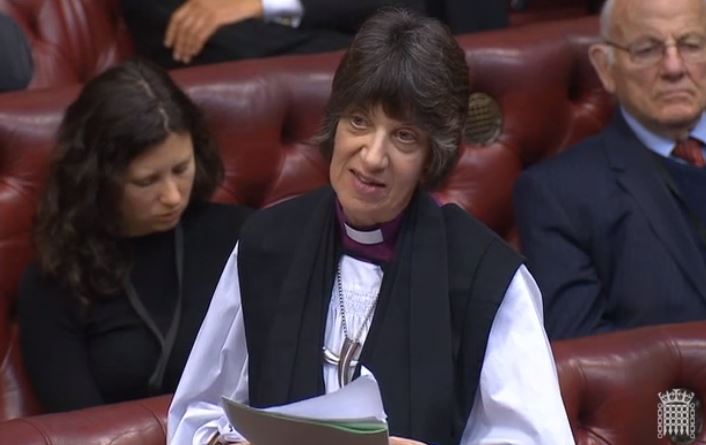
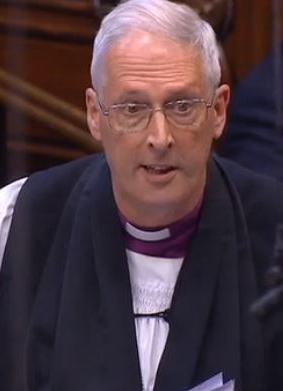
On 12th January 2022, the House of Lords debated a motion to take note of a report from the Risk Assessment and Risk Planning Committee: Preparing for Extreme Risks: Building a Resilient Society (Session 2021–22, HL Paper 110). The Bishop of Leicester spoke in the debate, advocating for greater inclusion of faith groups in emergency planning:

The Lord Bishop of Leicester: My Lords, I, too, am grateful for the Select Committee’s work in tackling such an important subject and, in particular, I concur with the authors’ recognition that,

“the UK must move away from a risk management strategy which … often ignores or fails to appreciate the interconnected nature of our society”,

and that we must instead,

“produce a risk management system that ties all sectors of society together.”

Interdependence is a fundamental part of human nature and policies that follow the grain of that nature are far more likely to succeed.

I was disappointed, therefore, that although the report advocated for a whole-society approach, no reference was made to the role of faith groups in emergency planning and response. Faith groups and leaders across the country were an integral part of the response to Covid-19. A 2020 report by the All-Party Parliamentary Group on Faith and Society, based on research with local authorities, found that faith communities were instrumental in local responses by offering buildings, running food banks, information-sharing, befriending, collecting, cooking and delivering food, and providing volunteers for local authority programmes. Accordingly, the APPG found that local authorities developed a new-found appreciation for the agility, flexibility and professionalism of faith-based organisations, and that local authorities were keen to continue and build on those relationships in the future.

Continue reading “Extreme Risk Management: Bishop of Leicester highlights benefits of including faith groups in planning for response to crises”

Bishop of Carlisle asks about new coal mine in Cumbria

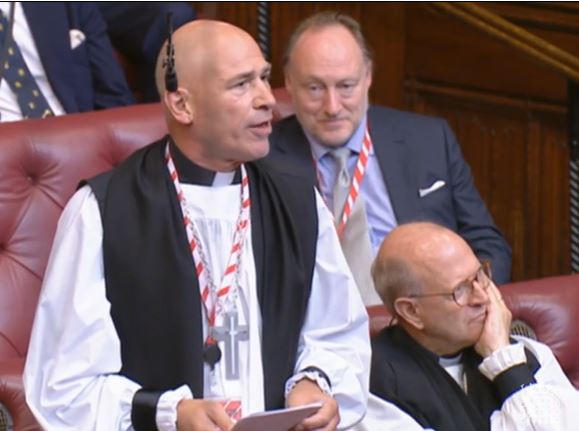
The Bishop of Carlisle asked a question concerning the proposed opening of a new coal mine in Whitehaven, Cumbria, on 8th December 2022:

The Lord Bishop of Carlisle: My Lords, I declare a slight interest in this topic, since Whitehaven is in my diocese, and like the noble Baroness, Lady Hayman, I live in west Cumbria—in a particularly beautiful part of it, I have to say. This debate has now been running for more than two years, and in Cumbria, as in the whole country, it has been highly contentious, with a great deal of passion expressed on both sides. We have already heard some of that passion in the debate this evening. So I am acutely aware of the many arguments about both the potential environmental impact, which has been deplored, and the employment opportunities, which would—as has already been mentioned—be very welcome in this very deprived part of the country.

Continue reading “Bishop of Carlisle asks about new coal mine in Cumbria”

Bishop of Durham asks about support for community and voluntary organisations

The Bishop of Durham received the following written answer on 8th December 2022:

The Lord Bishop of Durham asked His Majesty’s Government, further to the report by THEOS A Torn Safety Net, published on 7 November, what steps they are taking to support charities and organisations who have experienced a decline in volunteers and donations, and an increase in costs, as a result of the increased cost of living.

Lord Parkinson of Whitley Bay (Con): We know that, as households and communities face rising prices, many charities and civil society organisations are contending with the same price increases themselves while also seeing more demand for their services.

With the support of His Majesty Government, charities and civil society organisations have shown significant resilience over the past two years, and will again be crucial in supporting people through the winter.

Continue reading “Bishop of Durham asks about support for community and voluntary organisations”

Bishop of Durham asks about cap on energy prices for community spaces

The Bishop of Durham received the following written answer on 8th December 2022:

The Lord Bishop of Durham asked His Majesty’s Government, further to the recommendation in the report by THEOS A Torn Safety Net, published on 7 November, whether they plan to introduce a cap on energy prices in community spaces to provide support for communities.

Lord Callanan (Con): Applying a price cap in the non-domestic market would be impractical given the number of different contractual arrangements, range of prices offered, number of meter / location combinations impacting non-energy costs, and the risk of distorting the market.

Continue reading “Bishop of Durham asks about cap on energy prices for community spaces”

Church Commissioners Written Answers: Cathedrals, Church Repair and Maintenance, and Support for Family Relationships, Parenting and Marriage

Andrew Selous MP, representing the Church Commissioners, gave the following written answerto questions from MPs on 2nd December 2022:

Jim Shannon MP (DUP): To ask the Member for South West Bedfordshire, representing the Church Commissioners, in what way cathedrals are supporting community cohesion in communities they serve.

Andrew Selous MP (Con): First and foremost cathedrals are places of worship, but like parish churches they are also community buildings and often a focus for civic gatherings of faith, political and business leaders in our cities, which facilitate discussions for the common good. They are regularly used for pilgrimages, festivals, concerts, exhibitions and lectures, which are open to all in the community.

Continue reading “Church Commissioners Written Answers: Cathedrals, Church Repair and Maintenance, and Support for Family Relationships, Parenting and Marriage”

Church Commissioner Questions: Parish Ministry, Coronation, Rural Clergy, and Support over the Winter

On 17th November 2022, MPs put questions in the House of Commons to the Second Church Estates Commissioner, Andrew Selous MP:

Parish Ministry

Jerome Mayhew MP (Broadlands, Con):

2. What recent discussions he has had with the Church on strengthening its parish ministry.

Continue reading “Church Commissioner Questions: Parish Ministry, Coronation, Rural Clergy, and Support over the Winter”

Bishop of Manchester asks about energy generation

The Bishop of Manchester asked the following question on 27th April 2022, during a debate on energy security:

The Lord Bishop of Manchester: My Lords, I declare my interest as both a Church Commissioner and a board member of a housing association. As things stand, a community with local renewable generation is not allowed to sell the energy it generates directly to local people. Instead, it has to sell it to a utility, which sells it on to customers, creating disproportionate costs. Moreover, community-level generation could be further promoted by ensuring that new housing developments include green energy or even a requirement that they place no increased demand on the grid by generating more of their energy needs. The Bible assures us that the sun shines on both the righteous and the unrighteous. Indeed, I can assure the Minister that it does so even in my notoriously rainy city of Manchester. Can he outline what will be done to promote greater take-up of community energy generation programmes?

Continue reading “Bishop of Manchester asks about energy generation”

Bishop of Chichester asks about health outcomes in coastal communities

The Bishop of Chichester asked a question on government plans to tackle higher levels of disability and poor health in coastal communities on 10th February 2022, during a debate on the National Disability Strategy:

The Lord Bishop of Chichester: My Lords, last year, the Chief Medical Officer’s annual report focused on health in coastal communities, noting higher levels of deprivation and disability in these locations. What will the Government do to tackle the levels of multiple need and disability in these communities?

Baroness Scott of Bybrook (Con): My Lords, I cannot say specifically, but I will certainly write with the answer. Across the whole of this country, there are areas where disability is more of an issue than in others. That is why we have this cross-government strategy, and why we will deliver on it.

Hansard

Votes: Dormant Assets Bill

On 16th November 2021, the House of Lords debated the Dormant Assets Bill in the report stage. A vote was held on an amendment to the bill, in which a Bishop took part:

Continue reading “Votes: Dormant Assets Bill”

Dormant Assets Bill: Bishop of Ely supports creation of community wealth funds on behalf of the Bishop of Newcastle

On 16th November 2021, the House of Lords debated the Dormant Assets Bill in the report stage. The Bishop of Ely, on behalf of the Bishop of Newcastle, spoke in support of an amendment to the bill which would support the creation of community wealth funds to assist deprived communities in reducing inequality and improving local infrastructure:

The Lord Bishop of Ely: My Lords, the noble Lord, Lord Bassam, is correct that my friend the Bishop of Newcastle has made her valedictory speech, but I have been permitted to speak on her behalf. Noble Lords may have noticed a certain discrepancy in height and volume between me and the Bishop of Newcastle but she is living proof that stature has nothing to do with size. I applaud my friend for her significant role as a Lord Spiritual and a community leader in Newcastle; the city has honoured her with the freedom of the city in recognition of her work.

In support of the amendment, we would like to say that the creation of community wealth funds, as the noble Lord, Lord Bassam, has said, will strengthen community life in left-behind communities, including many in the diocese of Newcastle. Levelling-up investment, while welcome, has been largely about hard infrastructure but we want to see more investment in social infrastructure so that our communities can flourish. It is precisely that social infrastructure which could be provided by the community wealth funds, so they are already creating confidence in communities even if the consultation is yet to happen.

Continue reading “Dormant Assets Bill: Bishop of Ely supports creation of community wealth funds on behalf of the Bishop of Newcastle”