Bishop of Chelmsford tables question for debate on long term national housing strategy

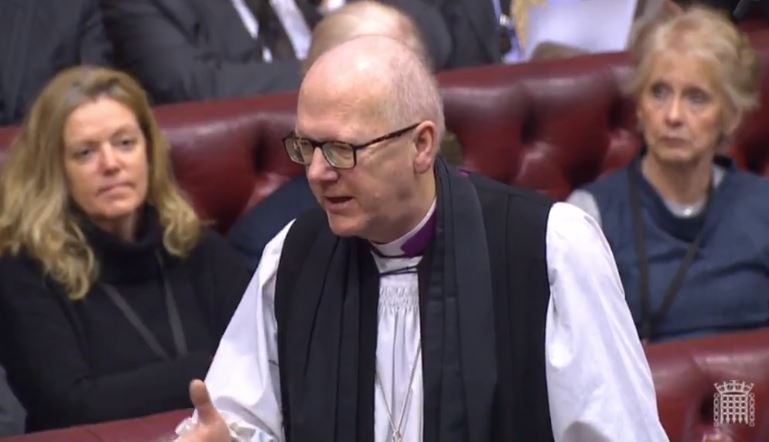
On 29th February 2024, the Bishop of Chelmsford led a grand committee debate on the delivery of a long term national housing strategy, calling for commitment to improving housing on a cross party basis, and a clear vision of what good housing looks like:

The Lord Bishop of Chelmsford: To ask His Majesty’s Government what plans they have to promote a long-term national housing strategy, and to seek cross-party support to ensure its effective delivery.

My Lords, it is a great privilege to open this debate and I am grateful to all noble Lords who have signed up to speak. I look forward to hearing from the great wealth of expertise and experience.

We are in the midst of a housing crisis. For too many people in the UK, home is not a place of safety and security but somewhere expensive or temporary, insecure or unhealthy. There are 140,000 children living in temporary accommodation, 1.2 million households on waiting lists for social homes, and numerous young professionals consigned to be part of “generation rent”. Inadequate housing has knock-on effects throughout a person’s life: on their education, their mental and physical well-being, their relationships and their ability to put down roots. It does not have to be like this. It is worth restating that decent housing is one of the basic essentials for a fulfilled and healthy life, yet we have some of the poorest quality housing in Europe. We can do better than the current system—indeed, we must do better.

Continue reading “Bishop of Chelmsford tables question for debate on long term national housing strategy”

Bishop of St Albans asks about domestic waste management systems

The Bishop of St Albans received the following written answers on 26th February 2024:

The Lord Bishop of St Albans asked His Majesty’s Government what assessment they have made of the impact of household waste and recycling centre closures on incidences of fly-tipping.

Lord Douglas-Miller (Con, DEFRA): We have previously commissioned research into the drivers, deterrents and impacts of fly-tipping that suggested any friction in the system relating to the use of Household Waste Recycling Centres (HWRCs), which have negative impacts on cost or convenience, can act as provocations for normally law-abiding people or businesses to fly-tip or give their waste to someone who goes on to fly-tip. The Environmental Protection Act 1990 requires waste disposal authorities to provide places for residents to deposit household waste. It is a Local Authority responsibility to manage suitable availability.

Continue reading “Bishop of St Albans asks about domestic waste management systems”

Bishop of Hereford makes maiden speech on poverty in rural communities

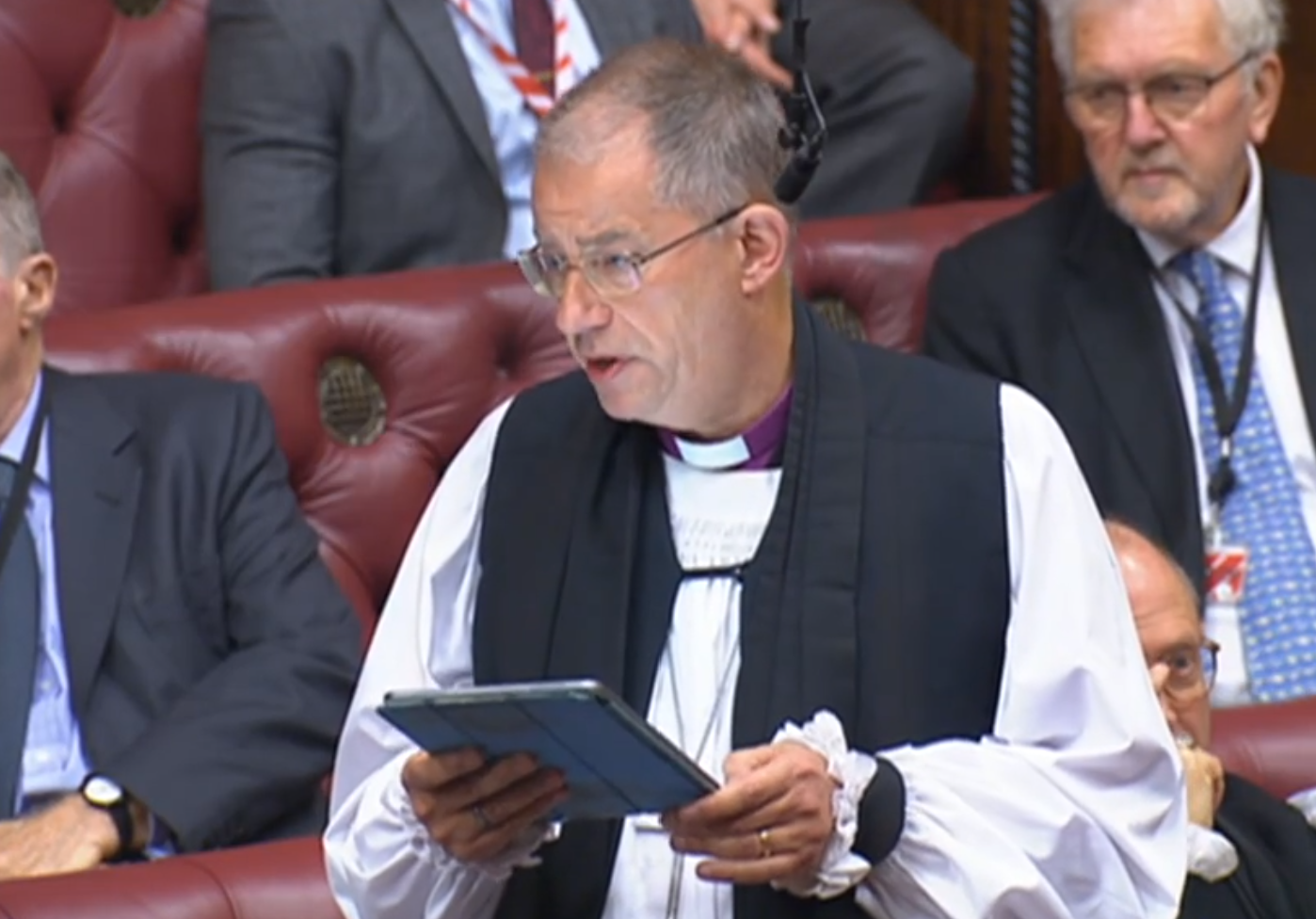
On 22nd February 2024, the Bishop of Hereford made his maiden speech during a debate on poverty reduction, focusing on tackling poverty in rural communities:

The Lord Bishop of Hereford: My Lords, I begin by recording my grateful thanks for the welcome and encouragement I have received since my introduction to your Lordships’ House. I am especially grateful for the forbearance of the staff as they have helped me navigate the labyrinthine corridors of this place, and to my colleagues for their patience in introducing me to the various procedures and protocols that govern our business.

I became the Bishop of Hereford in early 2020, just before the start of the first lockdown. The diocese of Hereford celebrates the 1,350th anniversary of its foundation in 2026—we are a diocese that predates the foundation of England. Indeed, the earliest timbers in the episcopal residence were acorns in the year 910. I have both worthy and ignoble predecessors in this role. I have already done better than four of them, who never actually came to the diocese at all. I hope not to emulate one of my Saxon predecessors, who, angered by the burning of the cathedral by the Welsh in 1055, took up arms with some of the canons and died in battle as a result. I also hope to avoid the fate of the cousin of the bishop who was murdered in the garden in 1256 on the coat-tails of his cousin’s unpopularity.

Hereford is the smallest and most rural diocese in England. We comprise the counties of Herefordshire and the southern half of Shropshire, one parish in Worcestershire and 14 in Wales. Sustaining a diocesan infrastructure with such a small base presents its challenges. For every 800 people who live here, we have one church building, and three-quarters of them are grade 1 listed.

Continue reading “Bishop of Hereford makes maiden speech on poverty in rural communities”

Bishop of Durham gives valedictory speech in debate on poverty reduction, calling for greater efforts to combat child poverty in the UK

The Bishop of Durham gave his valedictory speech in the House of Lords on 22nd February 2024, during a debate on poverty reduction, focusing on continuing high levels of child poverty and calling for poverty in the UK to be confronted as a national emergency:

The Lord Bishop of Durham: I am very grateful to the noble Lord, Lord Bird, for securing this debate on an issue of such importance and for the way that he introduced it. Also, because I have spoken on this issue repeatedly throughout my past 10 years as a Member of this House, it thus seems a fitting debate for my valedictory speech. I am very grateful to the noble Baroness, Lady Armstrong, for speaking straight after me. We have worked together on poverty in the north-east. I also look forward to the right reverend Prelate the Bishop of Hereford’s maiden speech.

During my maiden speech, I spoke of the high levels of poverty in my region of the north-east. Sadly, poverty, particularly child poverty, remains as significant an issue today as it was 10 years ago. Only last week, the North East Child Poverty Commission released its blueprint for tackling child poverty, featuring the latest poverty stats from 2021 to 2022, along with those recorded in 2014-15—the very year I entered this House. They reveal that, in 2021-22, there were around 134,000 children living in poverty in the North East Mayoral Combined Authority—an increase of over 7% since 2014-15.

But poverty is not just about numbers. Behind each statistic are the lives of children and the impact on them is all-encompassing. Poverty means going without the basic essentials. It means not being able to concentrate in school due to an empty stomach and not getting adequate nutrition; a packet of apples costs five times the amount of a packet of biscuits. Poverty means missed opportunities. It denies the chance to develop new skills through extra-curricular activities. Poverty means growing up too soon. It means dealing with stresses and anxieties with which no child should ever be burdened. It impacts the present and its effects last a lifetime.

Continue reading “Bishop of Durham gives valedictory speech in debate on poverty reduction, calling for greater efforts to combat child poverty in the UK”

Bishop of St Albans asks about access to essential services for rural communities

The Lord Bishop of St Albans received the following written answer on 13th February 2024:

The Lord Bishop of St Albans: To ask His Majesty’s Government what assessment they have made of the impact of the proposed ‘taxi tax’ on rural communities accessing essential services, particularly healthcare.

Continue reading “Bishop of St Albans asks about access to essential services for rural communities”

Victims and Prisoners Bill: Bishop of Manchester tables amendments to bolster victim support organisations

On 5th February 2024, the House of Lords debated the Victims and Prisoners Bill in Committee. The Bishop of Manchester spoke on two amendments he had tabled, aimed at enabling increased collaboration between statutory and community bodies in the victim support sector:

The Lord Bishop of Manchester: My Lords, I rise to speak to Amendments 56 and 59 in my name; I also support the other amendments in this group. These amendments would all help to firm up the very good intentions set out in Clauses 12 and 13.

In an earlier group, I tabled an amendment to ensure that victim support services were properly signposted; it is no use a service existing if the people it is meant to serve are not able to access it. But now we come to, if anything, a more fundamental point: how do we ensure that the right services exist for victims, and in each and every part of the country?

The Bill as drafted gets much right: it requires policing bodies, integrated care boards and local authorities to collaborate in assessing the needs of victims, producing a published strategy and, indeed, revising that strategy as occasion requires—so far, so good. But, as things stand, and as the noble Lord, Lord Russell of Liverpool, has indicated, that assessment and strategy could be little more than a combination of the unaffordable and the non-existent—a bit like an overambitious child’s Christmas wish list.

Continue reading “Victims and Prisoners Bill: Bishop of Manchester tables amendments to bolster victim support organisations”

Bishop of London asks about support for those with English as an additional language to access community services

The Bishop of London asked a question on community support strategies for those speaking English as an additional language and those with disabilities on 30th January 2024, during a discussion on the impact of the local authority Household Support Fund:

The Lord Bishop of London: My Lords, groups such as those with English as an additional language and disabled people face higher barriers to accessing local crisis support. Will the Government in their evaluation consider the strategies that are in place, or could be put in place, to ensure that those who face barriers can access local crisis support?

Continue reading “Bishop of London asks about support for those with English as an additional language to access community services”

Bishop of Durham emphasises importance of community support for refugees

On 18th January 2024, in Grand Committee during a debate on refugee integration, Bishop of Durham gave a speech on the importance of community support for refugees, particularly in access to housing under the government’s current policy, asking whether the government would extend the current “move on” period for refugees leaving home office accommodation:

The Lord Bishop of Durham: My Lords, I declare my interests as laid out in the register.

Successful integration into life in the UK is critical for refugees to rebuild their lives, enabling society to benefit from the valuable skills that they bring as a gift to this country. However, current policy makes integration difficult, leaving them with very little support, particularly in the early period.

My friend the right reverend Prelate the Bishop of London raised the 28-day move-on period in this House last month and in a letter to the Home Office with other faith leaders. I echo her concerns. Current policy gives refugees 28 days from the issuing of a biometric residence permit until they can no longer access asylum support and accommodation. In practice, refugees are often given much shorter notice to find accommodation and means to support themselves.

Continue reading “Bishop of Durham emphasises importance of community support for refugees”

Victims and Prisoners Bill: Bishop of Manchester welcomes focus on victims and opportunity for clarified legislation

On 18th December 2023, the Bishop of Manchester spoke in a debate on the second reading of the Victims & Prisoners Bill, applauding the focus on victims and welcoming the bill as an opportunity for clarity of legislation and statutory instruments:

The Lord Bishop of Manchester: My Lords, I am grateful to His Majesty’s Government for introducing this Bill. I am also grateful that shortly we will hear a maiden speech from the noble Lord, Lord Carter of Haslemere. His long experience of the law and the Civil Service will serve your Lordships’ House well. I look forward to his remarks today and on many future occasions.

I also welcome the focus on victims that lies at the heart of the Bill. As we have just heard, it builds on the report of my right reverend friend Bishop James Jones, a former Member of your Lordships’ House, into the Hillsborough tragedy. I was a young member of the clergy called into the stadium to support bereaved families. I will never forget the sight of iron barriers twisted out of shape by the pressure of human bodies being crushed against them. Hence I warmly commend the proposal for independent public advocates in cases such as that and the Manchester Arena attack, to which the Minister referred in his opening remarks—I thank him for doing so. As Bishop of Manchester, it fell to me to help lead my city’s response to the brutal murder of 22 people and the injuring and traumatising of hundreds of others.

Continue reading “Victims and Prisoners Bill: Bishop of Manchester welcomes focus on victims and opportunity for clarified legislation”

Victims & Prisoners Bill: Bishop of Newcastle raises potential effects on children and families, and migrant victims of domestic abuse

The Bishop of Newcastle spoke in a debate on the second reading of the Victims & Prisoners Bill on 18th December 2023, welcoming the bill while pointing out several areas of concern relating to children and families, migrant victims of domestic abuse, and the issue of imprisonment for public protection:

The Lord Bishop of Newcastle: My Lords, it is a privilege to speak today, to follow the noble and learned Lord, and to be in the company of those to follow. This is an important piece of legislation. We all know that the work of delivering justice for victims does not end with this legislation. Ultimately, we all want safer communities, so it is vital that we consider what really helps to rehabilitate people in prison so that they do not offend again on release. The work of reconciliation and restoration, challenging as it is, invites us to consider deeper issues. Root and branch reform of the criminal justice system is long overdue.

There are unresolved issues with the Bill, some of which I hope will be considered in this House. I will mention four very briefly, which my right reverend friend the Bishop of Gloucester will be interested in as the Bill progresses.

Continue reading “Victims & Prisoners Bill: Bishop of Newcastle raises potential effects on children and families, and migrant victims of domestic abuse”