King’s Speech Debate: Bishop of Newcastle highlights importance of communities in economic growth

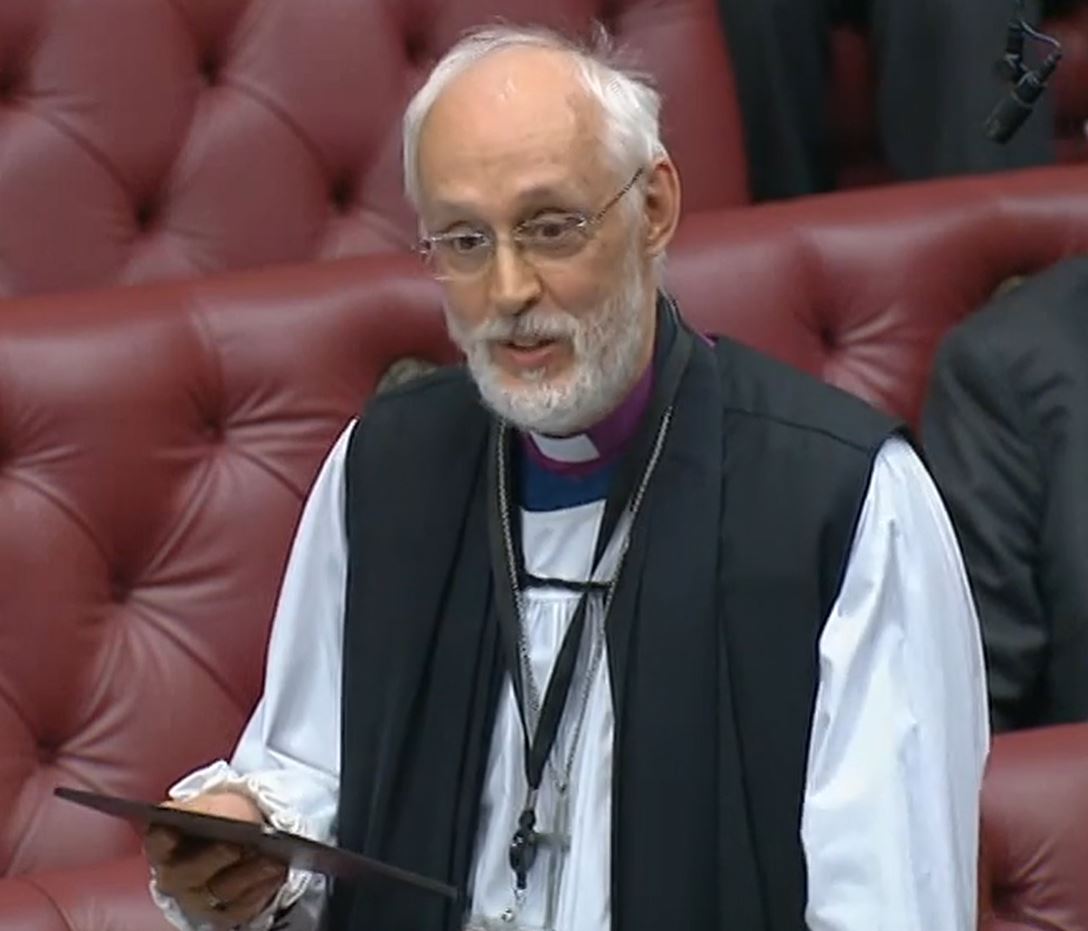
The Bishop of Newcastle gave a speech on the topic of the economy and economic growth during the King’s Speech debate on 22nd July 2024, highlighting the importance of local communities in relation to businesses and social enterprises:

The Lord Bishop of Newcastle: My Lords, I welcome the gracious Speech and the importance it places on economic growth. I congratulate the noble Lords, Lord Vallance and Lord Petitgas, on their excellent maiden speeches.

The Government’s bold articulation of fiscal reality, and the resistance to colluding with demands for short-term fixes, present a helpful foundation for next steps. One question is: when striving for growth, who will most feel its impact? The UK has some of the highest levels of geographic inequality in Europe. According to a survey conducted in 2022 by YouGov and the Resolution Foundation, 41% of those surveyed in the north-east felt that their region has generally declined in recent years—the highest out of any region in the UK. This feeling is not unfounded when real wages in half of the north-east’s local authorities are still below 2008 levels. The impact can be felt in take-home pay and on our high streets, and it is borne out in the investment decisions of businesses.

Continue reading “King’s Speech Debate: Bishop of Newcastle highlights importance of communities in economic growth”

King’s Speech Debate: Bishop of Lincoln speaks on impact of poverty in rural and coastal communities

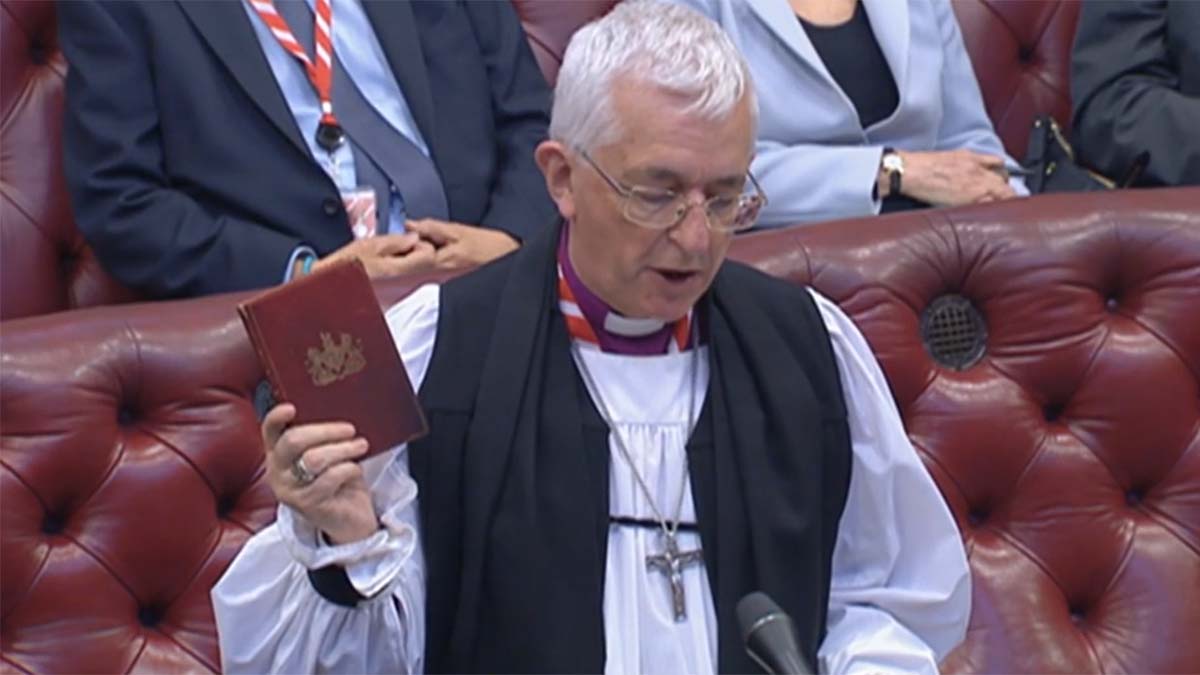
The Bishop of Lincoln spoke in the King’s Speech debate on 19th July 2024, raising the issue of poverty in coastal and rural areas and the subsequent effects on children’s mental health and wellbeing:

The Lord Bishop of Lincoln: My Lords, I share your Lordships’ appreciation of the noble Baronesses, Lady Barran and Lady Jolly, and I welcome the appointment of our new Ministers. The noble Baroness, Lady Merron, will know as much as I do about Lincolnshire and that, particularly in its coastal towns and rural areas, Lincolnshire suffers from intergenerational poverty, which has a very direct impact on children. I think your Lordships’ House has received two reports in the last 15 years about the poverty in our coastal towns, but nothing much has changed. If I have heard the Government correctly, I am glad to hear them express their intention to pay more attention to rural and coastal poverty, which is often hidden away when it is not in our big cities.

Therefore, I also particularly look forward to the progress of the children’s well-being Bill and the work of the newly announced child poverty unit. In moving forward in this area, how do His Majesty’s Government plan to involve faith communities in addressing these needs, particularly considering the concentration of faith communities in areas of poverty and deprivation, as my right reverend friend the Bishop of London referred to earlier?

Continue reading “King’s Speech Debate: Bishop of Lincoln speaks on impact of poverty in rural and coastal communities”

Bishop of Newcastle asks about protection of heritage and community sites from coastal erosion

The Bishop of Newcastle received the following written answer on 20th May 2024:

The Lord Bishop of Newcastle asked His Majesty’s Government what funding, other than flood and coastal erosion risk management grant-in-aid, they make available to protect heritage assets and community spaces at risk from coastal erosion.

Continue reading “Bishop of Newcastle asks about protection of heritage and community sites from coastal erosion”

Bishop of Lincoln asks about impact of housing asylum seekers in hotels

The Bishop of Lincoln asked a question on local community approaches to asylum seekers being housed in hotels, during a discussion on asylum seekers missing from their registered addresses on 2nd May 2024:

The Lord Bishop of Lincoln: My Lords, the Minister talked about hotels. The population of seaside towns, such as Skegness, have been very welcoming of asylum seekers staying in hotels. In effect, hotels are a way of monitoring the presence of asylum seekers over time. The frustration of people in Skegness and other coastal towns is that the slow progress in processing asylum seekers is having an impact on the tourist industry, the local economy and jobs in these towns. Is the Minister aware of that?

Continue reading “Bishop of Lincoln asks about impact of housing asylum seekers in hotels”

Bishop of Lincoln speaks in debate on combatting child poverty

The Bishop of Lincoln spoke in debate on child poverty on 29th April 2024, highlighting the importance of effective infrastructure for housing and employment, and the experiences of children and families in rural communities:

The Lord Bishop of Lincoln: My Lords, I too am grateful to the noble Lord, Lord Bird, for securing this debate and for his passion and his challenge. Like the noble Lord, I come from a poor London Irish family, but from south of the river, if that is allowed. We have heard from the noble Baroness, Lady Lister, about the causes of child poverty and that they are systemic, and about the potential for changing them—not by exceptionalism, as may have applied in our cases.

As the Bishop of Lincoln, I am very conscious that in greater Lincolnshire I see vibrant resilient communities but, in the midst of a commendable spirit, there are considerable challenges. The effects of deep poverty feel widespread and tangible in a way that I have not seen since I began as a priest in the mid-1980s. Damp, low-quality accommodation, particularly in the private rented sector, has an impact felt particularly by children at crucial stages of their development. In response to this, the Archbishops’ Commission on Housing, Church and Community set out five values for good housing: it should be safe, sociable, sustainable, satisfying and secure. Failure to deliver this only serves to entrench child poverty.

Continue reading “Bishop of Lincoln speaks in debate on combatting child poverty”

Victims and Prisoners Bill: Bishop of Manchester tables amendments on support services for victims of crime

On 23rd April 2024, the House of Lords debated the Victims and Prisoners Bill. The Bishop of Manchester spoke in support for his amendments 60, 64, and 70 to be the bill, which focus on establishing support services for victims of crime:

The Lord Bishop of Manchester: My Lords, I will speak to my Amendments 60, 64 and 70, which echo amendments on support services for victims that I tabled in Committee. I am grateful to the Minister for his responses at that stage and for his kindness in meeting me and representatives of Refuge and Women’s Aid in the interim. In light of those conversations, it is not my intention to press any of these amendments to a Division today. However, I hope that, in this debate and in the Minister’s response to it, we can clarify a little further how His Majesty’s Government will seek to ensure that victims across the country have access to quality support services provided by organisations that hold their confidence and understand their specific circumstances. As we are now on Report, I will not repeat the detailed arguments of Committee, but I think their force still stands.

Amendment 60 places a duty on the Secretary of State to define in statutory guidance

“the full breadth of specialist community-based support domestic abuse services”.

Continue reading “Victims and Prisoners Bill: Bishop of Manchester tables amendments on support services for victims of crime”

Bishop of Bristol asks about Community Ownership Fund for places of worship

The Bishop of Bristol received the following written answer on 22nd March 2024:

The Lord Bishop of Bristol asked His Majesty’s Government:

  • how much funding has been awarded in total from the Community Ownership Fund to communities seeking to turn places of worship into assets of community value.
  • which places of worship have received support from the Community Ownership Fund.
  • what steps they are taking to enable local communities to safeguard places of worship through the Community Ownership Fund.
Continue reading “Bishop of Bristol asks about Community Ownership Fund for places of worship”

Bishop of Manchester details benefits of partnership working during debate on local government finances

The Bishop of Manchester spoke in debate on the state of local government finances and the impact on communities on 21st March 2024, highlighting the efforts of faith groups and partnership working to combat poverty and homelessness:

The Lord Bishop of Manchester: My Lords, I too am grateful to the noble Lord, Lord Shipley, for securing this important debate, but I am doubly grateful for its full title. This is not simply a debate about local government finances; it is a debate about the impact on local communities, and that is a vital distinction. Money is only ever a means to an end. It is an input—a crucial one—but what really matters are the outcomes and, in terms of local government, what really matters is how well local communities are served.

I still recall that back in the 1990s, when I started attending and speaking at national housing conferences, there were some where every positive mention of housing associations brought an audible hiss from some local authority members who were present. They saw us as rivals, and in some cases even the enemy, as we were taking money that had formerly gone to them to provide services that they had previously enjoyed delivering. I guess their attitude could be summed up as: if a job is worth doing, it is for the public sector to do it. I hope that we have long moved on from those attitudes. Local authorities have a vital and leading part to play in the service of their communities, but they are not the sole provider. Other agencies are not competitors; they are partners in the common task of supporting the local community.

Continue reading “Bishop of Manchester details benefits of partnership working during debate on local government finances”

Bishop of Chelmsford asks about social and community measures for those seeking asylum

The Bishop of Chelmsford received the following written answers on 18th March 2024:

The Lord Bishop of Chelmsford asked His Majesty’s Government whether they are taking steps to develop engagement forums with asylum seeker and refugee communities.

Lord Sharpe of Epsom (Con, Home Office): We regularly engage with stakeholders through standalone meetings and various forums such as the Asylum Strategic Engagement Group, which includes organisations who both speak for and represent asylum seekers.

Continue reading “Bishop of Chelmsford asks about social and community measures for those seeking asylum”

Bishop of Norwich takes part in debate on industrial regeneration in urban areas

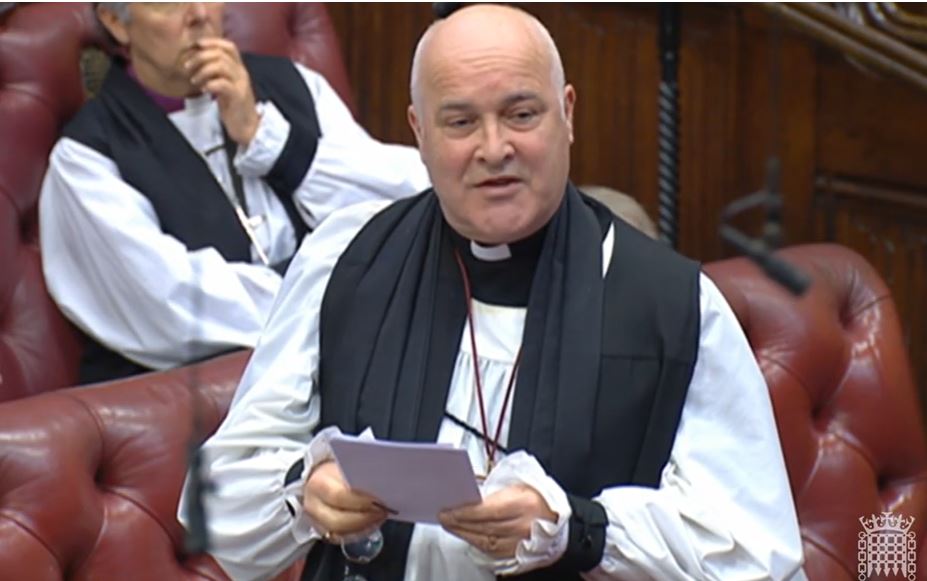
The Bishop of Norwich made a speech during a debate on regeneration of industrial areas on 7th March 2024, calling for greater investment in and engagement with communities to help drive local regeneration:

The Lord Bishop of Norwich: My Lords, the place that shaped me most as a priest in the Church of England was the parish of Holy Trinity North Ormesby in Middlesbrough at the turn of the millennium, so it was a simple delight and joy to hear the noble Baroness, Lady Chapman, speak about so many places that I know, from South Bank to Maske.

North Ormesby is set among derelict land, chemical plants and the distant smoke, sound and smell of the coke and steel furnaces. It is a place that taught me so much about resilience and survival, as well as about the strength of community, even when the stuffing had been knocked out of it. The people there taught me about acceptance and that each day was filled with little blessings. But I also learned about poverty and the impact of damp houses, as well as about health inequalities that meant that, if you lived six miles away, on average you lived another decade.

In all the indices, that community still comes out as being among the poorest, most ill, most unemployed and most unskilled, as well as having the lowest educational attainment and the worst air quality of wards in this nation. But the people I lived alongside in that community have warm and large hearts, despite the challenging context. The church was at the centre of its long-term regeneration, successfully building the Trinity Centre—a place for support, learning, faith and fun, it said. It was funded by the single regeneration budget and the neighbourhood renewal fund, but also, crucially, by many small grant-making trusts—and a local couple who one day knocked on the vicarage door with £1,000 of their savings because they believed in what we were doing. We gave confidence to the local authority and a housing association to invest in that community when others simply walked away.

Continue reading “Bishop of Norwich takes part in debate on industrial regeneration in urban areas”