On 10th January 2022, the House of Lords debated the Police, Crime, Sentencing and Courts Bill in the Report stage. Votes were held on amendments to the Bill, in which Bishops took part.

On 10th January 2022, the House of Lords debated the Police, Crime, Sentencing and Courts Bill in the Report stage. Votes were held on amendments to the Bill, in which Bishops took part.
On 10th January 2022, during a debate on amendments to the Police, Crime, Sentencing and Courts Bill, the Bishop of Gloucester spoke in support of an amendment tabled by Lord Marks of Henley Upon Thames that would establish a Women’s Justice Board to address the needs of women within the criminal justice system:
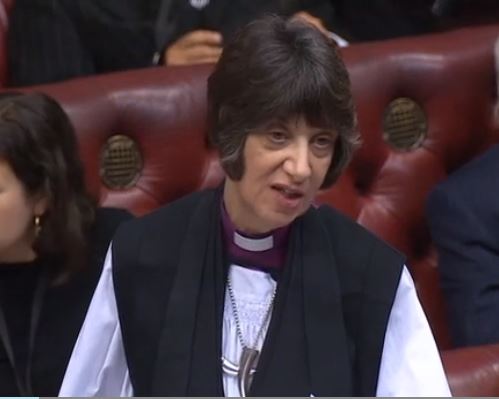
The Lord Bishop of Gloucester: My Lords, I add my wholehearted support to this amendment. I am very grateful to the noble Lords, Lord Marks and Lord Ramsbotham, and the noble Baroness, Lady Bennett, for their continued commitment to women in the criminal justice system. As bishop to prisons and president of the Nelson Trust, I am acutely aware, as I have said so often, of the need for a gendered approach to justice. The noble Baroness, Lady Kennedy, has just put that very powerfully.
Continue reading “Police Crime Sentencing and Courts Bill: Bishop of Gloucester supports establishment of a Women’s Justice Board”The Bishop of Gloucester tabled an amendment to the Police, Crime, Sentencing and Courts Bill on 15th of December 2021, requiring courts to reference the impact of sentencing on primary carers of dependent children:
85: After Clause 132, insert the following new Clause—
“Pre-sentence report requirements
(1) Section 30 of the Sentencing Act 2020 is amended as follows.(2) After subsection (3) insert—“(3A) A court must make inquiries to establish whether the offender is a primary carer for a child.(3B) If the court establishes that the offender is a primary carer for a child, unless there are exceptional circumstances before sentencing the offender the court must obtain a pre-sentence report containing information to enable the court to make an assessment of the impact of a custodial sentence on the child.”(3) After subsection (4) insert—“(5) In this section—(a) “child” means a person under the age of 18; and(b) “primary carer” means a person who has primary or substantial care responsibilities for a child.””Member’s explanatory statement
This Clause amends section 30 of the Sentencing Act 2020 to make clear the requirement for a sentencing judge to have a copy of a pre-sentence report, considering the impact of a custodial sentence on the dependent child, when sentencing a primary carer of a child.
The Lord Bishop of Gloucester: My Lords, in moving Amendment 85 I will speak also to the other amendments in my name in the group. I am very grateful for the support of the noble Lords, Lord Ponsonby and Lord German. I am very grateful for the briefing and expertise provided to me by the organisation Women in Prison and I declare my interest as Anglican Bishop for Her Majesty’s Prisons.
In Committee I highlighted the injustice of punishing a child for their parent’s mistakes and I will not go over that ground again. But I want to frame this discussion by reminding us that when a parent goes to prison it can affect every area of a child’s life, from losing their familiar home and school through to reduced educational achievement and mental and physical well-being. The consequences can last a lifetime.
Continue reading “Police, Crime, Sentencing and Courts Bill: Bishop of Gloucester tables amendment on sentencing requirements for primary carers”On 15th December 2021, the House of Lords debated the Police, Crime, Sentencing and Courts Bill in its third day of the report stage. Votes were held on amendments to the bill, in which a Bishop took part:
On 15th December 2021, the House of Lords debated the Police, Crime, Sentencing and Courts Bill in the report stage. The Bishop of Gloucester spoke in support of amendment 82A, which would seek to limit the issuing of short prison sentences of six months or less, with reference to the impact of short sentences on families:
The Lord Bishop of Gloucester: My Lords, I agree with much of what has been said. On Amendment 82A I reiterate what has been said, and I hope will be said later, about primary carers. We know the damage short sentences do to families. We also know that close to half of those leaving custody go on to reoffend within a year of their release, but two-thirds of those sentenced to less than 12 months go on to reoffend.
Continue reading “Police Crime Sentencing and Courts Bill: Bishop of Gloucester supports amendment on short prison sentences”On 13th December 2021, the House of Lords debated the Police, Crime, Sentencing and Courts Bill in the second day of the report stage. The Bishop of Leeds spoke in the debate, following an amendment from Baroness Chakrabarti on digital extraction of information from devices by police, highlighting issues regarding lack of understanding of technology and the need to communicate with young people:

The Lord Bishop of Leeds: My Lords, especially following the speech by the noble Lord, Lord Carlile, I am conscious that I have no conception of what the world looks like through the eyes of my grandchildren. When I was their age there were three channels on television, which began at 4.40 in the afternoon with “Jackanory”. The world has changed considerably and, although I have tried to keep up with technology, professionally and personally, I am aware that I cannot see the world into which we are moving. We are not ahead of the game.
Continue reading “Police, Crime, Sentencing and Courts Bill: Bishop of Leeds stresses need to consult young people on issues around technology”On 8th December 2021, the House of Lords debated Commons Amendments to the Police, Crime, Sentencing and Courts Bill. Votes were held on further amendments to the bill, in which a Bishop took part:
On 22nd November 2021, the House of Lords debated the Police, Crime, Sentencing & Courts Bill. The Bishop of Leeds spoke in the debate, supporting an amendment tabled by Baroness Coussins which would establish minimum qualifications for court appointed interpreters:
The Lord Bishop of Leeds: My Lords, I endorse every word of what the noble Baroness just said. In a previous incarnation—that is probably the wrong phrase to use; I am mixing my religions—I was a professional linguist in Russian, German and French, working in government service. One of the things you learn as a professional linguist is that language goes deep. This is not simply a matter of picking someone off the street who can order a pint in a Spanish bar; you are dealing with the stuff of people’s lives. Surely accuracy is vital, for the sake of not only clarity of understanding but justice itself.
Continue reading “Police, Crime, Sentencing & Courts Bill: Bishop of Leeds supports amendment on qualifications for court interpreters”
The Bishop of St Albans received the following written answers on 17th November 2021:
The Lord Bishop of St Albans asked Her Majesty’s Government:
The Bishop of Bristol spoke in a debate on amendments to the Police, Crime, Sentencing & Courts Bill on 15th November, on behalf of the Bishop of Gloucester. The speech was in support of amendments tabled by Lord Dubs and by Lord Ponsonby of Shulbrede, which sought to raise the threshold for imposition of short custodial sentences where community orders or other alternatives could be imposed instead:

The Lord Bishop of Bristol: My Lords, I speak on behalf of my right reverend colleague the Bishop of Gloucester, who is unable to be in her place. She declares an interest as Bishop to Her Majesty’s Prisons in England and Wales. These are her words.
“I am delighted to add my name in support of Amendment 213, tabled by the noble Lord, Lord Dubs. I also have great sympathy for Amendment 212, tabled by the noble Lord, Lord Ponsonby. Both aim to remedy some of the justice system’s current overemphasis on prison sentences without sufficient regard for whether prison is an effective remedy for the offender or a guarantee to the safety and benefit of the community. By and large, short sentences have proven ineffective on both counts.
Continue reading “Police, Crime, Sentencing & Courts Bill: Bishop of Bristol supports amendments on short sentences on behalf of Bishop of Gloucester” The Church of England in Parliament
You must be logged in to post a comment.