
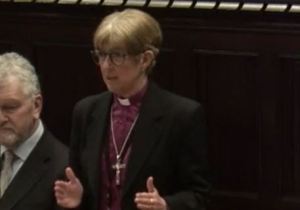
 On 6th February 2019 the House of Lords considered the Government’s Offensive Weapons Bill in its third day of Committee. The Bishop of Newcastle, Rt Revd Chrisine Hardman spoke against Government amendments to create new Knife Crime Prevention Orders. The amendments were withdrawn following the debate, but the Minister indicated they were likely to be returned to again at a later stage:
The Lord Bishop of Newcastle: Before becoming Bishop of Newcastle, I was an archdeacon in south-east London. In my archdeaconry, sadly, was Eltham, where Stephen Lawrence died. I do not, therefore, underestimate the sheer heartbreak and devastation of knife crime, particularly when young people are involved. This crime is growing and growing. I have sat with families whose children have been victims of knife crime. I have officiated at a funeral where that has been the case. The circles of devastation and heartbreak just go on and on. I do not underestimate the seriousness of this problem; nevertheless, I object to this amendment and hope that it will be withdrawn, so that there is more time to reflect on it. Continue reading “Offensive Weapons Bill – Bishop of Newcastle asks Government to think again on Knife Crime Prevention Orders”
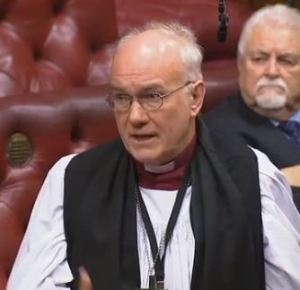 The Lord Bishop of Chester: My Lords, I wholeheartedly endorse and support what has been said about this strategy. I know from my pastoral work how the effects of crime can resonate throughout people’s lives, not least when it comes to sexual abuse that happened a long time ago. Nevertheless, can the noble and learned Lord comment on the term “victim” and when its use is appropriate and when it is not?
  On 1st March 2018 Baroness Jones of Moulsecoomb led a debate in the House of Lords on her question to Her Majesty’s Government ‘what proposals they have for the use of facial recognition technology in security and policing.’ The Bishop of St Albans, Rt Revd Alan Smith, spoke in the debate:
 On the 22nd January 2017 Lord Lexden asked the Government “whether they intend to review the law governing the naming of deceased individuals against whom criminal allegations have been made.” In his follow up question Lord Lexden raised the case of the deceased Bishop George Bell and the recent Carlile Review. The Bishop of Peterborough, Rt Revd Donald Allister, also asked a follow up question:
 On 9th January 2018 the Advocate-General for Scotland (Lord Keen of Elie) repeated a Statement made in the House of Commons by the Secretary of State for Justice on the Parole Board’s decision to release John Worboys and the Government’s response to the issues raised by the case. The Bishop of Gloucester, Rt Revd Rachel Treweek, asked a follow up question:
 The Lord Bishop of Southwark:
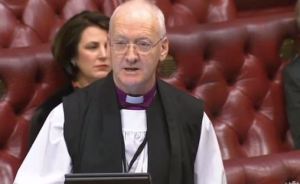 On 29th November 2017 Baroness Coussins asked Her Majesty’s Government “whether they have revised their target for annual budget savings on the cost of providing interpretation and translation services in criminal proceedings, following the allocation of the latest contract for those services to thebigword; and if so, what is their new target.” The Bishop of Leeds, Rt Revd Nick Baines, asked a follow up question:

You must be logged in to post a comment.