Police, Crime, Sentencing & Courts Bill: Bishop of Gloucester supports amendments targeted towards reform of Imprisonment for Public Protection

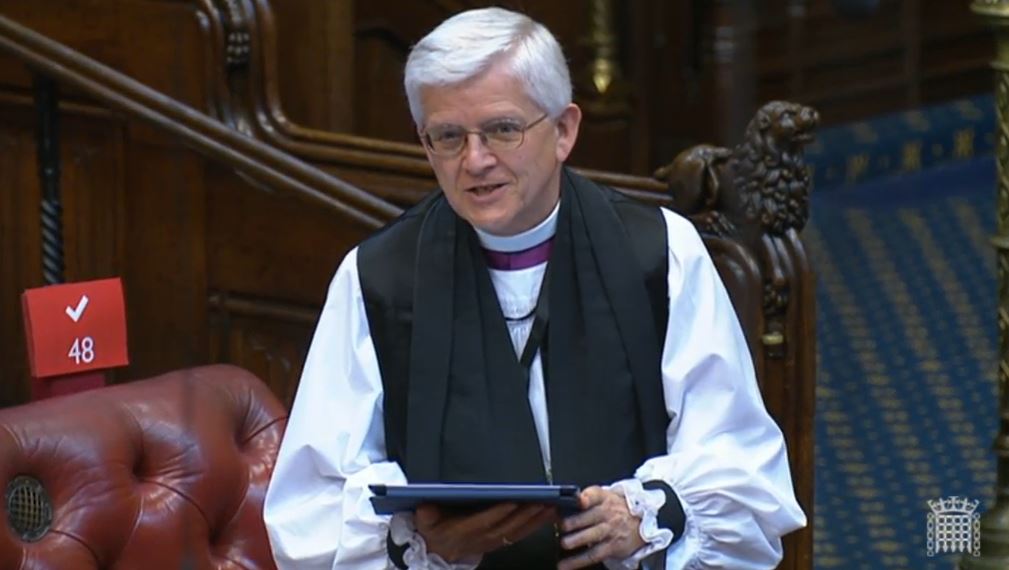
On 15th November 2021, the House of Lords debated amendments to the Police, Crime, Sentencing & Courts Bill. The Bishop of Gloucester spoke in the debate, supporting amendments designed to scrutinise the continuation of indefinite Imprisonment For Public Protection (IPP) Sentences:
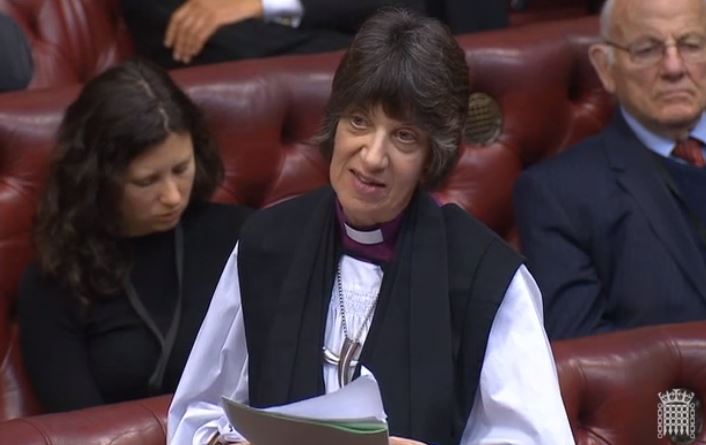
The Lord Bishop of Gloucester: My Lords, I add my voice to those who have already spoken in favour of these amendments. I declare my interest as Anglican Bishop to Her Majesty’s Prisons.

All the detail I was going to mention has already been carefully and expertly explained; again, I pay tribute to the organisations that have been named, including the Howard League, the Prison Reform Trust and UNGRIPP, for their excellent briefing reports and research. It resonates strongly with all the conversations I have with people in prison and family members who write to me or send me emails. The thing I am struck most by is the sense of hopelessness; many noble Lords have mentioned that. I am a proud patron of Prison Fellowship, whose motto is:

“We believe no one is beyond hope.”

We really need to listen to that in this debate.

Continue reading “Police, Crime, Sentencing & Courts Bill: Bishop of Gloucester supports amendments targeted towards reform of Imprisonment for Public Protection”
Police, Crime, Sentencing & Courts Bill: Bishop of Durham supports exclusion of children from changes to mandatory minimum sentences

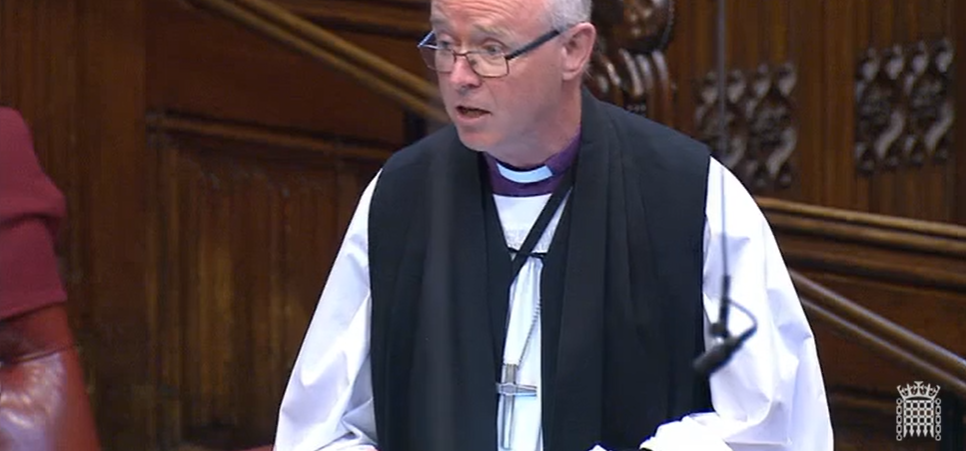
On 10th November 2021, during a debate on amendments to the Police, Crime, Sentencing & Courts Bill, the Bishop of Durham, on behalf of the Bishop of Derby, spoke in support of an amendment tabled by Baroness Massey which would ensure that children would not be affected by the imposition of changes to mandatory minimum sentences under the bill:

The Lord Bishop of Durham: My Lords, I speak on behalf of the right reverend Prelate the Bishop of Derby on this occasion, who could not be here today. I add my support to Amendments 198, 199, 200 and 201, in the name of the noble Baroness, Lady Massey, which deal with tariff starting points or DHMP sentences as they relate to young people. The noble Baroness laid out well the case for amending Clause 104 so that it takes into account evidence on maturation. I will briefly add the right reverend Prelate the Bishop of Derby’s perspective as a Lord spiritual and as part of a team of Bishops focused on Her Majesty’s prisons, particularly young offender institutions. She also declares an interest as vice-chair of the Children’s Society.

Children ought to be treated as children, and we resist any erosion of that in law. If we are to argue to the contrary we must be content to go against the trajectory of every other arena of English law. Eighteen is soon to become the age at which people can legally marry, leave education and join the Armed Forces. I urge noble Lords to reflect on this. If we project from this that children are to be protected from making decisions about marriage, education and even enlisting in Her Majesty’s Armed Forces until they reach a maturation point of 18, then the same logic surely must continue to apply in this instance.

Continue reading “Police, Crime, Sentencing & Courts Bill: Bishop of Durham supports exclusion of children from changes to mandatory minimum sentences”

Police, Crime, Sentencing and Courts Bill: Bishop of Durham moves rehabilitation amendment on behalf of the Bishop of Gloucester

On 10th November 2021, the House of Lords debated the Police, Crime, Sentencing and Courts Bill in the seventh day of the committee stage. On behalf of the Bishop of Gloucester, the Bishop of Durham moved amendment 181, which would ensure that “reasonable efforts” would be made to support interventions to prevent offenders under community cautions from reoffending:

The Lord Bishop of Durham: My Lords, I am moving the amendment in the name of my friend the right reverend Prelate the Bishop of Gloucester, with her permission, as she is, sadly, unable to be here. I declare her interest as Anglican Bishop for Prisons in England and Wales, and we are very grateful for the support of the noble and learned Lord, Lord Thomas, and the noble Lord, Lord Beith.

I should say first that, while there are many parts of the Bill with which I take some issue, I do by and large consider it a welcome feature of the Bill that it places a new emphasis and focus on diversionary and community cautions, and on simplifying the previous regime. Done well, these out-of-court disposals, with helpful conditions attached, can be an effective solution that strikes a balance between punishment, the protection of communities and supporting the offender to successfully seek restoration in their community.

Continue reading “Police, Crime, Sentencing and Courts Bill: Bishop of Durham moves rehabilitation amendment on behalf of the Bishop of Gloucester”

Police, Crime, Sentencing and Courts Bill: Bishop of Gloucester moves amendments on bail for primary carers of children

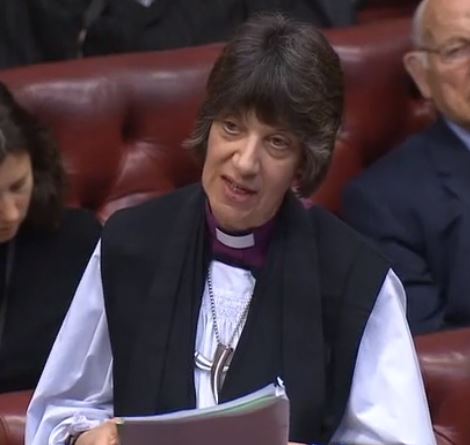
On 1st November 2021, the House of Lords debated the Police, Crime, Sentencing and Courts Bill in Committee. The Bishop of Gloucester spoke in the debate, in support of her amendment 110 and other amendments which would require courts to consider the impact of not granting bail on a child when the recipient of a bail decision is a primary carer to that child:

The Lord Bishop of Gloucester: My Lords, I am pleased to move this amendment, which has the support of the noble and learned Lord, Lord Falconer, the noble Lord, Lord Dubs, and the noble Baroness, Lady Massey. I am grateful for the knowledge and wisdom they will bring to the debate. I declare an interest as Anglican Bishop for Her Majesty’s Prisons in England and Wales and president of the Nelson Trust.

The sentencing of a primary carer can have a serious detrimental impact on the rights of a child and their life chances, yet the fact that they are a primary carer is not consistently considered by the court making the sentencing decision. Amendment 110 would require judges to consider the impact on a child of the decision of not granting bail when determining in criminal proceedings whether to grant bail to a primary carer of that dependent child. Amendments 215 to 217 aim to address inconsistencies in sentencing by requiring judges and magistrates to give due regard to the impact of a sentence on any dependent children and their welfare when sentencing a primary carer. The intention of Amendment 218 is to gather the relevant data about the number of prisoners who are primary carers and the number of children who have a primary carer in custody. Given that there are five amendments here, I hope noble Lords will bear with me.

Continue reading “Police, Crime, Sentencing and Courts Bill: Bishop of Gloucester moves amendments on bail for primary carers of children”

Police, Crime, Sentencing and Courts Bill: Bishop of Blackburn calls for greater recognition of faith communities

The Bishop of Blackburn spoke in a debate on the second reading of the Police, Crime, Sentencing and Courts Bill, noting the lack of reference to faith communities and calling for more recognition for those communities in the bill:

The Lord Bishop of Blackburn: My Lords, I offer to the noble Lord, Lord Sandhurst, my congratulations on his maiden speech. We are glad to welcome him to this House.

With so many words in this wedge of a Bill, it is easy to forget that we are talking about people—as someone said earlier, real people—and the potential consequences for real lives. There is a huge responsibility, therefore, to get these details right, for both the police and the public. The noble Baroness, Lady Chakrabarti, is right, that deep scrutiny is needed here in this House. An example of the wide range of the Bill and the important but almost impossible nature of covering all of its detail is that, although my friend the right reverend Prelate the Bishop of St Albans is unable to attend today’s proceedings, he has asked me to relay his intention to amend the Bill in Committee, to strengthen the ability of the police to deal with the issue of hare coursing. That is something to look forward to.

Continue reading “Police, Crime, Sentencing and Courts Bill: Bishop of Blackburn calls for greater recognition of faith communities”

Police, Crime, Sentencing and Courts Bill: Bishop of Gloucester speaks on need for “restorative, responsible, and relational” criminal justice system

On 14th September 2021, the Police, Crime, Sentencing and Courts Bill had its second reading in the House of Lords. The Bishop of Gloucester spoke in response to the bill, expressing concern over the effects of the bill on women and children and calling for a “restorative, responsible, and relational” approach to criminal justice:

The Lord Bishop of Gloucester: My Lords, I am grateful for the varied contributions heard today from noble and learned Lords, many of whom have vast experience in this area. I declare an interest as Anglican Bishop to Her Majesty’s Prisons in England and Wales and as president of the Nelson Trust.

As a Lord spiritual rooted in Christian hope, I look for a criminal justice system which is restorative, responsible and relational, and which is effective in focusing holistically on prevention and rehabilitation as well as appropriate conviction and punishment.

There are some welcome proposals within this very long Bill. These include community and diversionary cautions, problem-solving courts and additional support for employment for ex-offenders. There are other aspects that raise concern, and I will name just a few of them: increasing sentence lengths, police-led diversion, sentencing of mothers, racial disparities and young offenders.

Continue reading “Police, Crime, Sentencing and Courts Bill: Bishop of Gloucester speaks on need for “restorative, responsible, and relational” criminal justice system”

Bishop of Gloucester asks about treatment of experiences of domestic abuse in the criminal justice system

The Lord Bishop of Gloucester received the following written answers on 21st July 2021:

The Lord Bishop of Gloucester asked Her Majesty’s Government:

  • (1) what are the terms of reference, and (2) what is the planned process, for the Lord Chancellor’s review of sentencing in domestic homicide cases; and what plans they have, if any, to hold a public consultation on this matter.
  • (1) what are the terms of reference, and (2) what is the planned process, for the Lord Chancellor’s review of sentencing in domestic homicide cases; and what plans they have, if any, to hold a public consultation on this matter.
  • what organisations will be consulted for the Lord Chancellor’s review of sentencing in domestic homicide cases.
Continue reading “Bishop of Gloucester asks about treatment of experiences of domestic abuse in the criminal justice system”

Bishop of Gloucester asks about prosecutions involving survivors of domestic abuse

The Bishop of Gloucester received the following written answer on 20th July 2021:

The Lord Bishop of Gloucester asked Her Majesty’s Government what assessment they have made of the need for improvements in the implementation of the public interest test in decisions about whether to prosecute in cases involving a suspect who may also be a survivor of domestic abuse.

Continue reading “Bishop of Gloucester asks about prosecutions involving survivors of domestic abuse”

Bishop of Rochester asks about role of voluntary and community groups in Royal Commission on the Criminal Justice System

Following a question on the progress of the setting up of a Royal Commission on the Criminal Justice System on 6th July 2021, the Bishop of Rochester asked a question on whether voluntary and community organisations would have the opportunity to contribute to the work of the Commission:

The Lord Bishop of Rochester: My Lords, I welcome the noble Lord’s Question. As one who is soon to depart this place, I hope that he continues to pursue this and other such matters with his customary vigour and determination. Noble Lords will know of the significant contribution of voluntary and charitable groups, including those which are faith based, to work in the criminal justice sector. Many of these organisations are keen for the work of the royal commission to proceed as soon as possible in order to provide a framework for future work. Can the Minister confirm that such groups will have an opportunity to contribute in a substantive way to the royal commission’s work?

Continue reading “Bishop of Rochester asks about role of voluntary and community groups in Royal Commission on the Criminal Justice System”

Bishop of Gloucester asks about implementation of the Female Offender Strategy

The Bishop of Gloucester tabled a question on the progress of the government’s 2018 Female Offender Strategy on 21st June 2021:

The Lord Bishop of Gloucester: To ask Her Majesty’s Government what assessment they have made of the progress towards the implementation of the Female Offender Strategy, published on 27 June 2018; and what plans they have, if any, to revise the timetable for its implementation.

Continue reading “Bishop of Gloucester asks about implementation of the Female Offender Strategy”