Bishop of Gloucester asks about tackling crown court backlog

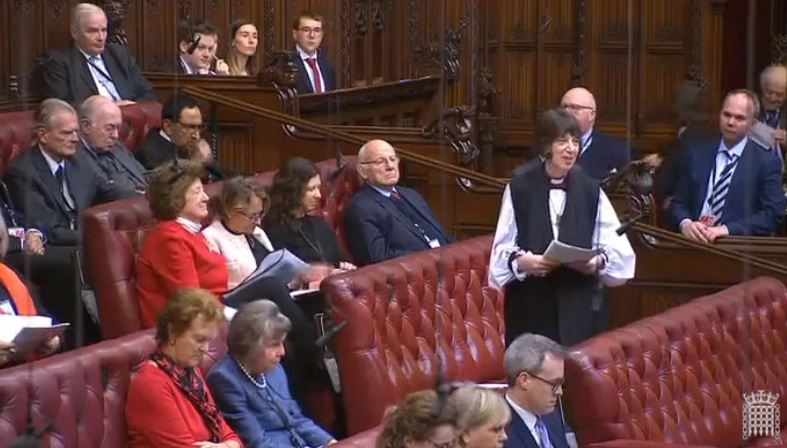
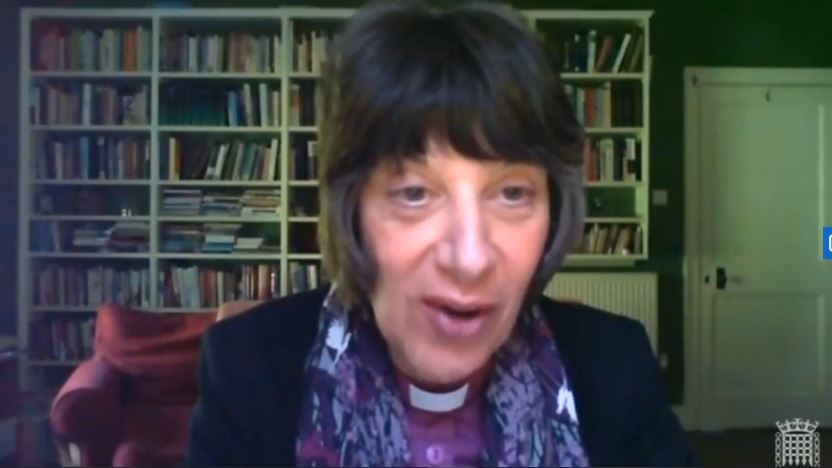
The Bishop of Gloucester asked a question on the importance of crime diversion and community police provision on 26th January 2021, during a discussion on the crown court backlog for serious criminal cases:

The Lord Bishop of Gloucester: I draw attention to my interest on the register as the Anglican bishop for Her Majesty’s prisons. The backlog of cases has a serious impact on offenders, victims and witnesses. On top of this, projections from the Ministry of Justice show that the prison population is expected to jump to almost 100,000 in 2026, which adversely affects prison staff as well as prisoners. Does the Minister agree that resources could be better spent on police-led diversion work and community-based provision, which could start now?

Continue reading “Bishop of Gloucester asks about tackling crown court backlog”

Votes: Covert Human Intelligence Sources (Criminal Conduct) Bill

On 13th January 2021, the House of Lords debated amendments to the Covert Human Intelligence Sources (Criminal Conduct) Bill. Votes were held on the amendments, in which Bishops took part:

Continue reading “Votes: Covert Human Intelligence Sources (Criminal Conduct) Bill”

‘Spycops’ and gambling related harm

In the House of Lords on 13th January 2021 the Bishop of Durham spoke during the debate on the Covert Human Intelligence Bill and the Bishop of St Albans received a written answer to a question on support for those living with gambling-related harm. Details below:

Continue reading “‘Spycops’ and gambling related harm”

Votes: Covert Human Intelligence Sources (Criminal Conduct) Bill

On 11th January 2021, the House of Lords debated the Covert Human Intelligence Sources (Criminal Conduct) Bill. Votes were held on amendments to the bill, in which a Bishop took part:

Continue reading “Votes: Covert Human Intelligence Sources (Criminal Conduct) Bill”

Bishop of London voices concern about high number of remand prisoners

On 21st October Lord German asked the Government “what assessment they have made of the impact on (1) prisons, (2) prisoners, and (3) those on remand, of increasing the maximum period of remand in custody by eight weeks.” The Bishop of London asked a further question:

The Lord Bishop of London: My Lords, is the Minister aware that many hundreds of remand prisoners in London prisons are now held for much longer periods than before Covid while waiting for a trial date? Her Majesty’s Prison Pentonville alone has over 400 prisoners waiting for unprecedented periods—of over a year—for their cases to be heard. Can she assure your Lordships’ House that action is being taken to relieve this? If so, what action can we expect? Continue reading “Bishop of London voices concern about high number of remand prisoners”

Bishop of Gloucester asks Government about funding for Female Offender Strategy

On Tuesday 29th September the Bishop of Gloucester, Rt Revd Rachel Treweek, asked a question she had tabled to Government on its Female Offenders Strategy. The exchanges are below, with the follow-up questions asked by other Members.

Female Offender Strategy

The Lord Bishop of Gloucester: To ask Her Majesty’s Government what assessment they have made of (1) the level of funding that has been provided to the Female Offender Strategy launched in June 2018, and (2) whether such funding is sufficient to implement the Strategy fully.

Baroness Scott of Bybrook (Con): My Lords, we are committed to ensuring sufficient funding for the female offender strategy, which we keep under review. To date, we have invested £5.1 million in the strategy in 30 different women’s services across England and Wales. In 2021, we will invest a further £2.5 million to meet ​core costs in the women’s community sector. In addition, we have been allocated up to £800,000 to support the development of our first residential women’s centre in Wales.

The Lord Bishop of Gloucester: I thank the noble Baroness for her Answer. Given the amount of money that the MoJ spends each year, the high cost of reoffending and the relatively small number of female offenders, why have the Government seemingly invested so little in their own strategy? When will we hear details of the implementation of the strategy, given that it all seems to have gone very quiet? Continue reading “Bishop of Gloucester asks Government about funding for Female Offender Strategy”

Counter-Terrorism and Sentencing Bill: Bishop of Manchester makes maiden speech

On 21st September 2020 the Bishop of Manchester, Rt Revd David Walker, made his maiden speech in the House of Lords during the Second Reading debate on the Government’s Counter-Terrorism and Sentencing Bill:

The Lord Bishop of Manchester (Maiden Speech) [V]: My Lords, I begin by expressing my thanks to the parliamentary staff and fellow Members of this House, who have both welcomed me and helped me understand something of the workings of this place. I also congratulate the noble Lord, Lord Vaizey, on his excellent and entertaining maiden speech reminding us of the importance of rehabilitation—not only for sacked ​government Ministers. I declare my interest as chair of the Greater Manchester police’s Ethics Committee, which is recorded in the register.

Continue reading “Counter-Terrorism and Sentencing Bill: Bishop of Manchester makes maiden speech”

Bishop of Gloucester raises impact on female offenders and children of coronavirus in prisons

On 23rd April 2020 the House of Lords held a debate in its virtual proceedings, on a question from Lord German, “to ask Her Majesty’s Government what assessment they have made of the impact of the COVID-19 epidemic on the prison population and offender rehabilitation programmes.” The Bishop of Gloucester, Rt Revd Rachel Treweek, took part in the debate:

The Lord Bishop of Gloucester: My Lords, I echo what has been said already. I draw attention to my interests in the register, particularly the fact that I am president of the Nelson Trust. I will make just a few points.

The Secretary of State has argued that the public would not accept the early release of certain categories of prisoners. The Government need to be clearer with the public about the risks in a pandemic to prisoners, key workers and their families. The potential risk of low-level, non-violent offenders being released on licence is far outweighed by the risk of inaction and delay. Will the Government commit to put into the public domain as soon as possible substantial and transparent information about how the release programme is working and publish daily statistics about coronavirus in prison, including the impact on staff and those in custody?

Continue reading “Bishop of Gloucester raises impact on female offenders and children of coronavirus in prisons”

Bishop of Winchester raises concern about response of universities to student complaints of assault and harassment

On 5th March 2020 Baroness Gale asked the Government “what assessment they have made of the effectiveness of the Crown Prosecution Service in prosecuting cases of rape.” The Bishop of Winchester, Rt Revd Tim Dakin, asked a follow-up question:

The Lord Bishop of Winchester: My Lords, a recent study highlighted that only 25% of university students who had experienced rape went on to report it to their university or to the police. It is therefore of concern that, since 2016, 300 non-disclosure agreements have been issued by universities in response to student complaints, including assault and harassment reports. The Office for Students and Universities UK are working to improve the handling of harassment and misconduct by universities, but can the Minister advise the House when the Government plan to legislate against the misuse of NDAs by higher education institutions to ensure that students are not discouraged from reporting these assaults? Continue reading “Bishop of Winchester raises concern about response of universities to student complaints of assault and harassment”

Bishop of Gloucester asks Government what is being done to support diversion and alternatives to custody for women

On 27th February 2020 the House of Lords debated a motion from Lord Bates, “to ask Her Majesty’s Government what assessment they have made of the findings of the Checkpoint programme, run by Durham Constabulary, to reduce reoffending rates and custodial sentences.” The Bishop of Gloucester, Rt Revd Rachel Treweek, spoke in the debate:

The Lord Bishop of Gloucester: My Lords, I too would like to thank the noble Lord, Lord Bates, not least for his important mention of mercy, which is so important to me in my Christian faith. I too would like to commend the work of the Checkpoint programme, especially on behalf of my right reverend friend the Bishop of Durham, who also wanted to pay tribute to Ron Hogg—so it is good to have heard that. Continue reading “Bishop of Gloucester asks Government what is being done to support diversion and alternatives to custody for women”