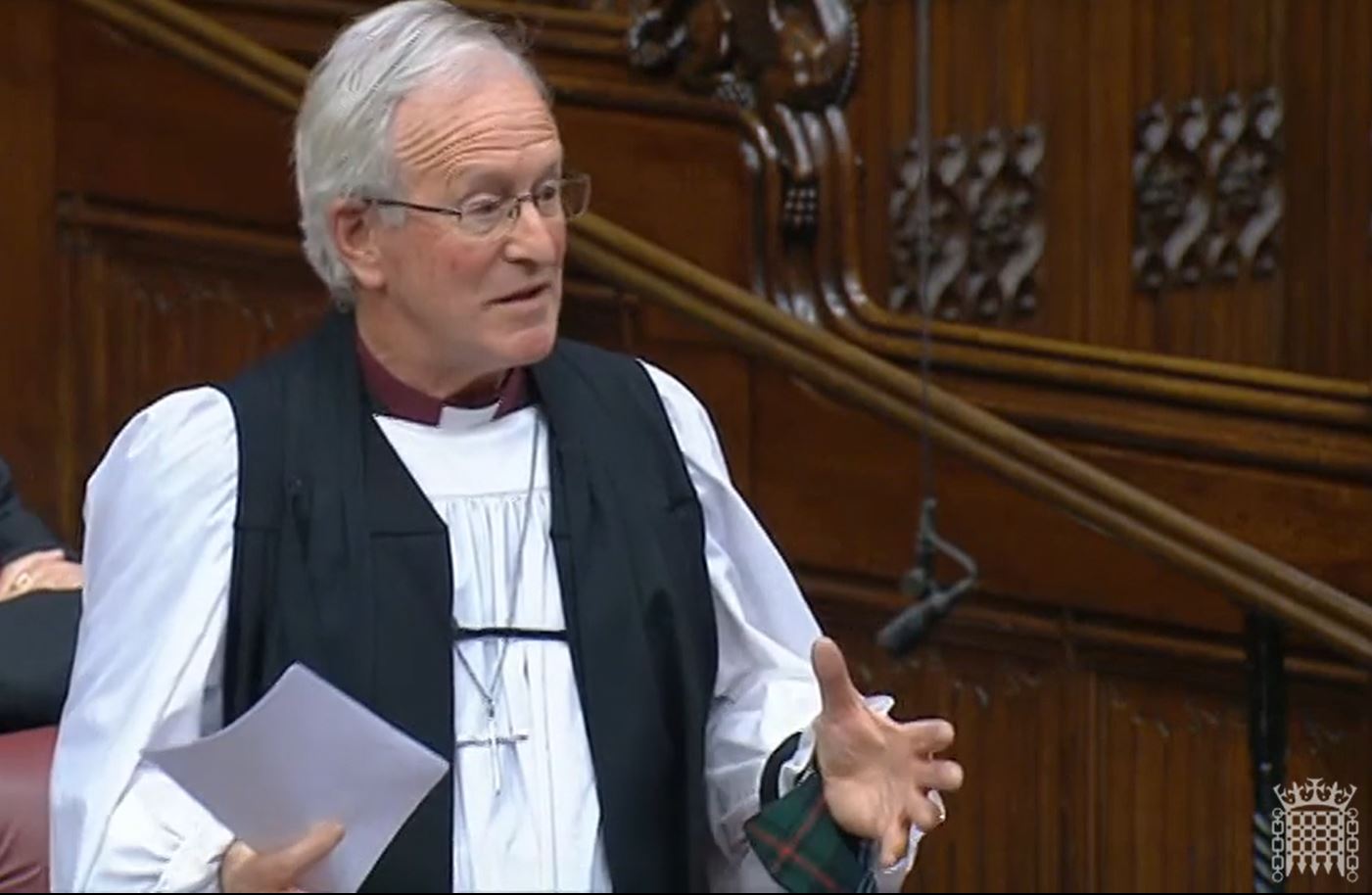
Bishop of Newcastle makes valedictory speech on economic planning and issues arising from the government’s budget

On 3rd November 2021, the Bishop of Newcastle gave her valedictory speech in the House of Lords, raising issues of economic planning and the impact of the government’s budget on poorer communities, and paying tribute to the North-East of England:
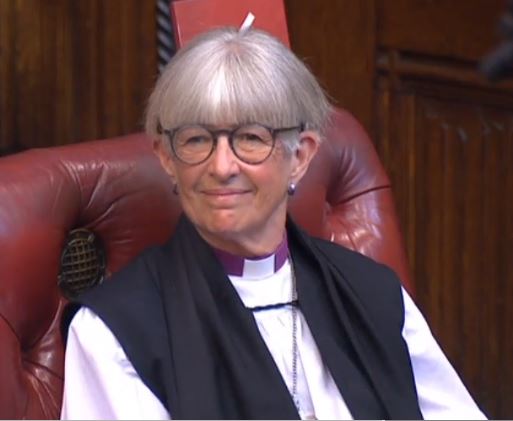
The Lord Bishop of Newcastle: My Lords, these past six years during which I have served as Bishop of Newcastle and as a Member of your Lordships’ House have, in a good way, been the most extraordinary years of my life. After a lifetime of living in the south, these six years in the north-east have helped me to see things from a different and much richer perspective.

The usual way to assess a Budget, the one we see in the newspapers, is to identify the winners and losers. I want strongly to resist this approach. When, aeons ago, I studied for my degree in economics, I learned that the way we spend our money shows what we value, what really matters to us. The question that matters is not what will I or we get out of this, but what kind of values does this Budget embrace—what is the moral framework undergirding it?

Continue reading “Bishop of Newcastle makes valedictory speech on economic planning and issues arising from the government’s budget”
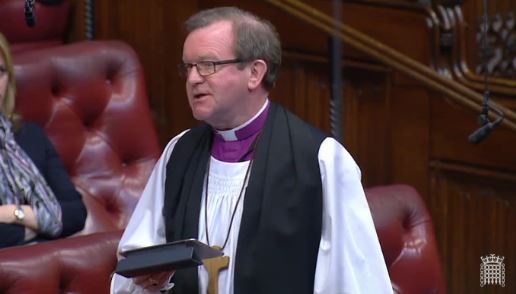
Queen’s Speech – Bishop of Portsmouth gives farewell speech, on economy and poverty

On 12th May 2021 the Bishop of Portsmouth, Rt Revd Christopher Foster, gave his valedictory speech in the House of Lords during the first day of debate on the Queen’s Speech. He focused on the economy and poverty.

“My Lords, it is more than seven years since I first spoke in this House. It is a long time since I was a maiden like the noble Baroness, Lady Blake, and the noble Lord, Lord Lebedev, whom I congratulate on their arrival and their speeches.

“Today, my name has ‘Valedictory’ next to it. Three weeks ago, I said an emotional godspeed to the people of the Portsmouth diocese at a cathedral service: scaled-down but intensely moving, for me and my wife Sally, at least, as we thanked so many.

“That service also gave me the opportunity for a bishop’s equivalent of ‘Desert Island Discs’, choosing the music sung wonderfully well by the cathedral choir. This included my favourite hymn among very many, ‘There’s a Wideness in God’s Mercy’. It praises God’s gentleness, mercy and justice and how those qualities are rooted in His radical inclusion. It is something I touched on in my valedictory sermon: that the Church is its congregations, but it is far more its communities.

“We must always keep our doors open, especially to those who have no figurative or literal shelter—so I am interested, and not a little intrigued, by the Government’s talk of levelling up. The phrase suggests that those who already have will not have to give up anything and that those who need a hand up will be propelled upwards—but by what? Well, that is the question: how does the rhetoric become the reality? It is a dilemma that the Christian Church understands. We proclaim the kingdom, but find building it challenging.

Continue reading “Queen’s Speech – Bishop of Portsmouth gives farewell speech, on economy and poverty”

Response to the Budget from the Bishop of Birmingham


03/03/2021

Following the Budget speech, the Bishop of Birmingham, David Urquhart, Convenor of the Bishops in the House of Lords, said:

“This is a time of great uncertainty, and while the Chancellor has rightly focussed on steps to get the economy moving, I’m concerned he has missed the chance to give certainty to those people and families who rely on Universal Credit, by not making the £20 uplift permanent.

“I’ll look at the details of the Budget closely for measures that will help the poorest and most vulnerable, especially access to sustainable jobs. The £19m for Domestic Abuse programmes is welcome as is support for schools to help get children back on the road of educational discovery. The lack of detail on social care is, however, a worry.

“The £300m additional funding for the Culture Recovery Fund is very welcome and will support the many small businesses and independent contractors our churches employ and support. I also note that the Levelling Up Fund prospectus specifically mentions cultural and heritage assets, including churches, and we look forward to churches and cathedrals particularly in areas of high deprivation taking part in this programme.”

Source: CofE website

Bishop of Carlisle speaks in debate on report from the Economic Affairs Committee

On 28th January 2021, the Bishop of Carlisle took part in a debate on a report from the Economic Affairs Committee, focusing on the need for health and social care reform:

The Lord Bishop of Carlisle [V]: My Lords, I add my own expression of gratitude to the Economic Affairs Committee for such a clear and coherent report, based as it is on such careful research and presenting us with such direct and forthright conclusions. Its basic principles for reform are eminently sensible. Like others, I applaud the emphasis, pace Dilnot, on a partnership approach to the funding of social care, and the principles of free personal care, with a cap on accommodation costs, and increased funding enabled by general taxation. I will focus my brief contribution on principle (j), which reads:

“Invest in the social care workforce and ensure a more joined up approach to workforce planning with the National Health Service.”

If that is ignored, any increase in funding will run the risk of being wasted.

Continue reading “Bishop of Carlisle speaks in debate on report from the Economic Affairs Committee”

Bishop of Oxford takes part in debate on report on tackling intergenerational unfairness

The Bishop of Oxford spoke in a debate on a report from the Select Committee on Tackling Intergenerational Unfairness on 25th January 2021, raising the issues of education, the gig economy, and all-age communities:

The Lord Bishop of Oxford [V]: My Lords, I welcome this key report on intergenerational unfairness and this debate. It is a privilege to take part. I want to focus my contribution on three issues.

The first concerns education and training. I welcome the report’s perspective and recommendations; as others have said, they are even more relevant now. However, as we know, the landscape is shifting significantly beneath our feet because of the immediate demands of the pandemic and the likely longer-term shifts in working patterns created by the fourth industrial revolution. We are sorely in need of creative, imaginative, cross-party and cross-society intergenerational thinking on education for life, not simply for work.

Continue reading “Bishop of Oxford takes part in debate on report on tackling intergenerational unfairness”

Bishop of Birmingham asks about impact of economic pandemic recovery

On 12th January 2021, the Bishop of Birmingham asked a question on the future impact of economic recovery from the COVID-19 Pandemic:

The Lord Bishop of Birmingham [V]: I am grateful for the much-appreciated provisions made by the Chancellor so far in this extreme crisis and for his honesty in outlining the significant harm already caused to the economy by the pandemic. Will the Minister reassure the House that, following these emergency measures, many of which have been outlined just now, there are plans and policies already being formed for a recovery? Would he indicate some of the economic and social principles that the Government will be applying in leading the recovery? In addition to the question from the noble Lord, Lord Balfe, will the inevitable need to rebalance the public finances not unfairly burden the poorest?

Continue reading “Bishop of Birmingham asks about impact of economic pandemic recovery”

Bishop of St Albans asks about monetary policy, car finance schemes

On 30th December the Bishop of St Albans received written answers to questions on monetary policy, and care finance schemes:

The Lord Bishop of St Albans: To ask Her Majesty’s Government, further to the Written Answer by Lord Agnew of Oulton on 3 December (HL10488) and the exchange of letters between the Bank of England and HM Treasury on the Asset Purchase Facility on 29 January 2009, whether the Monetary Policy Committee still requires the consent of HM Treasury to engage in quantitative easing through the Asset Purchase Facility. [HL11242]
The Lord Bishop of St Albans: To ask Her Majesty’s Government, further to the Written Answer by Lord Agnew of Oulton on 3 December (HL10488) and the exchange of letters between the Bank of England and HM Treasury on the Asset Purchase Facility on 29 January 2009, what assessment they have made of the implications of the confirmation in these letters that the financing of the Asset Purchase Facility by central bank money would require HM Treasury consent for the question of whether it is appropriate for the Government to comment on the effectiveness of quantitative easing; and what assessment they have made of the effects of quantitative easing on the increase in house prices compared to increases in wages. [HL11243] Continue reading “Bishop of St Albans asks about monetary policy, car finance schemes”

Bishop of Portsmouth urges Government to keep uplift in universal credit for those ‘on cliff edge’

On 3rd December the House of Lords debated the Chancellor’s November Spending Review statement. The Bishop of Portsmouth took part in the debate:

The Lord Bishop of Portsmouth [V]: My Lords, I was delighted to hear the Chancellor stress that the Government would continue to support the most vulnerable, but the proof of that assertion will be in how much money the Government are prepared to provide. That will be the barometer of what and who they consider most important. I therefore join my voice to those profoundly deprecating the proposed cut in development aid. I urge the Government to think again. Continue reading “Bishop of Portsmouth urges Government to keep uplift in universal credit for those ‘on cliff edge’”

Bishop of St Albans asks about wages and house prices

On 3rd December 2020 the Bishop of St Albans received a written answer to a question on the effect of quantative easing on wages and house prices:

The Lord Bishop of St Albans: To ask Her Majesty’s Government what assessment they have made of the effects of quantitative easing on the increase in house prices compared to increases in wages. [HL10488]

Continue reading “Bishop of St Albans asks about wages and house prices”

Bishop of St Albans asks about the Regional Comprehensive Economic Partnership

On 2nd December 2020 the Bishop of St Albans received a written answer to a question on the impact of the Regional Comprehensive Economic Partnership:
The Lord Bishop of St Albans: To ask Her Majesty’s Government what assessment they have made of (1) the economic, and (2) the diplomatic, consequences for the UK of the Regional Comprehensive Economic Partnership. [HL10490]

Continue reading “Bishop of St Albans asks about the Regional Comprehensive Economic Partnership”