
 On 8th October 2019 Lord Foster of Bath (LD) moved a motion “that this House takes note of the Report from the Select Committee on the Rural Economy Time for a strategy for the rural economy (HL Paper 330)”. The Bishop of London, Rt Revd Sarah Mullally, contributed to the debate:
The Lord Bishop of London: My Lords, you may well ask what the Bishop of London is doing adding her voice to a debate on our strategy for the rural economy. Despite having spent most of my adult life in London, my five years in the West Country and latterly as the Bishop of Crediton in Devon demonstrated to me the challenges of rural life.
Continue reading “Bishop of London on need for improved rural services, and role of churches”
 On 3rd September 2019 the Bishop of St Albans
  On 8th July 2019 the Bishop of Leeds, Rt Revd Nick Baines, received written answers from the Government in reply to three questions about the Israeli-Palestinian conflict:
 On 26th June 2019 the Second Church Estates Commissioner, Rt Hon Dame Caroline Spelman MP, answered two written questions from Jim Shannon MP (Strangford) on Church-based tourism and community development: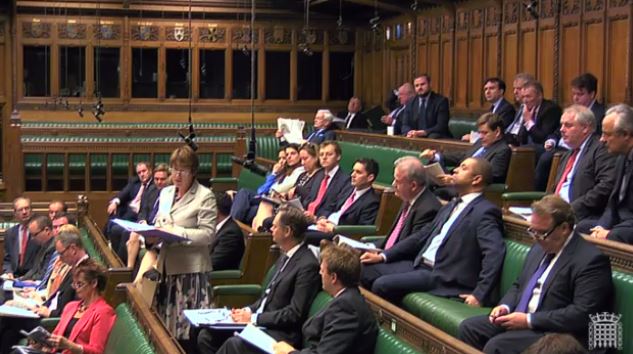
 Bishop of Leeds: My Lords, I welcome this Statement, and thank the Minister for repeating it. I also want to note the work that the Church of England and the Children’s Society have done promoting these matters. I am particularly pleased that public and utilities debt is to be included in this, but—taking advice from Donald Tusk, who said “Don’t waste the extension”—can the Minister say who will ensure that plans are put in place for sustainable debt resolution? It was said that debtors will have to seek professional advice. How will that be ensured, so that we do not simply prolong the problem of debt where it will be exacerbated? Secondly—and I am sorry if I missed this in the Statement—when might we expect the new regulations to be published?
 The Archbishop of York: My Lords, I want to support the main thrust of the speech from the noble Lord, Lord Stevenson, about debt. Julia Unwin, who was chief executive of the Joseph Rowntree Foundation, did a big research project on why people were going to Wonga. They went to Wonga because it asked no questions; people knew they could get their payday loan. Other lenders asked more questions and were far more intrusive and credit was not readily available. Noble Lords know that my archiepiscopal colleague, the most reverend Primate the Archbishop of Canterbury, said that he intended not only to reform Wonga but to do away with it, and we know what has happened to Wonga.
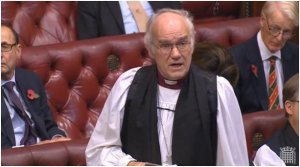 The Lord Bishop of Chester: My Lords, it is a privilege and a challenge to follow such a brilliant speech from someone who knows his way around the subject. If you want to find good things to tax, I always say that you should start with sin: find a new sin and tax it. I rather agree that HS2 is a sin, not for adding capacity, which I am all in favour of, but in doing so in such an unnecessarily expensive way. For me, trains go quite fast enough already and it could have been done far more cheaply without factoring in the speeds in a small country. As I follow the noble Lord’s speech, I think of St Paul, who once began by saying, “I speak as a fool”. I do so too, a little, after that wonderful description of the financial landscape.
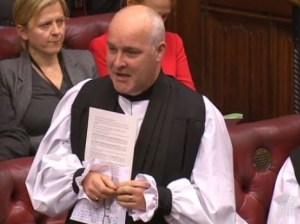 The Lord Bishop of Chelmsford: My Lords, for many on these Benches there are measures to welcome in this Budget: for instance, the decision to increase the work allowances within universal credit for families with children and people with disabilities, as other noble Lords have mentioned. This goes a substantial way towards reversing the cuts announced in 2015. Likewise, the announcement of measures to aid the transition to universal credit, worth £1 billion over five years, is also welcome, as is the additional and non-repayable run-on support for new claimants to help people manage during the five-week waiting period before their first payment. However, I am disappointed that the run-on support does not cover the child elements of universal credit.
 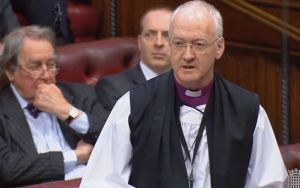 The Lord Bishop of Leeds: My Lords, we take the point about the Sheffield city region, but it leaves the rest of Yorkshire wondering where it fits in, and when this will improve for it. We have failing rail infrastructure. In Yorkshire, we have almost total, widespread support for the One Yorkshire devolution deal. A report produced by the Institute for Government has referred to Yorkshire as,
 The Church of England in Parliament
You must be logged in to post a comment.