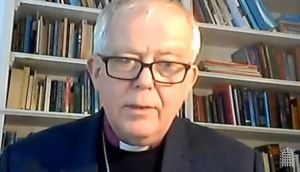
Energy Bill: Bishop of Carlisle calls for more community-led energy generation

On 19th July 2022 the House of Lords debated the Government’s Energy Bill at its Second Reading:

The Lord Bishop of Carlisle: My Lords, I take many of the cogent and very well-informed points that have already been made in this debate, not least the one made by the noble Lord, Lord Howell, on the need for international co-operation. Even so, I welcome all three pillars of this Bill. Its stated direction could offer at least a step forward towards the goal of net-zero carbon.

I suggest in particular two rather domestic but, I hope, practical areas that could, in my view, do with further development in the Bill; namely, local renewable energy generation, as raised by the noble Baroness, Lady Hayman, and carbon capture, which has been addressed by the noble Lord, Lord Whitty, and the noble Baroness, Lady Sheehan.

In both cases, I hope noble Lords will forgive special reference to Cumbria, where I live. It is currently engulfed in a very contentious debate about the Woodhouse Colliery near Whitehaven that is not nearly as straightforward as it might first appear. Cumbria also has the “energy coast”—originally coal, then nuclear and now, increasingly, renewables. It has the Walney Extension offshore wind farm, which has more than 20% of the UK’s wind farm generating capacity. What is more, as a county, we have more than 50% of all the potential small-scale hydropower generation in the north-west.

Continue reading “Energy Bill: Bishop of Carlisle calls for more community-led energy generation”

Bishop of Gloucester asks about fuel and gas prices for off-grid households

The Bishop of Gloucester received the following written answers on 12th July 2022:

The Lord Bishop of Gloucester asked Her Majesty’s Government what recent discussions they have had regarding the adequacy of regulations governing the costs paid by off-grid households for (1) oil, and (2) liquified petroleum gas.

Continue reading “Bishop of Gloucester asks about fuel and gas prices for off-grid households”

Bishop of St Albans asks about oil and gas imports

The Bishop of St Albans asked a question during a debate on North Sea Oil and Gas Producers: Investment Allowances, on 7th June 2022:

The Lord Bishop of St Albans: My Lords, will the Government, first, reveal the calculations they have made on why we are giving these subsidies, rather than putting the money into renewables? This has come at a time when we have seen massive increases in gas imports. Indeed, if we had done this some years ago, and been able to move and shift much more quickly, we would not be in half the mess we are in now. What is the basis on which the Government are deciding to subsidise the oil, rather than putting this extra financial incentive into renewables?

Continue reading “Bishop of St Albans asks about oil and gas imports”

Bishop of Oxford asks about the cost of living

The Bishop of Oxford asked the following question in a debate about the cost of living, on 25th May 2022:

The Lord Bishop of Oxford: My Lords, the Minister and other noble Lords will be aware of the paradox that it is often the very poorest people in society who pay a higher tariff for their electricity through pre-payment meters and the like. They may not have bank accounts or the ability to pay on any kind of credit. Are the Government proposing to do anything to help and support those who are locked into these higher energy prices when they can least afford then?

Continue reading “Bishop of Oxford asks about the cost of living”

Bishop of St Albans asks about waste heat

The Bishop of St Albans received the following written answer on 25th April 2022:

The Lord Bishop of St Albans asked Her Majesty’s Government what plans they have to improve the capture of waste heat from British industry to alleviate rising energy costs.

Continue reading “Bishop of St Albans asks about waste heat”

Bishop of Durham asks about energy investment

The Bishop of Durham asked a question about investment in sustainable energy during a debate on gas production on 15th March 2022:

The Lord Bishop of Durham: Will the Minister expand on the investment of microgeneration at local level? At Bishop Auckland, one of the local estates is having a massive transformation through solar being installed on all the rooms on that estate. Could not more money be put into that? Let us forget fracking, to be honest, because it is not going to deliver us anything at any time.

Continue reading “Bishop of Durham asks about energy investment”

Bishop of Salisbury asks about investment in renewable energy

The Bishop of Salisbury asked a question on research and investment in renewable energy on 3rd February 2021, during a discussion on the impact of electricity delays on the UK energy supply:

The Lord Bishop of Salisbury [V]: My Lords, the price of electricity from Hinkley is remaining unchanged at £92.50 per megawatt hour, and EDF is expecting the same profit of more than 7.1% on its investment. Given that, can the Minister explain the points that she has just made about how the additional 30% of construction costs on the initial £18 billion budget is being absorbed at no cost to consumers? As the price of electricity from renewables has dropped—with wind now at £40 per megawatt hour—might not research and development into renewals have been a better investment? Hinkley already looks like transitional technology.

Continue reading “Bishop of Salisbury asks about investment in renewable energy”

Bishop of Salisbury asks about use of rural churches as charging points for electric vehicles

On 16th December the Bishop of Salisbury responded to a Government statement in the Lords about the Energy White Paper:

The Lord Bishop of Salisbury [V]:  My Lords, I very much welcome the energy White Paper.

One thing we have learned during this pandemic is the importance of the local. What assessment have the Government made of the further potential of local solar, wind and micro hydro energy schemes and of what finance might be needed to facilitate their collectively enormous potential?
Given the comments in the other place about the lack of rural infrastructure for energy, might the Minister find it helpful to consider the possibility of churches being places for siting bidirectional charging points for electric vehicles?

Continue reading “Bishop of Salisbury asks about use of rural churches as charging points for electric vehicles”

Bishop of Salisbury calls for more focus on energy microgeneration

On 27th October the House of Lords considered the Government’s Infrastructure Planning (Electricity Storage Facilities) Order 2020 in Grand Committee. The Bishop of Salisbury took part in the debate, highlighting the need for local authorities to be properly resourced to respond, and the value of microgeneration:

The Lord Bishop of Salisbury [V]: My Lords, this is not really my territory. I hesitate to come into this discussion but I will not delay noble Lords long. I note that the Delegated Legislation Committee in the other place dealt with this proposal in 13 minutes and, even then, the Minister commented on the widening of the discussion beyond the SI itself. That has already begun to happen in this discussion.

There seems to be little controversy surrounding the SI. The 2019 consultation drew 28 responses from industry, which were broadly supportive. However, is not the question that needs to be addressed on what additional funding will be given to local authorities to ensure that there is sufficient expertise and capacity for local planning officers to make fully informed decisions about these planning requests? Continue reading “Bishop of Salisbury calls for more focus on energy microgeneration”

Bishop of Salisbury asks Government about investment in local micro-energy generation

On 20th October Lord Ravensdale asked the Government “what assessment they have made of the report by the International Energy Agency World Energy Outlook 2020, published on 13 October.” The Bishop of Salisbury asked a follow up question:

The Lord Bishop of Salisbury [V]: My Lords, the report from the IEA focuses on the impact of the pandemic on macro energy generation and distribution, and it emphasises the vulnerability of the national grid. The pandemic has emphasised the importance of the local, so how does the Minister see the Government’s role in encouraging the rapid development of local micro energy generation? Continue reading “Bishop of Salisbury asks Government about investment in local micro-energy generation”