
Bishop of Newcastle makes valedictory speech on economic planning and issues arising from the government’s budget

On 3rd November 2021, the Bishop of Newcastle gave her valedictory speech in the House of Lords, raising issues of economic planning and the impact of the government’s budget on poorer communities, and paying tribute to the North-East of England:
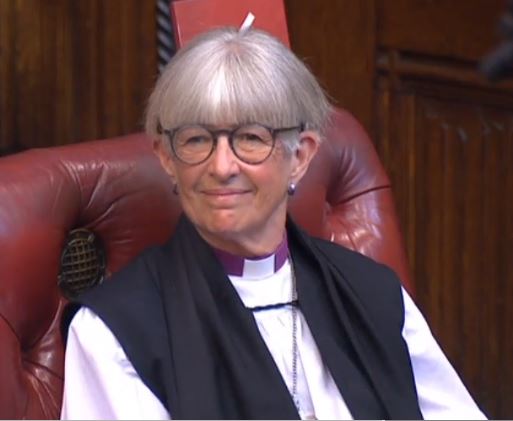
The Lord Bishop of Newcastle: My Lords, these past six years during which I have served as Bishop of Newcastle and as a Member of your Lordships’ House have, in a good way, been the most extraordinary years of my life. After a lifetime of living in the south, these six years in the north-east have helped me to see things from a different and much richer perspective.

The usual way to assess a Budget, the one we see in the newspapers, is to identify the winners and losers. I want strongly to resist this approach. When, aeons ago, I studied for my degree in economics, I learned that the way we spend our money shows what we value, what really matters to us. The question that matters is not what will I or we get out of this, but what kind of values does this Budget embrace—what is the moral framework undergirding it?

Continue reading “Bishop of Newcastle makes valedictory speech on economic planning and issues arising from the government’s budget”
Bishop of Durham speaks about tackling child poverty and health inequality

The Bishop of Durham spoke in a debate on regional inequalities on 14th October 2021, discussing issues relating to child poverty and health inequality:

The Lord Bishop of Durham: My Lords, I thank the noble Lord, Lord Liddle, for securing this debate, and am pleased to follow on from the noble Lord, Lord Young of Cookham. I, too, look forward to the maiden speech of the noble Viscount, Lord Stansgate.

Jubilee is a strong theme of our Judaeo-Christian tradition. Jubilee includes setting people free from the impacts of inequality. If levelling up is going to mean anything significant, it must tackle the inequalities that exist in our nation. It needs to be a kind of jubilee.

This week is Challenge Poverty Week. Child poverty is a very good measure of regional inequalities within England, as it is both an indicator of poverty and a perpetuator of it. Child poverty highlights the complexity of issues that cause it, including education and employment. It has lifelong impacts on children as they grow into adults and shape their communities. The recent report by Donald Hirsch for Loughborough University estimates that the cost of child poverty is £38 billion a year, a significant increase in the past five years.

We see far higher levels of child poverty in some places than others. It is not a simple divide of a wealthy London and an impoverished north. The Institute for Fiscal Studies reported in its Green Budget for 2020 that

“inequalities within regions are larger than the inequalities between regions.”

Continue reading “Bishop of Durham speaks about tackling child poverty and health inequality”

Bishop of London asks Government how it will tackle social and economic inequalities in response to covid-19

On 26th October 202 the Bishop of London asked a question in the House of Lords that she had tabled, on covid-19 and social and economic inequalities. The exchanges and follow-up questions from other Members are reproduced below:

Lord Bishop of London: To ask Her Majesty’s Government what plans they have to ensure that (1) social, and (2) economic, inequalities are addressed in their plans for economic recovery from the impact of the COVID-19 pandemic.

Baroness Penn (Con): My Lords, the Government have taken unprecedented action to keep people in work and to support businesses since the pandemic began. We are committed to carefully considering the social and economic impact of new policies and to tackling inequalities. Initiatives such as the Kickstart Scheme, the Job Support Scheme and enhanced welfare provision continue to support people, particularly those in groups at risk of higher unemployment due to the pandemic.

The Lord Bishop of London [V]: I thank the noble Baroness for her reply. Given the multiple layers of inequality that the pandemic is revealing, can the Minister tell the House whether Her Majesty’s Government will implement the recommendations made in the recent 10-year Marmot review and set up a taskforce that will focus on understanding the social and economic determinants of health from a holistic, society-wide perspective? Continue reading “Bishop of London asks Government how it will tackle social and economic inequalities in response to covid-19”

Bishop of Carlisle asks Government about tackling health inequalities

On Tuesday 15th September 2020 Lord Hunt of Kings Heath asked the Government “in the light of the Covid-19 pandemic, what plans they have for changes to the NHS long-term plan.” The Bishop of Carlisle, Rt Revd James Newcome, asked a follow-up question:

The Lord Bishop of Carlisle: My Lords, given that the health protection remit of Public Health England is to be subsumed into the new national institute for health protection, can the Minister tell us what steps Her Majesty’s Government will take to ensure that health inequalities are robustly addressed through programmes of health education and promotion, as envisaged in chapter 2 of the NHS Long Term Plan? Continue reading “Bishop of Carlisle asks Government about tackling health inequalities”

Trade Bill: Bishop of Blackburn delivers maiden speech in House of Lords

On 8th September 2020 during the House of Lords second reading debate on the Government’s Trade Bill, Rt Revd Julian Henderson, the Bishop of Blackburn, delivered his maiden speech. The full text is below:

The Lord Bishop of Blackburn (Maiden Speech): My Lords, I am extremely grateful for the warmth of the welcome that I have received in my Introduction to your House. When I told my elderly father in 2013 that I had been appointed to serve as the next Bishop of Blackburn, many miles away from his home in Sussex, he was very quiet and somewhat disappointed that my wife and I would be living so far away, but then a light came into his eyes and he asked, “Does that mean you may be invited to enter the House of Lords?” When I replied in the affirmative, he said very quickly, “Well, then, that makes it all right.”
I come, first and foremost, as a Christian who will seek opportunity to support the convictions and values foundational to our faith in Jesus Christ, and to draw attention to those many today, around the world, who are persecuted for their faith in him, and then to advocate for the right for all to enjoy freedom of speech and belief, wherever they may live, and to do so in peace.

Continue reading “Trade Bill: Bishop of Blackburn delivers maiden speech in House of Lords”

Bishop of Durham asks Government about low earners, in work poverty and universal basic income

On 6th May 2020 the Archbishop of York, Most Revd John Sentamu, led a debate in the House of Lords on the motion that the Lords “do consider the case for increasing income equality and sustainability in the light of the recent health emergency.” The Bishop of Durham, Rt Revd Paul Butler, also spoke in the debate:

The Lord Bishop of Durham: My Lords, I congratulate the right reverend Prelate the Bishop of Derby on her moving maiden speech. I am grateful for all she does to champion the voices of children.

I want to thank Archbishop Sentamu for his leadership in consistently speaking up for racial and social justice. He champions work among young people, notably through the Archbishop of York Youth Trust. He inspires others to do the same.

The Covid-19 pandemic is a dividing experience through its unequal financial impact. The lowest-earning 10% are seven times more likely than high earners to work in a sector which has shut down. Archbishop Sentamu ​champions the real living wage. In-work poverty is compounded by irregular working hours. Such unpredictability means that families cannot easily save to safeguard themselves from unexpected life events. Eighteen per cent of the north-east’s working population experience insecure work. Turn2us found that people on zero-hours contracts expect a £193 drop in monthly income. These workers often provide essential services such as cleaning and delivery, yet face great financial instability. Will Her Majesty’s Government promote Living Hours accreditation? Continue reading “Bishop of Durham asks Government about low earners, in work poverty and universal basic income”

Archbishop of York leads Lords debate on the case for income equality and sustainability

On 6th May 2020 the Archbishop of York, Most Revd John Sentamu, led a debate in the House of Lords on the motion that the Lords “do consider the case for increasing income equality and sustainability in the light of the recent health emergency.” The Archbishop started the debate, and summed up afterwards, referring to many of the speeches made by other Members over the course of nearly three hours. Amongst the other speakers were the Archbishop of Canterbury and the Bishops of Durham and Derby. The entire debate can be read in Hansard here, and the Archbishop’s opening and closing speeches are reproduced below:

Income Equality and Sustainability: Motion to Consider

Moved by The Archbishop of York, That the Virtual Proceedings do consider the case for increasing income equality and sustainability in the light of the recent health emergency.

The Archbishop of York: My Lords, I am grateful to the Government Chief Whip and the usual channels for granting me this opportunity to move a Motion that is very dear to my heart—thank you. I commend Her Majesty’s Government for their rapid action in the current crisis and, through unprecedented public spending, working to protect jobs and avert millions of redundancies. It is in the light of this recent health emergency that I beseech your Lordships’ House to take note of the case for increasing income equality and sustainability.

Last Thursday, the noble Baroness, Lady Bennett of Manor Castle, opened a Question for Short Debate on Covid-19 and people living in poverty. I believe that what we are doing today has the potential to make a lasting difference. As Amelia Earhart, the first woman to fly across the Atlantic, said:

“The most difficult thing is the decision to act, the rest is merely tenacity.”

As long ago as 28 April 1909, Winston Churchill, then president of the Board of Trade, gave a speech in the other place in which he said:

“It is a serious national evil that any class of His Majesty’s subjects should receive less than a living wage in return for their utmost exertions.”—[Official Report, Commons, 28/4/1909; col. 388]

Not much has changed since. That principle remains as strong as ever in our national life. Continue reading “Archbishop of York leads Lords debate on the case for income equality and sustainability”

Bishop of Portsmouth asks about the UK Shared Prosperity Fund

On 22nd May the Bishop of Portsmouth, Rt Revd  Christopher Foster, received written answers to three questions about the UK Shared Prosperity Fund. 

The Lord Bishop of Portsmouth: To ask Her Majesty’s Government when they intend to publish the consultation on the UK Shared Prosperity Fund. Continue reading “Bishop of Portsmouth asks about the UK Shared Prosperity Fund”

Archbishop asks government about income inequality

york-170117-bOn 31st January 2018, Baroness Lister asked Her Majesty’s Government ‘whether they have a policy goal to reduce income inequality; and if so, what is their strategy for achieving that goal.’ The Archbishop of York, Most Revd John Sentamu, asked a follow-up question: 

The Archbishop of York:  My Lords, does the noble Lord agree with Wilkinson and Pickett in The Spirit Level that equal societies, in terms of income, are much happier societies and that income inequality leads people not to be happy? Does he further agree that being in work does not mean that you have income equality? We have a lot of hard-pressed families on poverty wages, hence the food banks. What are the Government going to do to create this income equality, where we can all become happier people? Continue reading “Archbishop asks government about income inequality”

Bishop of Salisbury calls for Social Mobility Commission to focus on common good

On 4th December 2017 the House of Lords heard a Government statement repeated on the Social Mobility Commission chaired by Alan Milburn, whose board had announced their resignations that day. The Bishop of Salisbury, Rt Revd Nicholas Holtam, asked a follow up question: