Archbishop: British society deserves an economy rooted in the common good

On 5th September 2017 the Archbishop of Canterbury, Most Revd Justin Welby, published an article in the Financial Times, about the need to address economic inequality. The Archbishop is a member of the IPPR thinktank’s Commission on Economic Justice, whose interim report can be seen here. The text of the article is below.

Britain stands at a moment of significant economic uncertainty; a watershed moment where we need to make fundamental choices about the sort of economy we need for the way we want to live. Continue reading “Archbishop: British society deserves an economy rooted in the common good”

Bishop of Derby speaks on tackling poverty and powerlessness

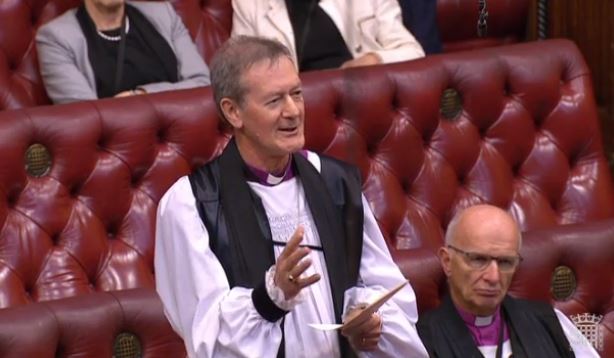
On 14th July 2016 the House of Lords debated a motion from Lord Bird, “That this House takes note of the case for tackling the causes of poverty in the United Kingdom”. The Bishop of Derby, Rt Revd Alastair Redfern, spoke in the debate and his remarks are below. The Bishop of St Albans’ speech in the same debate can be seen here.

Derby 191115cThe Lord Bishop of Derby: My Lords, I, too, thank the noble Lord, Lord Bird, for introducing this important issue of tackling the causes of poverty. We learn from the briefing notes that the noble Baroness, Lady Lister, makes it clear in her textbook that it is almost impossible to define poverty. That is part of the complexity with which we have to wrestle because, as poverty is relative, it is very hard to design appropriate responses.

In my trade, we have two phrases: we talk about the poor and about the poor in spirit. The word for spirit means power, and I want to look at to what extent to be poor and in poverty means to be lacking in power—the kind of power that allows you to feel good about yourself and to have security of work, security of a living place and security of contributing to society. How do we bless people with a sense of power over their lives, for themselves and those around them, and to make a contribution to society? Continue reading “Bishop of Derby speaks on tackling poverty and powerlessness”

Archbishop of Canterbury on the future for the United Kingdom after the EU Referendum

On 5th July 2016 the House of Lords debated a motion “That this House takes note of the outcome of the European Union referendum.” The Archbishop of Canterbury, Most Revd & Rt Hon Justin Welby, spoke in the debate. His speech is below in full, followed by extracts from the speeches of other Peers. 
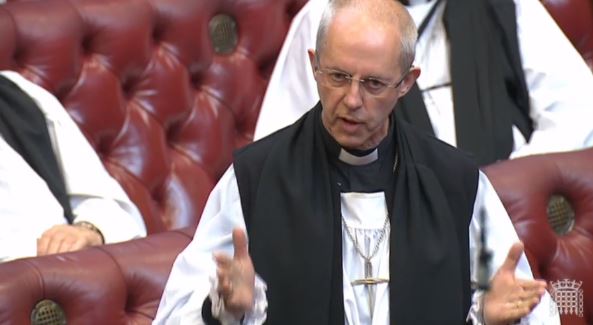
2ABCEUdebateThe Archbishop of Canterbury:  My Lords, the events of the past two weeks have led to some of the most traumatic and dynamic changes that we have known. The course of the campaign was robust—as it properly should be on such great issues—but at times veered over the line on both sides: it was not merely robust but unacceptable. Through such comments were created cracks in the thin crust of the politeness and tolerance of our society, through which, since the referendum, we have seen an outwelling of poison and hatred that I cannot remember in this country for very many years. It is essential, not only for this House but for the leaders of both sides and throughout our society, to challenge the attacks, xenophobia and racism that seem to have been felt acceptable, at least for a while.

Just over a week ago, at Lambeth Palace, at the breaking of the fast of Ramadan, I shared an iftar with the new Mayor of London, Sadiq Khan, and the Chief Rabbi. There were more than 100 young people of every faith and of no faith there. That sense of hope and energy for the future carried us through the rest of the week. It is there and we can reach for it. If, however, we are to thicken the crust through which the cracks have come, if we are to move to a place where we are not yet speaking of reconciliation but beginning to get on a path where in future healing and reconciliation will begin to happen, we need to beware. St Paul, in his letter to the Galatians, says to them at one point:

“Love one another, cease to tear at one another, lest at the end you consume one another”.

We are in danger of doing that in the way that our politics is developing at the moment. If we are to tackle that, we have to put in place some fundamental issues to be capable of creating the agile, flexible, creative, entrepreneurial and exciting society—full of the common good and of solidarity and love for one another—which is the only way that this country will flourish and prosper for all its citizens in the world outside the European Union of the future. Continue reading “Archbishop of Canterbury on the future for the United Kingdom after the EU Referendum”

Archbishop of York: ‘working poor’ “a stain on the conscience of this country”

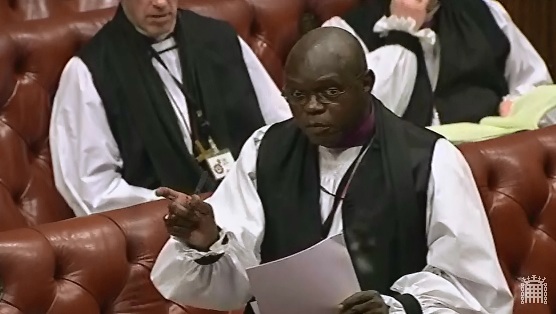
On 25th June 2014, Labour Peer Baroness Thornton asked Her Majesty’s Government what measures they are taking to address any fall in wages of women in the United Kingdom. The Archbishop of York, the Most Revd and Rt Hon John Sentamu,asked a supplementary question:

Archbishop of YorkThe Archbishop of York: My Lords, the Living Wage Commission published its final report yesterday. It makes it clear that people in the care industry are paid very poorly—and the majority happen to be women. Will the Government take a reality check and recognise that people in the care professions are paid poorly? Will they make sure that, in terms of procurement, local authorities encourage those in the care profession to pay at least the living wage, which we wanted to be voluntary and not compulsory? If that does not happen, concern about women being paid poorly will continue. It is a stain on the conscience of this country that people work hard and are still in poverty.

Baroness Northover: I read the report of the most reverend Primate’s commission with enormous interest. I note that he has just said that he is looking for a voluntary approach rather than regulation, but he challenges responsible employers to pay a fair wage. He is right to identify the difference in pay between men and women.

(via Parliament.uk)

Maiden speech by the Bishop of Portsmouth – Higher Education

On 9th April 2014 the Bishop of Portsmouth, Rt Rev Christopher Foster, gave his maiden speech in a House of Lords debate to take note of Higher Education in the UK.

14.04.09 Portsmouth maiden speech 1

Bishop Christopher focused his remarks on his diocese, the important role of Portsmouth University, access for international students and on local economic disadvantage. His speech in full is below: Continue reading “Maiden speech by the Bishop of Portsmouth – Higher Education”

Archbishop’s phone-in on LBC radio: transcript

Justin-Welby_2873342b

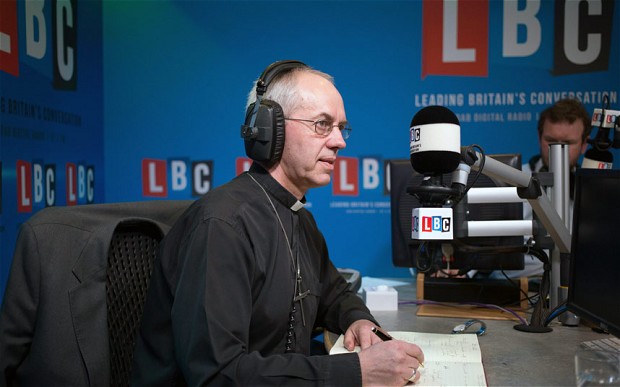
On Friday 4th April 2014 the Archbishop of Canterbury took questions from callers to LBC’s James O’Brien radio show. Topics covered included same-sex marriage, the nature of God, climate change, economics and investments, female bishops, welfare reform and relations within the Anglican Communion. A transcript is below. The full recording can also be heard here.

Update: On 6th April the Archbishop gave a joint interview to BBC Radio 4’s Sunday Programme, with Cardinal Vincent Nichols. In it he was asked to expand on the final answer he gave during the LBC interview. The Sunday Programme recording can be heard here (27 mins 55 secs in)

Continue reading “Archbishop’s phone-in on LBC radio: transcript”

Shrinking the economic gap between London and the regions: Budget speech by Bishop of Sheffield

“If we do nothing, we will see the gap between London and the regions continue to widen to the detriment of the whole country. I urge the Government and this House to address this problem with imagination, courage and vigour” – Bishop of Sheffield

On 27th March Peers debated the Chancellor’s 2014 Budget statement. The Bishop of Sheffield spoke of the need to rebalance the economy so that the proceeds of renewed economic growth could be shared across the regions. He suggested this could be the task of a cross-party parliamentary commission.

14.03.27 Bishop of SheffieldThe Lord Bishop of Sheffield: My Lords, the prophet Jeremiah wrote a short but remarkable letter to his contemporaries long ago who had been sent into exile in Babylon. The letter has shaped Jewish and Christian thought on how communities of faith should engage with the wider society down all the generations since. The prophet’s advice is to,

“seek the welfare of the city where I have sent you … for in its welfare you will find your welfare”.

Continue reading “Shrinking the economic gap between London and the regions: Budget speech by Bishop of Sheffield”

Freedom and Responsibility: Budget speech by the Bishop of Chester

On 27th March Peers debated the Chancellor’s 2014 Budget statement. The Bishop of Chester, Rt Rev Peter Forster, cautioned that if society were to experience renewed growth and prosperity, it should guard against recreating the problems of the past 30 years. He argued for an emphasis on strengthened social institutions, including families, continued commitment to overseas aid, and improved financial education.

14.03 Bishop of ChesterThe Lord Bishop of Chester:  My Lords, the reason that the Bishops sit on the government side of the Chamber, I am told, is the recognition that the task of government is so difficult that the Government need all the help available to them. Managing the economy in recent years has been an enormously difficult task and we can only express relief and, indeed, gratitude that things seem to be moving on to a more normal plane despite all the challenges ahead, about which the Chancellor himself is fairly candid. Continue reading “Freedom and Responsibility: Budget speech by the Bishop of Chester”

The Bishop of Peterborough makes his maiden speech in the House of Lords

The Bishop of Peterborough delivered his maiden speech to the House of Lords on 25th February 2014, during the debate tabled by Lord Low of Dalston: ‘To ask Her Majesty’s Government what is their response to Tackling the Advice Deficit, the report of the Low Commission on the future of advice and legal support on social welfare law in England and Wales’.

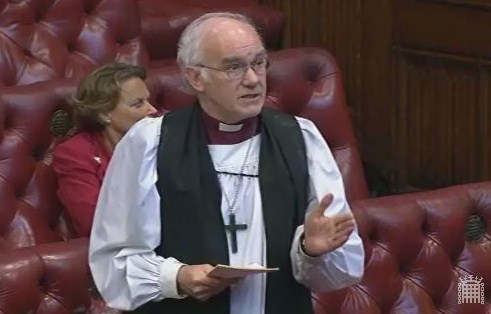
The Lord Bishop of Peterborough: My Lords, as I make this m14.02 Peterboroughaiden speech I am delighted to have the opportunity to thank the many Members and staff of your Lordships’ House who have made me so very welcome here. I am also most grateful to the noble Lord, Lord Low, for initiating this debate, and for producing with his colleagues this excellent, wide-ranging and challenging report.

I suppose it to be inevitable that cuts in government spending, however necessary they may be, will always hit the poorest most. It is therefore all the more important to give attention to ways of helping the most vulnerable to claim and receive the support to which they are entitled and the professional advice they may need. This report does that: I welcome it most warmly and hope that Her Majesty’s Government can do so too. Continue reading “The Bishop of Peterborough makes his maiden speech in the House of Lords”

Bishop of Worcester commends the living wage as tool to tackle inequality

Lord Giddens asks Her Majesty’s Government what policies they have to address economic inequalities in British society.

The Bishop of Worcester asked a supplementary question:

The Lord Bishop of Worcester: My Lords, is the Minister aware of the first report published today by the Living Wage Commission, chaired by my friend the most reverend Primate the Archbishop of York, which found that emerging economic recovery will have no effect on more than 5 million workers unless employers pay a living wage. It found furthermore that 6.7 million of the 13 million people in poverty in the UK are in a family where someone works—which, for the first time, is more than half the total. Will the Minister tell the House what steps the Government are taking to address this real concern?

Lord Newby: My Lords, the Government are encouraging employers to pay the living wage where they can. One of the key things about people in work on very low incomes is that a large proportion of them are working a small number of hours or a smaller number of hours than they would like. Economic growth will mean that more of those people are able to work longer hours, which will help deal with their household circumstances.

(via parliament.uk)