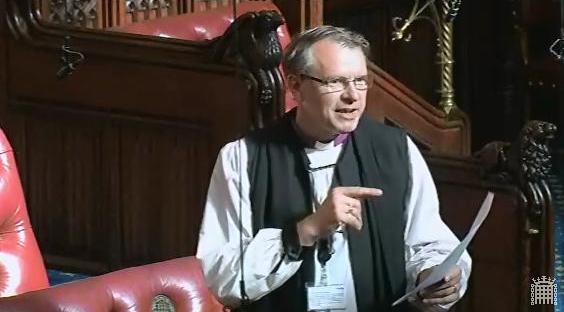
Bishop of Peterborough welcomes Budget announcement on National Living Wage

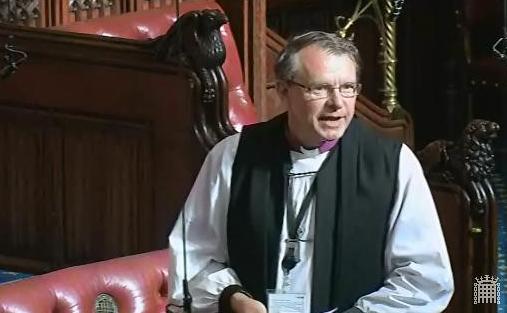
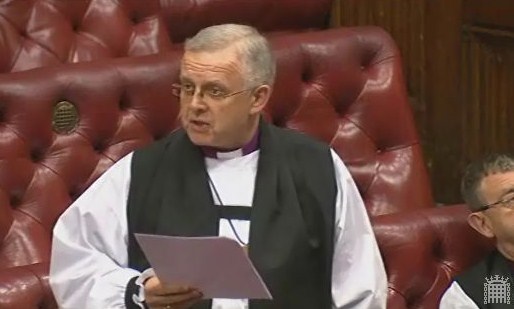
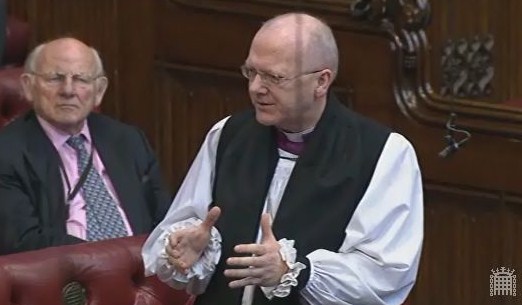
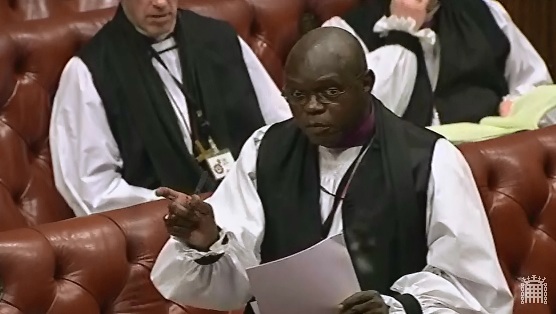
14.02 PeterboroughOn the 21st July 2015 the Bishop of Peterborough, the Rt Revd Donald Allister, spoke during the debate on the Budget Statement. The Bishop welcomed the new National Living Wage and asked for greater transitional support for employers and employees, as well as careful attention to phasing in the reduction in tax credits.

Continue reading “Bishop of Peterborough welcomes Budget announcement on National Living Wage”

Childcare Bill – Speech by Bishop of Durham

“On behalf of the well-being of the children themselves, if we are going to make this increase in provision, which I am sure we will and indeed should, let us try to ensure that all the regulations that follow place the child at the centre, not the adults, whether those adults be the parents, the providers or the politicians.” – Bishop of Durham, 16/6/15

On Tuesday 16th June 2015 the House of Lords debated the Government’s Childcare Bill. Details about the Bill can be seen here. The Bishop of Durham, Rt Revd Paul Butler, spoke in the debate, raising concerns related to funding, capacity, pay and putting the needs of children first. The full text of his speech is below, with extracts from the Minister’s reply, and can also be watched on the Parliament website here

14.06.10 Bishop of Durham 5The Lord Bishop of Durham: My Lords, in welcoming the general intent of this Bill, I wish to raise a number of concerns. It seems to me that there are already several common threads in what is being said. It may well be that they will be addressed—they will need to be—in the secondary legislation, but to be able fully to support the Bill I believe this House needs some assurances regarding these concerns. In raising them, I wish to point out that I have consulted some who are engaged in this work already, and also those for whom it is intended to be a benefit—parents and, indeed, grandparents. Continue reading “Childcare Bill – Speech by Bishop of Durham”

Bishop of Peterborough calls on Government to support adoption of Living Wage

On 11th November 2014, Lord Haske asked Her Majesty’s Government what is their assessment of the report by the Resolution Foundation Low Pay Britain 2014.The Bishop of Peterborough, the Rt Revd Donald Allister, asked a supplementary question:

14.02 PeterboroughThe Lord Bishop of Peterborough: My Lords, now that the economy is picking up, will the Minister comment on the living wage and on whether the Government believe that the minimum wage really is enough?

Lord Ashton of Hyde: The right reverend Prelate is right to bring this subject up. The minimum wage is a minimum as a catch-all; the Government support people and businesses paying above that, if they can pay the living wage, but only when it is affordable and not at the expense of jobs. In BIS, the department I represent, we have recently increased the pay of the lowest-paid workers in the department so that everyone receives the living wage. We support that as long as it is not at the expense of jobs.

(via Parliament.uk)

Bishop of St Albans calls for Living Wage to help improve youth employment

On 30th July 2014 Baroness Sherlock asks Her Majesty’s Government what action they are taking to reduce levels of youth unemployment following the recent closure of the youth employment contract incentive scheme. The Bishop of St Albans, the Rt Revd Alan Smith, asked a supplementary question:

Bishop of St AlbansThe Lord Bishop of St Albans: My Lords, a significant part of the problem is that there are some posts suitable for young people, but they are often in parts of the country where accommodation is prohibitively expensive or the cost of commuting simply precludes them from taking those jobs. In the light of that, have Her Majesty’s Government considered embracing the concept of the living wage for all people of working age?

Lord Freud: Obviously we have looked at the living wage. If the figure suggested for the living wage were to be adopted, we would have to consider the impact on unemployment and the particular impact on youngsters, who would be hit worst. The NIESR estimated that adopting the living wage as opposed to the minimum wage would knock 300,000 youngsters out of work.

(via Parliament.uk)

Archbishop of York: ‘working poor’ “a stain on the conscience of this country”

On 25th June 2014, Labour Peer Baroness Thornton asked Her Majesty’s Government what measures they are taking to address any fall in wages of women in the United Kingdom. The Archbishop of York, the Most Revd and Rt Hon John Sentamu,asked a supplementary question:

Archbishop of YorkThe Archbishop of York: My Lords, the Living Wage Commission published its final report yesterday. It makes it clear that people in the care industry are paid very poorly—and the majority happen to be women. Will the Government take a reality check and recognise that people in the care professions are paid poorly? Will they make sure that, in terms of procurement, local authorities encourage those in the care profession to pay at least the living wage, which we wanted to be voluntary and not compulsory? If that does not happen, concern about women being paid poorly will continue. It is a stain on the conscience of this country that people work hard and are still in poverty.

Baroness Northover: I read the report of the most reverend Primate’s commission with enormous interest. I note that he has just said that he is looking for a voluntary approach rather than regulation, but he challenges responsible employers to pay a fair wage. He is right to identify the difference in pay between men and women.

(via Parliament.uk)

Bishop of Durham gives maiden speech in House of Lords

“Young people…have been told that their value and contribution to the world is in work and their economic contribution. They have been told a lie…We have to help our young people to understand their true value as human beings first and foremost—but yes, we have to help them to find good, meaningful work” – Bishop of Durham, 10/6/14

14.06.10 Bishop of Durham 4

On 10th June 2014 the Bishop of Durham, Rt Rev Paul Butler, gave his maiden speech to the House of Lords, during the debate on the Queen’s Speech. The Bishop spoke about the attributes and needs of the Durham diocese, his experience of the global church, and his concern for young people’s social and economic welfare. He voiced his support for the Living Wage and plans within the Queen’s Speech for laws to tackle the emotional abuse of children.

This was the seventh contribution to the debate on the Queen’s Speech from the Bishops’ Benches. You can also watch a video of the Bishop delivering the speech on parliamentlive.tv


The Lord Bishop of Durham (Maiden Speech): My Lords, I begin by thanking your Lordships for the way in which I have been welcomed and supported as I have entered this noble House. That support has been full of wisdom, including guiding this Bishop as to how to kneel correctly during Prayers, for which I was extremely grateful. Continue reading “Bishop of Durham gives maiden speech in House of Lords”

Living Wage Call by the Bishop of Leicester

In the House of Lords on 1st April 2014 Lord Young of Norwood Green asked Her Majesty’s Government ‘what plans they have to mark the 15-year anniversary of the minimum wage, which took effect on 1 April 1999.’ The Bishop of Leicester asked a supplementary question: 

14.04.01 Bishop of Leicester

The Lord Bishop of Leicester: My Lords, in view of what the Minister has said about there being much work to do on the living wage, does he agree that a good way to mark this anniversary would be to commission an independent inquiry into the actual effects of raising the minimum wage to the living wage for everyone? Continue reading “Living Wage Call by the Bishop of Leicester”

Bishop of Worcester commends the living wage as tool to tackle inequality

Lord Giddens asks Her Majesty’s Government what policies they have to address economic inequalities in British society.

The Bishop of Worcester asked a supplementary question:

The Lord Bishop of Worcester: My Lords, is the Minister aware of the first report published today by the Living Wage Commission, chaired by my friend the most reverend Primate the Archbishop of York, which found that emerging economic recovery will have no effect on more than 5 million workers unless employers pay a living wage. It found furthermore that 6.7 million of the 13 million people in poverty in the UK are in a family where someone works—which, for the first time, is more than half the total. Will the Minister tell the House what steps the Government are taking to address this real concern?

Lord Newby: My Lords, the Government are encouraging employers to pay the living wage where they can. One of the key things about people in work on very low incomes is that a large proportion of them are working a small number of hours or a smaller number of hours than they would like. Economic growth will mean that more of those people are able to work longer hours, which will help deal with their household circumstances.

(via parliament.uk)