Ethos and education: the Bishop of Chelmsford makes maiden speech in House of Lords

“…it is impossible to understand and inhabit the modern world, especially in east London, without a critical appreciation of faith and, even more than that, a mature spiritual, moral, social and cultural worldview. Moreover, good religious education has been shown to be one of the best ways of countering religious extremism” – Bishop of Chelmsford, 9/6/14

14.06.09 Chelmsford 2

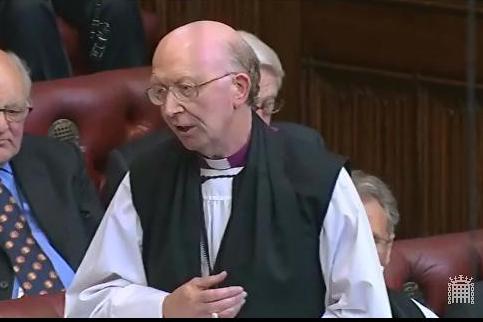
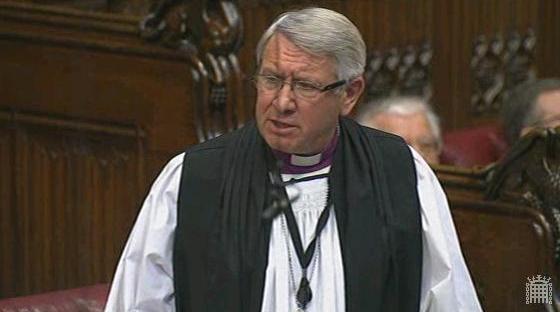
The Bishop of Chelmsford, Rt Rev Stephen Cottrell, made his maiden speech on 9th June 2014, during the debate on the Queen’s Speech. He spoke of the importance of religious education and the positive role played by church schools. He also welcomed Government proposals in the Queen’s Speech for tackling the emotional abuse of children. The speech can also be watched on Parliament Live TV.

The Lord Bishop of Chelmsford (Maiden Speech): My Lords, I think that the correct medical term for my condition is imposter syndrome. I have suffered from that for a long time. How could a boy from Southend who was not brought up going to church and who, aged 11, fell the wrong side of the line and went to a secondary modern school end up sitting on these red Benches and speaking in this House? Because of this, I want to say something today about the place of education in the life of our nation. Continue reading “Ethos and education: the Bishop of Chelmsford makes maiden speech in House of Lords”

Free Schools – independent or interdependent? Question from Bishop of Oxford

In the House of Lords on 14th May 2014, Baroness Jones of Whitchurch asked Her Majesty’s Government “what early intervention measures they are putting in place to reduce the educational and financial implications of failing free schools.” The Bishop of Oxford, who chairs the Church of England’s Board of Education, asked a supplementary question:

Bishop of Oxford

The Lord Bishop of Oxford: My Lords, given that prevention is better than costly cure, can the Minister let us know what is being done to make sure that free schools are established as groups of interdependent schools, rather than independent and autonomous units? Can he let us know how what we have learnt from the academies programme—that we need to get schools grouped together in multi-academy trusts—is being transferred to free schools?

Lord Nash: The right reverend Prelate makes an extremely good point. Although it is true that a number of outstanding schools have been established entirely independently, the way forward is the school-to-school support model, with schools operating in local clusters and secondaries working with their primaries. We are taking this learning, which has been very successful in the academy movement, into the free schools movement.

(via Parliament.uk)

Schools: attainment by ethnic minority pupils

In the House of Lords on 8th April 2014 Baroness Benjamin asked Her Majesty’s Government ‘what steps they are taking to raise the academic attainment levels of black British students, and especially those of Caribbean descent?’ The Bishop of St Albans asked a supplementary question:

14.03 Bishop of St Albans


The Lord Bishop of St Albans: My Lords, what assessment have Her Majesty’s Government made of the impact on educational attainment of the absorption of the Ethnic Minority Achievement Awards into the dedicated schools grant, which was done some months ago?

Lord Nash: The impact was substantial. I will have to write to the right reverend Prelate to give him more details.

(via Parliament.uk)

Schools: Bad Behaviour

On 25th March 2014 Baroness Massey of Darwen asked Her Majesty’s Government ‘what policies they promote to prevent bad behaviour in schools, apart from punishment?’. The Bishop of Leicester asked a supplementary question:

The Lord Bishop of Leicester: LeicesterMy Lords, in view of the Minister’s clear endorsement of the policy of positive reinforcement of good behaviour, does he agree that we should be doing much more to promote a culture of mutual respect more widely in society so that the benefit of the positive work of many schools is not lost when our children step out of the school gate?

Lord Nash: I agree entirely with the right reverend Prelate. I know that the church has a particularly strong record of promoting community cohesion across its schools. A culture of mutual respect and of respecting other races and religions is essential to a modern school.

Bishop of Winchester on teacher training, education and social mobility

“I question whether the Government’s policies for improving the quality of teaching have been fully effective and will enable social mobility. I am particularly concerned about the School Direct programme. In fact, I suggest there is an urgent case for rethinking arrangements around initial teacher training before a crisis develops.” – Bishop of Winchester

The Bishop of Winchester gave a speech in a House of Lords debate on 13th March 2014, tabled by the Education Minister Lord Nash.

The debate title was: ‘that this House takes note of the role of primary and secondary education in improving social mobility.’

The Lord Bishop of Winchester:13.05 Bishop of Winchester

My Lords, I, too, am grateful to the noble Lord, Lord Nash, for the opportunity of this debate. I shall focus on the impact made by initial teacher training on social mobility. Continue reading “Bishop of Winchester on teacher training, education and social mobility”

Bishop of Newcastle on role of education in improving social mobility in the north-east

“…she went away to university but then, crucially, returned to give back to the wider community the benefits of the education that she had received. We need more people like her—people not using their education to escape from the area, but realising that with well trained minds and warm hearts they have much to give for the common good..” – Bishop of Newcastle

The Bishop of Newcastle gave a speech in a House of Lords debate on 13th March 2014, tabled by the Education Minister Lord Nash.

 The debate title was: ‘that this House takes note of the role of primary and secondary education in improving social mobility.’

The Lord Bishop of Newcastle:

14.03 Bishop of NewcastleMy Lords, I, too, welcome this debate about the role of primary and secondary education in improving social mobility, and I want to speak from my experience as a bishop in the north-east of England for the past 16 years.

Continue reading “Bishop of Newcastle on role of education in improving social mobility in the north-east”

FGM: Bishop of St Albans asks Government about counselling support

Baroness Prosser asked Her Majesty’s Government what steps they are taking to ensure that government departments work together to identify girls at risk of female genital mutilation and provide them with the necessary support.

The Bishop of St Albans asked a supplementary question:14.03 Bishop of St Albans

The Lord Bishop of St Albans: My Lords, I welcome the Secretary of State for Education’s commitment to provide the guidelines to schools on protecting children who are at risk of genital mutilation. Will the noble Baroness tell the House what further steps are being taken to provide for and to support properly trained counsellors who really understand the cultural background to this issue so that we are not only protecting children but supporting those who are at risk or may already have been abused?

Baroness Jolly: Work is going on with local communities. A £100,000 grant has been given to set up training so that people could work with NGOs and local schools to pick up exactly the type of issue that the right reverend Prelate has outlined.

(via Parliament.uk)

Academy Chains & Inspection: Bishop of Chester Question

Baroness Hughes of Stretford asked Her Majesty’s Government, following the decision to remove 10 academies from the E-ACT Academy chain, what action they are taking to ensure that other chains are managing schools satisfactorily.

The Bishop of Chester asked a supplementary question.

The Lord Bishop of Chester: My Lords, I should like to return to the issue of inspection. In as much as the multichain bodies are involved in the governance of all the academies in their chain, and Ofsted inspects governance, why does Ofsted not also inspect the chains themselves?

Lord Nash: Ofsted looks at the support that chains are giving to their schools, and we have a very tight grip on the governance of all the chains. We have been in discussions with 50 chains to strengthen their governance arrangements

(via Parliament.uk)

The Bishop of St Albans calls for greater support for businesses taking on apprentices

Baroness Stedman-Scott asked Her Majesty’s Government what steps they are taking to equip young people with the skills necessary to enter the job market.

The Bishop of St Albans asked a supplementary question:

The Lord Bishop of St Albans: My Lords, there are four times as many 18 to 24 year-olds looking for work at the moment as there are in the 16 to 17 age group. Yet the Government’s policy on apprenticeships for 19 to 24 year-olds is to ask employers to pay half the costs of the learning framework. Many businesses, especially SMEs, will pause before taking on an apprentice because of this. Does the Minister agree that if this requirement were to be removed, it would hugely encourage many more young people to get into apprenticeships as well as giving them much more of a chance to succeed?

Lord Ahmad of Wimbledon: The right reverend Prelate makes an important point, but I am sure many noble Lords are aware that the Government do support local businesses. Indeed, they have made additional funding available to small businesses that are looking to take on both trainees and apprentices.

On the age group that the right reverend Prelate mentioned, particularly 19 to 24 year-olds, in October 2013 the Government announced funding of an additional £20 million to support the expansion of traineeships, which are helping even more young people to get the skills and experience they need to get into full-time work.

(via parliament.uk)

The Bishop of St Albans asks Government about support for healthy living in schools

Baroness Morgan of Ely asked Her Majesty’s Government what representations they have made to the food and drink industry about reducing levels of sugar in processed products in the United Kingdom.

The Bishop of St Albans asked a supplementary question:

The Lord Bishop of St Albans: My Lords, while I support the need to reduce the level of sugar in processed food wherever possible, I am concerned that this alone will do little to improve the nation’s health or deal with the problem of obesity. What progress are the Department for Education and the Department of Health making on reducing the number of calories in meals served in schools, and what progress is being made on increasing the level of physical activities for the pupils in our schools?

Earl Howe: My Lords, tackling obesity calls for action by the widest possible range of partners, including the food industry but also including schools. That is what we are trying to do through the responsibility deal. Our National Child Measurement Programme, the School Food Plan, the School Games and the money that we are putting into school sports funding—£150 million a year—all contribute to the joint effort across government to influence the way in which calories are consumed by children. I have encouraging news on that front, which is that the level of child obesity is now the lowest that it has been since 1998, so we are moving in the right direction.

(via parliament.uk)