
On 20th June 2019 Lord Bird led a debate in the House of Lords on the motion “that this House takes note of the case for better protecting and representing the interests of future generations in policy-making.” The Bishop of Oxford, Rt Revd Steven Croft, spoke in the debate, and his speech is below. The speech of the Bishop of Leeds in the same debate can be seen here.
 The Lord Bishop of Oxford: My Lords, I too welcome this debate and thank the noble Lord, Lord Bird, very warmly for bringing it. I welcome his proposals. As the noble Lord, Lord Layard, said, the foundation is a moral and ethical case. That moral case has shifted in recent years because of the realisation of the effects of the Anthropocene era. Humanity’s effect on the environment means that the interests of not just the next generation but every generation beyond that need to be protected in our policy-making and debate.
Continue reading “Bishop of Oxford on future generations, climate change and technology policies”
 On the 13th June 2019 the bishop of St Albans the Rt Revd Alan Smith received a written answer from the government about 5G spectrum sharing.
 On 12th June 2019 the House of Lords debated a report from the Communications Committee, “That this House takes note of the Report from the Communications Committee Regulating in a digital world (2nd Report, HL Paper 299).” The Bishop of Chelmsford, Rt Revd Stephen Cottrell, who served on the Committee, spoke in the debate.
 On 28th March 2019 the Second Church Estates Commissioner, Rt Hon Dame Caroline Spelman MP, answered questions from MPs on digital connectivity, the 25th anniversary of the ordination of women, and Easter church attendance.
 On Monday 3rd December 2018 Baroness Benjamin asked Her Majesty’s Government “what financial and other resources will be available to the UK Council for Internet Safety.” The Bishop of Chelmsford, Rt Revd Stephen Cottrell, asked a follow-up question:
 On 19th November 2018, Lord Clement-Jones tabled a Motion ‘That this House takes note of the Report from the Select Committee on Artificial Intelligence AI in the UK: ready, willing and able? (HL Paper 100).’ The Bishop of Oxford, the Rt Revd Steven Croft, served on the committee that produced the report and he spoke in the debate:
 On 1st March 2018 Baroness Jones of Moulsecoomb led a debate in the House of Lords on her question to Her Majesty’s Government ‘what proposals they have for the use of facial recognition technology in security and policing.’ The Bishop of St Albans, Rt Revd Alan Smith, spoke in the debate:
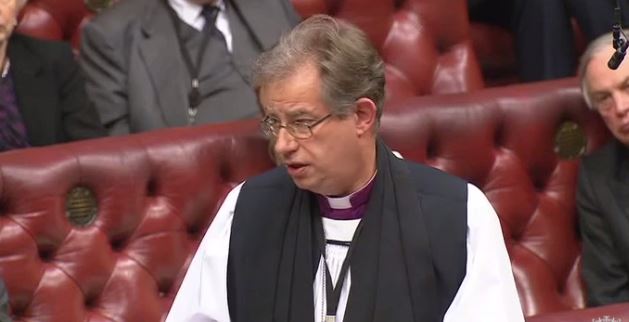 The Lord Bishop of Oxford: My Lords, like other speakers, I am grateful to the most reverend Primate the Archbishop of Canterbury for his leadership in this debate and in much else.

You must be logged in to post a comment.