
On 6th May 2020 the Archbishop of York, Most Revd John Sentamu, led a debate in the House of Lords on the motion that the Lords “do consider the case for increasing income equality and sustainability in the light of the recent health emergency.” The Archbishop of Canterbury, Most Revd Justin Welby, also spoke in the debate, highlighting the position of those with no recourse to public funds:

The Archbishop of Canterbury: My Lords, first, I thank the most reverend Primate for tabling this debate today, as well as for a lifetime’s work of battling inequality. May we continue to benefit from his wisdom and prophetic voice. I also look forward to hearing the maiden speech of the right reverend Prelate the Bishop of Derby.
I wish to highlight the issue of those particularly at risk because they do not have the right to access public funds. Migrants are more likely to be self-employed, in temporary work, or working in industries which have been especially badly hit. They are less likely to own their own homes, risking homelessness if they lose their income. Concerns have been raised that migrants may be compelled to continue working even if they become ill as to stop would be to risk destitution, which puts their and others’ health at risk. Continue reading “Archbishop of Canterbury raises economic insecurity of migrants without access to public funds”

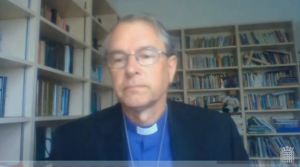 I want to return to the two-child limit. I am sorry but it simply will not do to keep parroting back the same answer every time we raise this issue. Today, the Church of England and the Child Poverty Action Group published our latest information and a report on the impact of the limit. It includes evidence from the early days of the Covid crisis. Sixty thousand more families will be impacted. The policy is utterly flawed. I have been assured by Minister after Minister that if we give them the evidence, they will re-examine the limit. It is time that it be re-examined. Please agree at least to look at our report and re-explore the arguments around this issue.
  On the 13th January Baroness Lister of Burtersett asked the Government “what assessment they have made of the impact on low-income families of the four-year freeze in working age and children’s benefits”. the Bishop of Durham, the Rt Revd Paul Butler, asked a follow-up question:
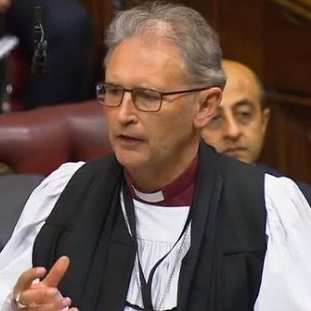 The Lord Bishop of Coventry: My Lords, I echo the praise that has already been given to the emergency services following both Barking and the Grenfell disaster. I welcome the Statement’s recognition of the power of community and its commitment to a new and stronger partnership between residents and those who serve them, for trust to rebuilt and, in particular, for the council to listen and the community to be heard.
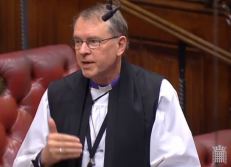
 The Lord Bishop of St Albans: My Lords, it is two years since this came in, so we have quite a lot of evidence. Will the Minister assure the House that the review is totally independent, and that we will be able to see all the working out of what is proposed and the analysis? A large number of noble Lords are deeply concerned about this. Would the Minister be willing to meet with us to discuss how we might take it forward.
 On 2nd, 3rd & 4th April 2019 the Bishop of Durham, Rt Revd Paul Butler, received answers to three written questions on the benefit cap policy.


You must be logged in to post a comment.